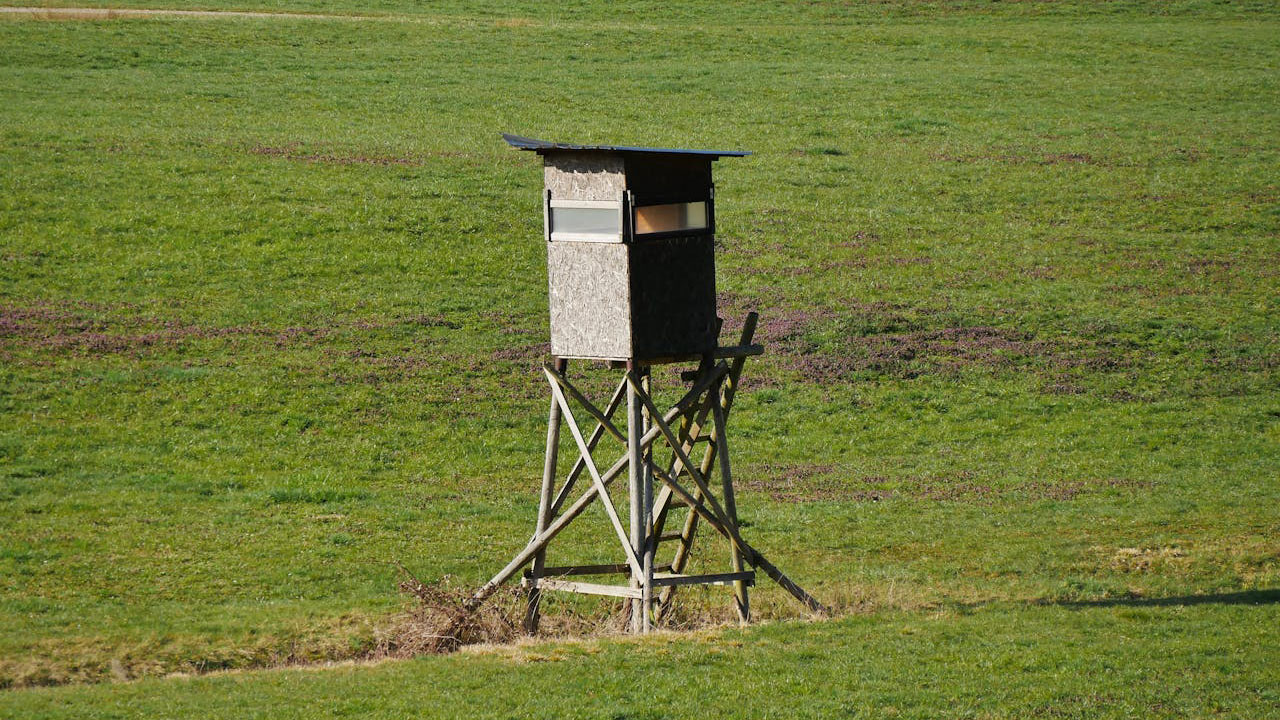
Photo credit: Natur & Urban/Pexels.com
A hunter who thought he was spending a quiet day watching his field ended up with a property-line problem that had Reddit split between neighborly restraint and calling the game warden.
The hunter shared the situation in a post on r/Hunting titled “What does Reddit think I should do? My land, not my stand.” He said he had been sick and was sitting in a heated blind overlooking his field when his dad got down to walk a thicket along the east property line. That was when his dad noticed a stand that, according to the poster, did not belong there.
At first, it looked like a neighbor had pushed a little too far across the line. The poster said there was an ATV trail running right up to the stand, along with a salt lick and scent drip nearby. That made the whole thing more serious in his eyes because he said those were not legal where he lived.
His girlfriend urged him not to turn it into a full-blown neighbor fight right away. Her suggestion was to put up a no-trespassing sign and leave a note on the seat of the stand. That advice made sense from a peacekeeping standpoint, especially with rural neighbors who may be living beside each other for years. But the hunter was clearly bothered by the fact that someone had apparently built or placed a stand on his land without asking.
The situation got more confusing once he started checking property records. He first thought he knew which neighbor the land belonged to, but after reviewing county GIS records, he realized the house tied to the land was not the one he had assumed. The trail appeared to lead from a different direction, which made him less certain about who was actually responsible.
That uncertainty seemed to slow him down. Instead of marching over and accusing the wrong person, he kept digging. A friend found possible property owners on Facebook and sent him screenshots. The poster said one profile photo showed a man with a bear that had tried to climb his stand the year before, which made that person seem like the more likely hunter. Still, he did not want to confront someone without knowing for sure.
From there, he started working through the property-line question more carefully. He said his dad had taken coordinates with a Garmin, and he converted those to latitude and longitude. He also checked the county GIS overlay and compared it to the property line. After that, he believed he had a strong enough margin to say the stand was roughly 10 yards onto his property.
That changed the whole tone of the situation. This was no longer a vague “maybe the line is off” issue in his mind. He believed he had verified that the stand was on his side, and he said that gave him enough confidence to confront whoever owned it.
Still, he didn’t immediately tear it down. Instead, he planned to move a camera into the area and wait until he knew who was using the stand. That approach gave him a way to document the trespass without guessing, and it also reduced the odds of accusing the wrong neighbor.
The stand alone would have been enough to bother most landowners, but the salt lick and scent drip made commenters take the situation more seriously. Several users pointed out that if baiting was illegal in that area, the landowner did not want to be anywhere near it without documentation showing it was not his.
One commenter said that if it were only the stand, they would take it down and post the property. But with the salt lick and scent drip involved, they would report it.
That concern showed up repeatedly. Some users warned that if a conservation officer or game warden found illegal bait near a stand on the poster’s land, the landowner could end up having to explain himself even if he did not put it there. Others said the safest move was to report it first so there was a record that the landowner had discovered the setup and was not responsible for it.
The poster later clarified that the scent drip and salt lick were on the edge of the ATV trail and appeared to be on the other side of the line, not directly beside the stand. But commenters still thought the setup looked connected enough to create trouble. If a stand on one side of the line was being hunted over bait on the other, it could still drag both landowners into an ugly mess.
That is where the conversation shifted from “what do I do with this stand?” to “how do I protect myself legally?” For a lot of hunters, that was the bigger issue. A trespassing stand is irritating. Illegal bait tied to your property could become a real problem.
Not everyone thought the first move should be a report. Several commenters told the hunter to talk to the neighbor first, especially since rural property disputes can linger for years.
One user suggested simply driving over and asking why the stand was there, while giving the person a chance to remove it without turning the whole thing into a feud. Their point was that if the man was going to be a neighbor for decades, it was worth trying to keep the relationship civil at first.
Another commenter suggested softening the approach even more by framing it as a possible mistake. Instead of accusing someone of trespassing, they said the poster could say something like the stand might have accidentally ended up over the property line. That would let the other hunter save face and take it down without the situation immediately getting hostile.
That kind of advice came from people who understand how quickly land disputes can get personal. A deer stand is one thing. A neighbor war is another. Once someone feels embarrassed, accused, or threatened, a simple property-line problem can turn into years of tension.
A few commenters also pointed out that neighbors sometimes need each other during hunting season. If a wounded deer crosses the property line, it helps to have a civil relationship with the person next door. Burning that bridge over one stand could make future situations harder.
Plenty of Reddit users took the opposite view. To them, the stand was on private property and that was the end of the discussion.
Some told the poster he had every right to remove it. Others joked that if it was on his land, it had become his stand. A few suggested taking it down, posting the property, and putting up cameras to catch whoever came back looking for it.
That harder approach came from the basic frustration many landowners understand. Property lines are not suggestions, and hunting land is not something people get to use just because it looks convenient. The poster had his own stand, his own field, and his own plans for how to manage the thicket. Someone else slipping a stand onto that land crossed a line in more ways than one.
The poster also mentioned that they had been treating the thicket as a safe area for deer, which may be why they had not noticed the stand sooner. That detail made the discovery more frustrating. If the landowner had intentionally left that pocket alone, then someone else setting up there was not only trespassing but also interfering with how the property was being managed.
That is the part that would bother a lot of hunters most. It was not merely a stand in the woods. It was someone else making hunting decisions on land they did not own.
Commenters were divided on the exact next step, but most agreed the hunter needed to document everything before doing anything dramatic.
Several told him to set up trail cameras, preferably cellular cameras, so he could identify whoever was using the stand without risking the camera being stolen before he got photos. One commenter suggested putting cameras within view of each other in case someone tried to mess with one. Another recommended hanging a camera higher than eye level and angling it down so it would be harder to notice.
A lot of users also pushed him toward contacting the game warden or conservation officer, especially because of the baiting concern. Their argument was that a report would create a record and keep him from being blamed if illegal hunting activity was tied to his land.
Others urged a calmer first conversation. They thought the best move was to approach the likely neighbor, explain that the stand appeared to be over the line, and give him a chance to fix it. They warned that rural neighbor disputes can outlive the original problem, especially when families stay on the same land for generations.
The poster seemed to settle somewhere in the middle. He did not immediately tear the stand down or start accusing people. Instead, he verified the property line, checked records, moved a camera into place, and planned to confront the right person once he had proof.
For anyone who has dealt with hunting access, property lines, and neighbors who get a little too comfortable, the dilemma is easy to understand. You want to protect your land. You also don’t want to start a feud unless you have to. But once someone puts a stand on the wrong side of the line, especially with questionable hunting tactics nearby, ignoring it stops feeling like an option.