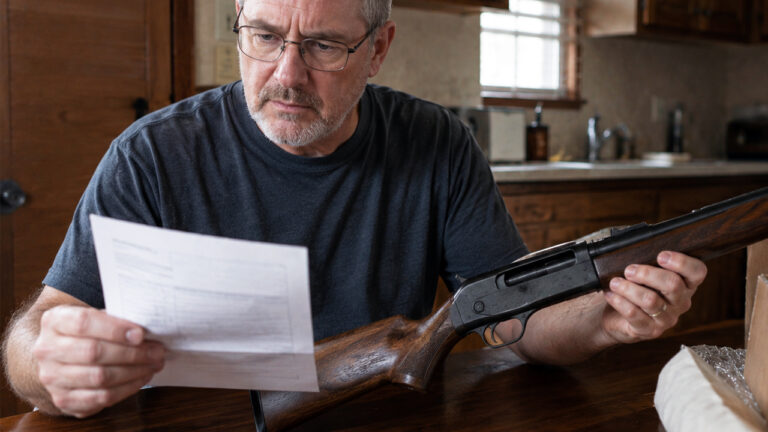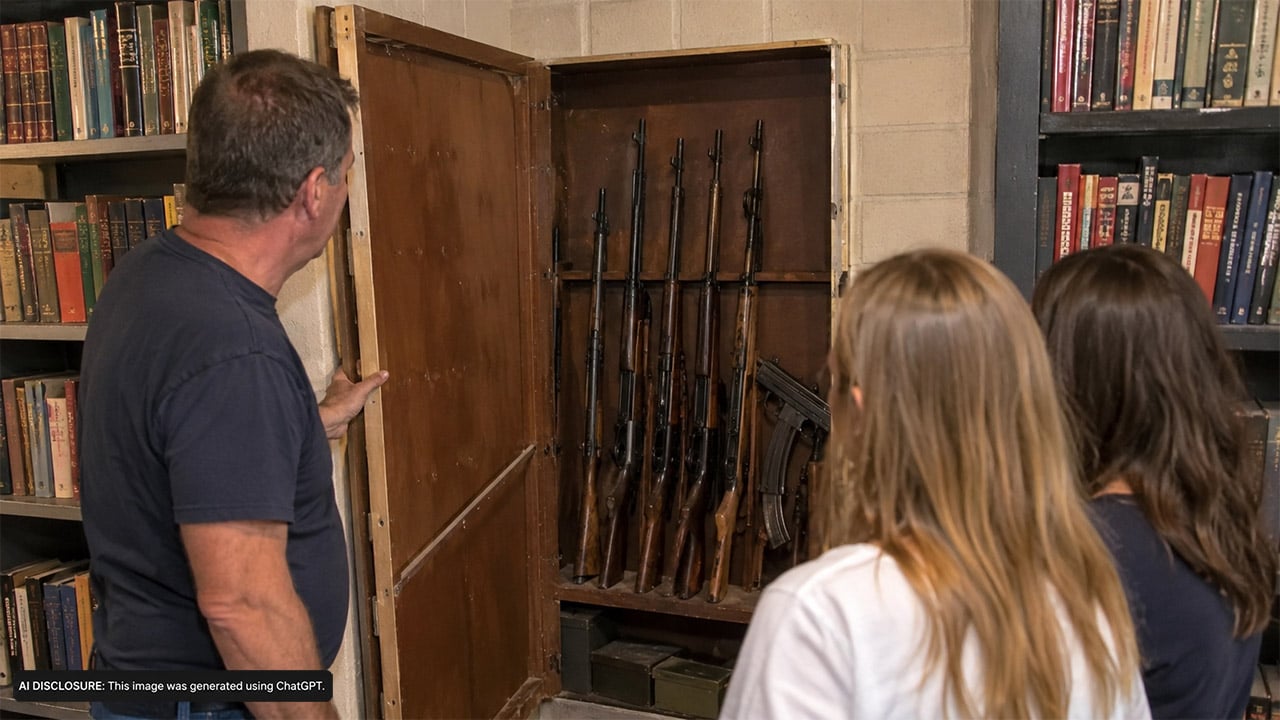
Photo credit: AI-generated image created using ChatGPT. Illustrative only
Most home renovation surprises are busted plumbing and mystery wiring. This one was steel and old oil paper.
After buying an older, beat-up home in Southern California, one family started cleaning out a basement—already a rarity in that part of the state. While wrestling a broken bookshelf, they noticed a locked cabinet door hidden behind it. In the original post, the homeowner said they punched through the soft, aging door and found a stash of WWII-era firearms and ammunition tucked away like a time capsule.
A basement bookshelf turned into a hidden gun cabinet
The house was described as very old—built around the 1940s—and purchased for a low price because the previous owners were moving overseas. When the family began clearing out the basement, they found an old, broken bookshelf that had to be moved. Behind it was a cabinet door with a lock.
Once the door gave way, they realized it wasn’t just old junk storage. Inside were multiple firearms that appeared to be WWII-era pieces, along with boxes of ammunition wrapped in yellow paper. If you’ve ever torn into a wall and found something you weren’t expecting, you know how fast that “cool find” feeling can turn into “what do we do now?”
The guns sounded like real WWII hardware, not replicas
The homeowner said they recognized some of what they saw from video games—an “mp40 looking gun” that was heavily rusted, and a P08 Luger wrapped in oiled paper. There was also a long bolt-action rifle they couldn’t identify, plus a Mauser handgun with a “weird detachable magazine,” also wrapped in oil and yellow paper.
Another rifle had a broken stock and a tag on it, which suggests it may have been stored, collected, or handled at some point in a way that involved documentation. The condition was mixed: some rusted, some preserved. That spread is typical of an old stash—some items were protected, others were left to the damp and time.
One firearm changed the tone: “mp40 looking” and possibly full-auto
The moment that really put the brakes on the excitement was the possibility that the MP40-style gun could fire in full auto. In California, and under federal law, an unregistered machine gun is a serious problem. Even if it was grandfathered somewhere decades ago, paperwork is everything—and most folks cleaning a basement don’t have a binder of NFA forms sitting next to the furnace.
It’s also worth remembering that looks alone don’t prove what a gun is. Plenty of firearms resemble submachine guns, and plenty of true WWII bring-backs exist. But the homeowner’s concern was reasonable: if it’s capable of full-auto fire, it’s in a different legal universe than a typical antique handgun or bolt rifle.
The ammo was treated like a live hazard, and buried
The family also found “a few boxes of ammunition wrapped in yellow papers.” The homeowner said their father dug a hole and buried the firearms because he thought the old ammunition might misfire.
From an outdoorsman’s safety standpoint, the instinct to treat unknown ammunition as dangerous is a good one. Old ammo can be unstable, corroded, or unpredictable. But burying guns and ammo creates a whole new set of problems—moisture, corrosion, and the real risk that a future dig-up turns into a rusty, unsafe mess that’s harder to identify and handle. It also complicates the “chain of custody” if you end up needing to show what was found and when.
What the family wanted to know: turn them in, donate, or keep?
The homeowner’s questions were simple and practical: What do we do with these? Should we turn them over to authorities, donate them to a museum, or keep them? And if keeping them was possible, what steps would make it legal?
That’s the same crossroads most gun folks would hit in this situation. A WWII pistol in good shape can be a family heirloom-tier collectible. A tagged rifle might have historical value. But a suspected full-auto gun can turn a neat discovery into a high-stakes legal issue fast, especially in a state with strict firearms rules.
The grounded path forward: safety first, then verify legality the right way
When you find unknown firearms in a house—especially old military guns—there are two tracks you need to think about at the same time: immediate safety and long-term legality.
On the safety side, treat every gun as loaded until proven otherwise, and avoid handling them more than needed. Old firearms can have stuck actions, brittle springs, and rust that hides a bore obstruction. Old ammo should be handled cautiously and stored safely away from heat, flame, and curious hands.
On the legality side, the big fork in the road is whether any of the firearms are regulated in a way that requires registration or is outright prohibited. A WWII-era Luger, a bolt-action rifle, or many old Mauser pistols may be legal to possess depending on specifics, but they still might trigger transfer rules. A machine gun is a different animal entirely. If there’s even a chance the MP40-style gun is functional and full-auto, you’re not in “cool collection” territory anymore—you’re in “get competent, local legal guidance before you do anything else” territory.
There are safe, lawful ways to sort this out. The key is not trying to test-fire anything, not trying to “fix it up” before you know what it is, and not passing it around to buddies for opinions. Identification and compliance should happen through proper channels—people who can tell you what you actually have and what’s required to handle it legally in California.
Hidden finds like this are every history buff’s dream and every homeowner’s curveball. This family stumbled onto a piece of the WWII era that was literally built into the house, but one questionable firearm category turned it from interesting to urgent. If you ever uncover something similar, move slow, stay safe, and get the facts before you make the next decision.
Like The Avid Outdoorsman’s content? Be sure to follow us.
Here’s more from us: