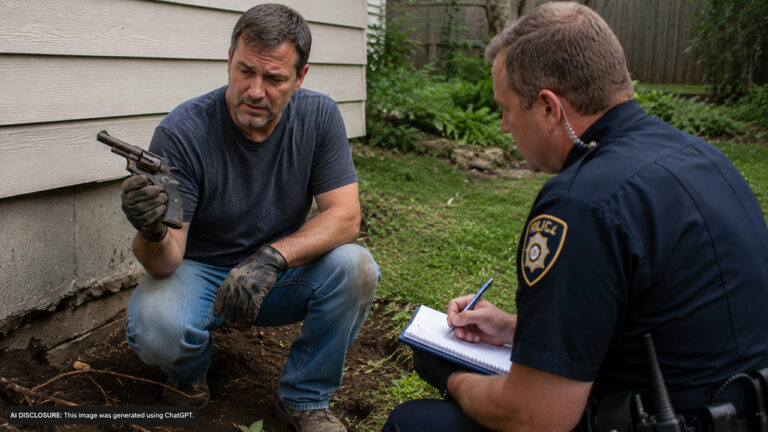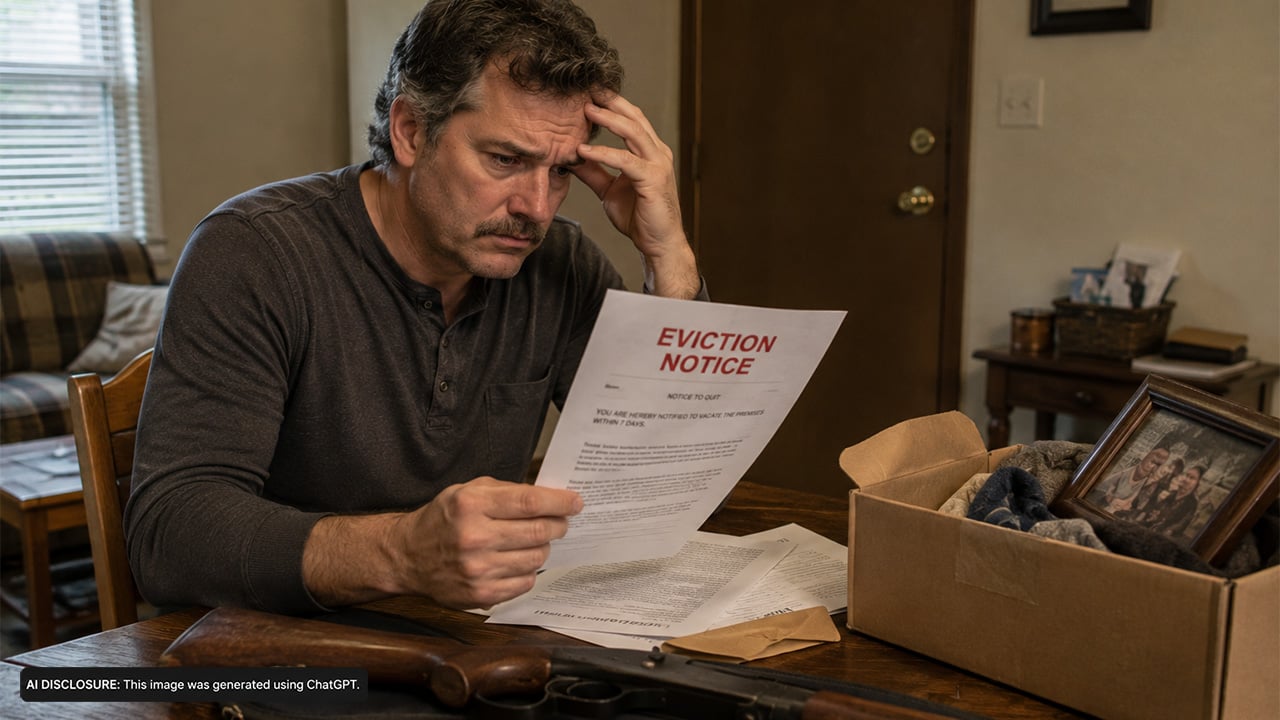
Photo credit: AI-generated image created using ChatGPT. Illustrative only
Eighteen years in the same place builds a certain kind of trust. You know the creaks in the floor, the way the wind hits the back door in a storm, and you figure the arrangement with the owner is steady—even if it’s just month-to-month.
That’s why one tenant’s story, shared in the original post, hits a nerve for a lot of gun-owning renters: a sudden notice to vacate, a messy eviction process, and then the claim that the landlord walked off with his shotgun while police “refuse to investigate.”
A long, quiet rental relationship turned fast
According to the tenant, he’d rented the residence for 18 years and had barely dealt with the landowner—saying he hadn’t seen him in that entire stretch and had only talked to him three times. Those conversations weren’t small talk. He said he asked directly whether the property would be sold and requested at least six months’ notice if the owner wanted him out, so he’d have time to buy the place or find another home.
Then in May, he said a letter arrived telling him to vacate by the end of the month. No runway. No gradual transition. Just the kind of notice that forces you to scramble—especially if you’ve got a life built around the place.
Negotiations to buy the property got tangled up in repairs and price
Instead of just packing up, the tenant said he tried to purchase the property. He described getting bids from multiple contractors, focused on what he believed were serious foundation problems—saying the structure had sunk in spots and that what looked like a “real foundation” was concrete block with concrete poured over adjoining pieces, with cracks and broken areas visible.
From his perspective, those repairs mattered because they should have driven the price down. But he said they couldn’t reach a number he felt was fair given the cost to stabilize the structure. Negotiations stretched into July, and during that time he said the landlord cashed the July rent check anyway.
An eviction filing followed—even while rent checks were being cashed
The tenant claimed that while they were still negotiating, the landlord started an unlawful detainer suit. In plain terms, that’s an eviction case. And once that ball starts rolling, it can follow you around like a bad smell.
He said the filing damaged his credit by showing as an eviction on his record, and that made it hard to get approved elsewhere. At the same time, he claimed the landlord continued accepting rent—saying the August rent check was cashed “like normal,” which he believed reaffirmed the month-to-month arrangement and should have required a new notice to vacate.
He also said they met and talked and he agreed to move out by November 1. But with the eviction case sitting there, he said he was denied housing applications, and he asked the landlord for an “order of limited dissemination” to reduce the impact. He claimed the landlord refused.
Court mistakes and ownership confusion made the situation worse
The tenant’s description makes it clear he felt boxed in: he said he couldn’t get approved to move because of the lawsuit, so he considered staying longer than promised until the landlord agreed to help limit the record’s spread.
Then came court. He wrote that the landlord had accepted rent payments—including December—while the case was still moving through. He also alleged the landlord filed paperwork stating he was the landowner, but that in 2000 the property had been placed into a trust and the landlord was acting as trustee. The tenant seemed to believe those points would sink the case.
But he also admitted he didn’t understand the eviction process and made a key mistake: he failed to properly answer required notification to the landlord’s attorney by the specified date. He said he wrote “contested,” but didn’t lay out the reasons in the way the court required. He said the judge didn’t accept his argument, and the landlord won.
Then came the gun: “Landlord stole my shotgun”
The reason this story matters to outdoorsmen isn’t just the eviction. It’s the firearm. The tenant’s opening claim is blunt: “LANDLORD STOLE MY SHOTGUN,” and he asked who can be contacted “when cops operate above the law and let the landlord take a gun stealing it live!”
He didn’t provide model, gauge, serial number, or how the shotgun was stored. But any gun owner knows what that allegation means in real life. A long gun isn’t just a “thing” you replace like a microwave. It may be a home-defense tool, a hunting piece with seasons and memories tied to it, and it’s also a controlled item that can create problems if it ends up in the wrong hands.
He also claimed police refused to investigate. That’s the part that leaves people feeling helpless, because if you can’t get an officer to take a theft report, your normal next steps—insurance, pawn checks, documenting serial numbers, trying to get the firearm entered as stolen—get a lot harder.
What practical-minded folks tend to focus on in situations like this
Even with the tenant’s story told in rough, frustrated language, the practical issues are pretty clear. Evictions move on deadlines, and missing a required response—especially in writing—can bury you even if you’ve got what feels like a strong argument about notice, rent acceptance, or who legally owns the property.
On the gun side, the biggest lesson for renters is that you can’t treat firearms like general household property when a living situation is unstable. If a move-out deadline is looming or a court date is on the calendar, it’s smart to make sure your guns are secured and accounted for—stored lawfully, locked up, and not left behind in a place you may lose access to fast. That’s not about “giving in.” It’s about preventing exactly this kind of nightmare where a firearm goes missing and you’re left trying to convince someone to take it seriously.
And if you ever do have a firearm stolen, documentation is everything: make, model, serial number, photos if you have them, and a clear timeline of when you last had it. The tenant didn’t include those details in his post, but they’re the difference between a vague complaint and a report that can actually be acted on.
This is the ugly intersection of housing trouble and gun ownership. When a landlord-tenant situation turns legal, time speeds up, paperwork matters more than common sense, and anything left in the home—especially a firearm—can become the flashpoint that makes a bad situation feel outright dangerous.
Like The Avid Outdoorsman’s content? Be sure to follow us.
Here’s more from us: