Photo credit: AI-generated image created using ChatGPT. Illustrative only
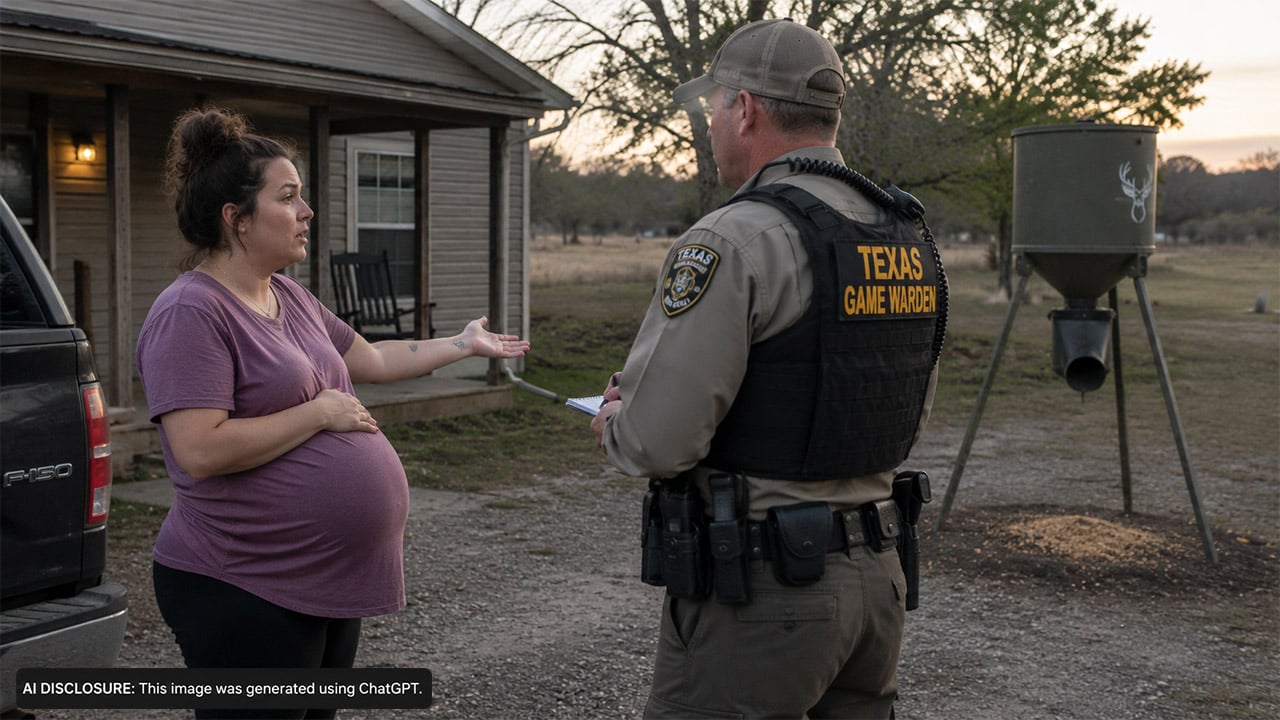
A Texas homeowner says the peace and quiet she expected in the country got replaced with rifle fire and a growing sense that somebody’s “safe setup” is only safe for the people pulling the trigger. With a baby due in less than three weeks, she’s not just annoyed—she’s worried about what happens when a shooting range and deer-hunting equipment sit right on the edge of her property line.
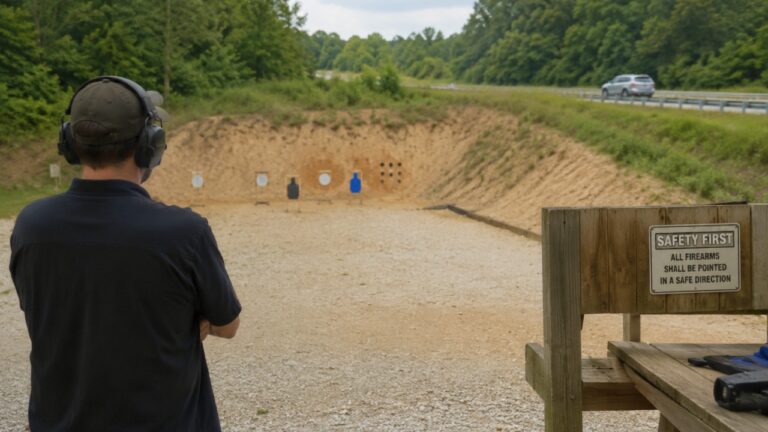
In the original post, the woman explained that hunters leasing roughly 2,000 acres behind her home in Texas set up a shooting range “right where our property line ends.” She said they’re shooting loud rifles “every day, all day,” and while the constant shooting is stressful, her bigger fear is a deer stand and feeder she believes are set up in a way that could encourage shots toward her home and yard.
A range line at the fence changes everything
If you’ve spent any time around rural property lines, you know how fast things get tense when the action gets pushed right up against the edge. The homeowner said she and her family have owned their place since 2019, but the range only started this year—meaning the “normal” she bought into has been replaced by someone else’s new routine.
The part that sticks out isn’t just that there’s shooting. It’s that it’s allegedly happening at the boundary of two properties, with heavy rifle use, to the point it can be heard “constantly through our brick home.” That kind of proximity is where bad habits show up: poor backstops, questionable lines of fire, and people getting too comfortable because “we’ve always done it this way.”
Nineteen days from delivery, stress turns into a safety issue
She said she’s “having a baby in 19 days” and the constant shooting has her stressed to the limit. That’s not a minor detail. Anyone who’s had a newborn in the house knows sleep is already going to be short, and the idea that you can’t even rest during the day because the range is cracking off outside is brutal.
She also said she’s worried her baby “won’t be able to sleep,” that she can’t take naps now, and that she “won’t be able to bring her outside.” Whether you’re a hunter or not, that’s a hard reality: a family feeling trapped inside their own home because the neighboring leaseholders chose to build their setup on the closest possible acre.
The deer feeder and stand are what made her feel unsafe
Noise will wear you down, but perceived muzzle direction is what flips the switch from “annoying neighbor” to “this could get somebody hurt.” The homeowner said the hunters have “a deer stand and feeder pointed where they will shoot TOWARDS OUR PROPERTY.” She told them she didn’t feel safe, and she said their response was, “it’s pointing down.”
Anybody who’s hunted from a stand knows how that conversation goes. Yes, you can angle shots down. Yes, a downward angle can help. But “pointing down” isn’t the same as “no chance of a miss, ricochet, or a poorly chosen shot.” A feeder can draw deer to a spot, and a stand can encourage a predictable shot direction. If that direction even looks like it favors a neighboring yard, it’s going to put the neighbor on edge—especially with a baby coming.
She tried the neighborly route, and it didn’t move the needle
Before talking lawyers, she did what most rural folks try first: she went to the hunters and asked them directly. She even offered to pay for them to move the stand/feeder setup. According to her post, the answer was a hard no. She quoted them saying they’d “spent thousands making this our shooting range and we’re not moving it,” along with “we pay thousands to lease this land.”
When she asked why they couldn’t find somewhere else on the 2,000 acres, she said they told her it was “the safest place for us.” That line is where a lot of these disputes die. Everyone thinks they’re the safe one. Meanwhile, the neighbor on the other side of the fence is thinking about what happens when somebody misses, when a new shooter shows up, or when a “safe” backstop gets washed out or shot up over time.
What outdoorsmen usually look at first: backstops, lines of fire, and who actually controls the land
This is where the details matter. The hunters don’t own the property—they lease it from “a forest investment company.” That doesn’t automatically make their range or hunting setup illegal, but it does mean there’s another party with leverage: the landowner. Lease agreements often have rules about where shooting can occur, what improvements can be made, and what kind of liability the lessees take on.
From a practical outdoorsman’s standpoint, two questions sit at the top. First: what’s behind the target area and behind the feeder direction—dirt berm, thick timber, a natural hillside, or open country that could send a bullet a long way? Second: are they truly shooting in a direction that could cross a property line, or does it just appear that way from the house? The homeowner feels confident it’s aimed toward her place, and that’s enough that she’s asking what legal steps exist to force a change.
When situations like this turn into formal complaints, documentation is what carries weight. Pictures from multiple angles, marked property lines, dates/times of shooting, and any communications where the other party dismisses safety concerns—all of that helps a landowner, an attorney, or an investigator understand whether this is simply unpleasant or actually hazardous.
The legal help she asked about—and the real-world path most people take
She asked what type of attorney she needs, saying she assumed “real estate” but wasn’t sure. In a dispute like this, the legal lanes people commonly explore include property/boundary issues, nuisance-type complaints, and—when shots may be directed toward occupied property—anything that touches public safety and lawful discharge.
But there’s also the non-court route that often gets faster results: pressure from the actual landowner who holds the lease. If a leaseholder is creating a liability headache by running a range right on a boundary line, a landowner may decide it’s not worth the risk, especially if a neighbor is describing an apparent line-of-fire issue involving a home, animals, and a soon-to-arrive newborn.
None of that requires a shouting match at the fence. In fact, it shouldn’t. When firearms and property lines are involved, the smart move is to avoid confrontation and move everything through proper channels—landowner contact, written complaints, and professional advice—before somebody says or does something that can’t be taken back.
At the end of the day, hunters and shooters have every right to enjoy the outdoors and practice responsibly. But pushing a range and a baited setup to the edge of someone’s home place—and brushing off a pregnant neighbor’s safety concerns with “it’s pointing down”—is how you invite the kind of scrutiny nobody wants. Good neighbors make room. Good sportsmen do, too.
Like The Avid Outdoorsman’s content? Subscribe to our newsletter so you never miss an article.
Here’s more from us: