Photo credit: AI-generated image created using ChatGPT. Illustrative only
Most hunters will never have a run-in with a game warden beyond a license check at the trailhead or a “how’s the day going?” at the boat ramp. But when a person stacks up violations across multiple seasons and counties, the end result isn’t a warning—it’s the end of the line.
That’s where things landed for Jerry “Trey” Truitt III of Tennessee, who Montana Fish, Wildlife & Parks says was sentenced for a string of poaching-related crimes in Ravalli County that ultimately cost him his hunting and fishing privileges for life, as detailed in the original post.
A sandhill crane kill in a county with no crane season
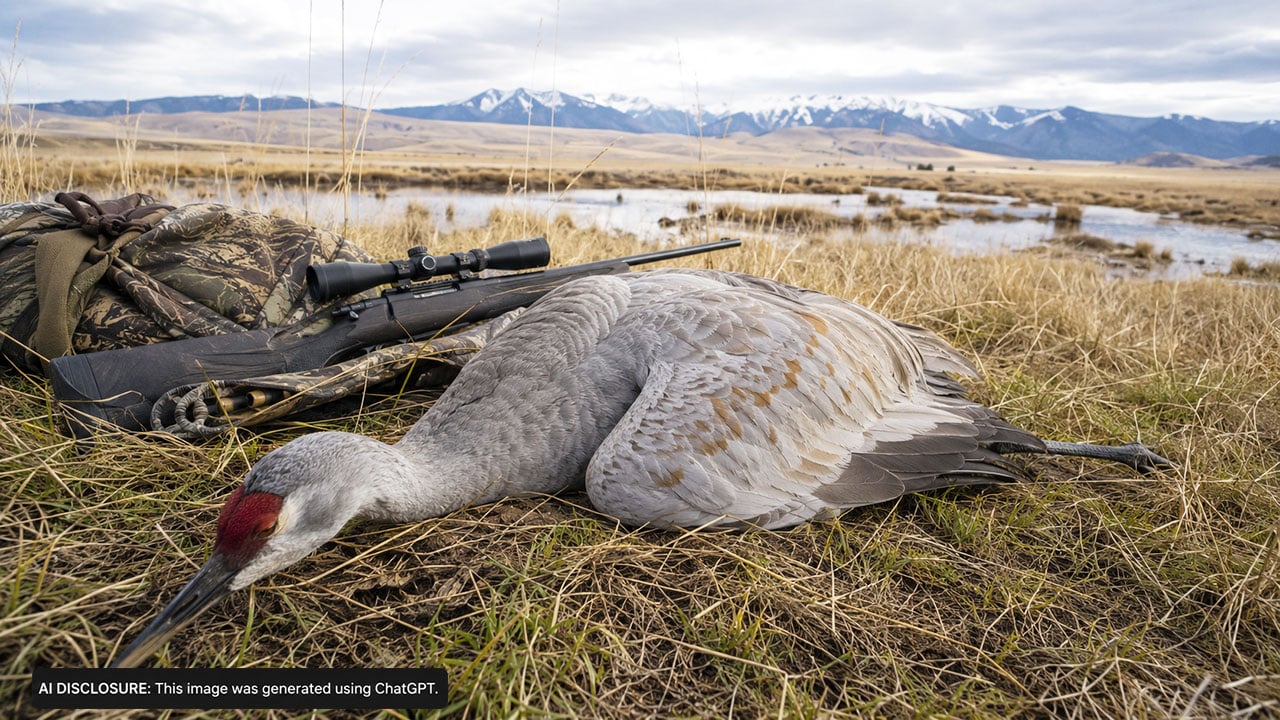
The violation that jumps off the page is the sandhill crane. FWP reports Truitt killed a sandhill crane in Ravalli County, and that there is no season for cranes there. That’s not a “got confused on dates” mistake—if there’s no season, there’s no season.
In the same set of charges, wardens also tied him to unlawful possession of a turkey and to hunting turkeys without a license. Add in criminal trespass and hunting during a closed season, and it paints a picture of someone who wasn’t simply cutting one corner—he was operating like rules were optional.
The 2026 Ravalli County case: five criminal counts and a no-contest plea
FWP says the most recent case wrapped up April 2 in Ravalli County Justice Court. Truitt pleaded no contest on five criminal counts connected to poaching crimes committed in 2024 and 2025.
Those convictions were for two counts of unlawful possession of wildlife (turkey and sandhill crane), one count of hunting without a license, one count of criminal trespass, and one count for hunting during a closed season. No-contest doesn’t mean “not guilty”—it means the court treats it like a conviction, and the penalties still land.
This wasn’t his first Montana mess: elk and whitetail taken without a license
What really turned this into a career-ending outcome, though, is that it wasn’t isolated. FWP notes Truitt already had a prior history of poaching convictions in Ravalli and Lake Counties.
In Ravalli County, the original Montana case involved crimes committed in 2024. He was convicted in April 2025 on two counts of hunting without a license and two counts of unlawful possession of a game animal. According to FWP, he killed an antlerless elk and an antlerless white-tailed deer in the West Fork of the Bitterroot without a license.
Most of us know how hard Montana tags can be to draw, how much planning goes into a trip, and how much money it costs to do it right. Shooting any big game without the proper license isn’t just stealing an animal—it’s taking a spot from the guys and gals who played it straight.
Lake County added another layer: obstruction, using someone else’s license, and unlawful waterfowl hunting
FWP also points to a 2025 case in Lake County Justice Court. Truitt pleaded guilty there to obstruction of justice, using a license issued to another person, and violating Commission rules and regulations related to unlawfully hunting waterfowl on Ninepipe Wildlife Management Area in 2024.
That combination matters. “Using a license issued to another person” isn’t a paperwork slip—it’s the kind of move that tells wardens you’re willing to lie on top of breaking game laws. And obstruction is the kind of charge you pick up when the situation goes from “we found a problem” to “someone tried to interfere with the investigation.”
How you end up losing hunting and fishing privileges for life
There are hunters who get cited once and learn their lesson. Then there are people who keep rolling the dice until the penalties finally have teeth. In Truitt’s case, FWP says earlier cases resulted in fines, restitution owed, and some loss of hunting and fishing privileges—but the final sentencing pushed it into a lifetime loss.
That’s the part folks sometimes miss: the justice system and wildlife agencies don’t always drop the hammer on the first violation, especially if it’s a lower-level offense. But a repeated pattern—big game taken without a license, trespass, hunting closed seasons, unlawful waterfowl activity on a WMA, and then a crane killed where there’s no season—builds a record that’s hard to explain away.
FWP credited Ravalli County Game Wardens Taylor Gagnon and Shane Yaskus, along with Warden Sergeant Lou Royce, with leading the Ravalli County investigations, and said Warden Jake Pickens led the Lake County case. FWP also thanked the county attorneys involved, specifically noting Deputy County Attorney David Lakin for the time and effort put into these cases.
And it’s worth saying out loud: losing privileges for life isn’t just “no more deer hunting.” It shuts the door on a whole way of living—seasons, tags, weekends at camp, fishing trips, and the right to legally participate in the very thing a lot of us build our fall around.
What this says to hunters, landowners, and anyone who sees something off
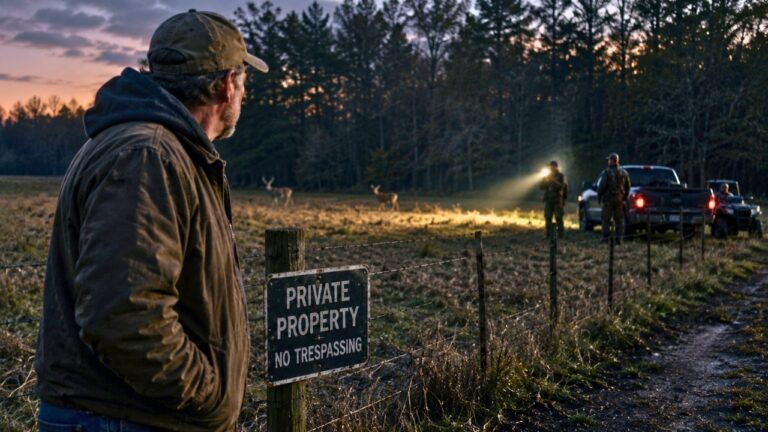
There are two groups this kind of case hits close to home: ethical hunters and the landowners who keep finding gates open, tire tracks where they shouldn’t be, and gut piles where nobody had permission. Criminal trespass was part of Truitt’s Ravalli County convictions, and that one always raises the temperature because it brings people and firearms onto ground they don’t belong on.
FWP also highlighted something that every rural resident already knows: a lot of these cases start because a regular person notices something and speaks up. Wardens said wildlife crime investigations are often initiated or solved due to leads from the public, and they directed people to tipmont.mt.gov for information on reporting natural resource crimes and who to contact locally.
The clean, responsible answer in the field isn’t confrontation—especially not when you don’t know who you’re dealing with. It’s good documentation, staying safe, and making the call to the folks whose job it is to sort it out. This case is a good example of what can happen when the right people keep pressure on repeat offenders long enough for the full story to catch up with them.
At the end of it, the message is simple: Montana’s not a place where a guy can bounce from county to county, stack violations, and expect it to stay small forever. When the pattern is there and the evidence is there, the consequences can be permanent.
Like The Avid Outdoorsman’s content? Subscribe to our newsletter so you never miss an article.
Here’s more from us: