Photo credit: AI-generated image created using ChatGPT. Illustrative only
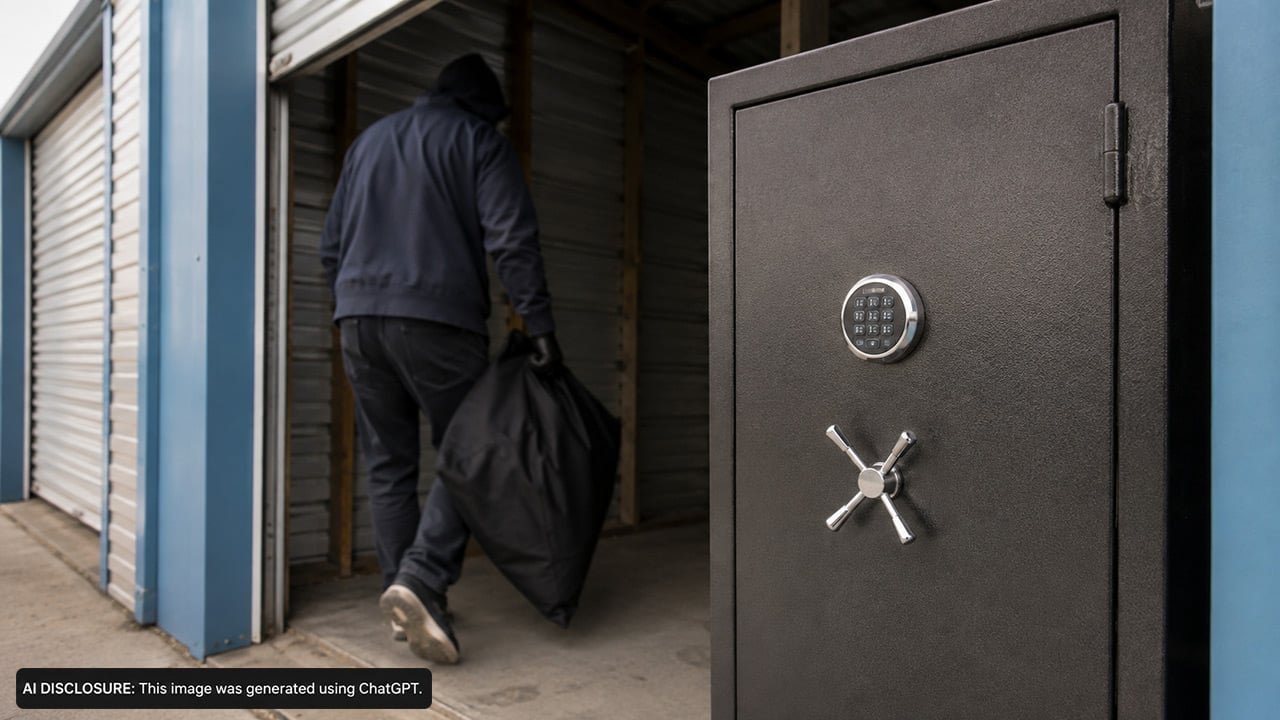
When you lock a heavy gun safe behind a roll-up door, punch in a unique access code, and pay a storage bill every month, you’d think you’ve done enough to keep your firearms out of the wrong hands. That’s what one Indiana man believed—until he walked up to his unit and found the safe flat-out gone.
The situation was laid out in the original post, written by a friend trying to help clean up the mess. The safe reportedly held about a dozen firearms, along with sensitive personal documents like a Social Security card and tax returns. The building had code access tied to individual renters, and the facility allegedly had video showing the safe outside the building—yet the owner couldn’t get the facility to share it, and couldn’t get police to even go pull it.
A “locked up” safe isn’t the same as secured
The story starts with a move. The gun owner had recently left an apartment and moved back in with his parents, and he put his belongings in an indoor storage facility. Among those items was a large gun safe loaded with firearms.
Folks who hunt and own guns know the temptation: a storage unit feels like an extension of your garage, and a heavy safe feels like the final layer. But storage units are targets. They’re anonymous, they’re packed with valuables, and thieves can work fast without a neighbor looking out the window and recognizing a truck.
What was taken wasn’t just “stuff”
A dozen firearms is bad enough, because once they’re out there, they’re out there. Stolen guns don’t usually come back clean, and they don’t always stay out of trouble. Even for people who never think about crime, the reality is simple: stolen firearms can turn into someone else’s tool for doing harm.
Then there’s the personal paperwork. A Social Security card and tax returns aren’t just inconvenient to replace—they’re the kind of documents that can turn a property crime into a long, grinding identity-theft headache. In a lot of ways, that paperwork is as dangerous as the guns, just in a different direction.
The facility reportedly had the keys to the whole timeline
According to the post, this indoor storage facility wasn’t a wide-open, no-control situation. Entry required a code, and each unit had a unique code tied to the renter. That matters, because access logs can narrow down who was in the building and when.
On top of that, the friend said the storage place had camera footage showing the people with the safe outside the building. That’s the kind of detail that makes you think, “This should be straightforward—pull the time stamp, match the code entry, and you’ve got a lead.” But the owner said the facility wouldn’t provide the footage or information to him.
From the facility’s perspective, that refusal isn’t shocking. Many businesses won’t hand over video or access logs to private citizens, even if those citizens are the victims, because they don’t want to misidentify someone, compromise an investigation, or get dragged into a liability mess. They often want law enforcement to make the request.
The part that made gun owners’ blood pressure rise: no detective, no follow-up
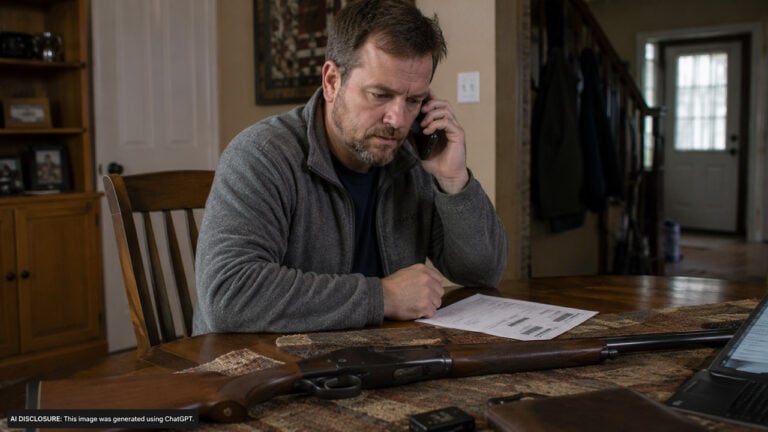
The gun owner did what he was supposed to do first: he filed a police report the day he found the safe missing. The problem came after. The friend described trying to get a detective to go retrieve the footage and access-code records, and hitting nothing but a voicemail tree and dead ends.
That’s the nightmare scenario. Security footage is perishable. Systems overwrite. Logs can get purged. Employees forget what they saw. The longer it sits, the more likely the best lead in the whole case disappears.
It also leaves a bad taste because this wasn’t a stolen lawnmower or a missing TV. A dozen firearms walking out the door is a public-safety issue, and most folks would assume it would get prioritized accordingly. Instead, the owner was left feeling like nobody cared.
The hard lessons here are the same ones we preach at deer camp
The friend who wrote the post admitted there were “really dumb decisions” involved, and that they already knew it. That’s honest, and it’s also the right attitude if you’re trying to fix the situation instead of just venting about it.
The outdoorsman lesson is simple: don’t store firearms—especially that many—in a place you don’t control day to day. If you’re between homes, the best answer is usually to keep guns with you, store them with a trusted family member in a real residential safe situation, or use a lawful, documented option that keeps them under tighter oversight. A storage unit is convenient, but convenience is what thieves bank on.
And if you absolutely must put valuables in storage, you treat it like it could be broken into tomorrow. That means serial numbers recorded ahead of time, insurance understood, and sensitive documents kept somewhere else. A safe is a tool, not a magic spell.
What the poster was really asking: how do you force the next step?
The friend’s questions were practical: Are we wasting our time? Who do we talk to to get things moving? Would an attorney help? They weren’t expecting to get the guns back. They wanted “some sort of justice,” and they wanted the obvious evidence preserved and reviewed.
In plain terms, when a business won’t release video to a victim, the usual route is law enforcement requesting it. If that doesn’t happen, people often start working up the chain—politely but persistently—within the police department, asking about report numbers, requesting to speak to a supervisor, and documenting every call. Separately, an attorney may be able to send a preservation letter to the facility instructing them not to delete footage and logs. That doesn’t magically solve the case, but it can help keep evidence from getting overwritten while the system catches up.
None of that feels satisfying when you’re the one who got hit. But it’s the difference between an issue that stays a complaint and one that turns into a file with deadlines and accountability.
For Indiana gun owners and hunters reading this, the takeaway isn’t just “storage units are risky.” It’s that when guns are stolen, time matters, paperwork matters, and follow-through matters. A safe can be carried off. Video can be erased. And once stolen firearms scatter, the cost shows up in places a lot bigger than a missing steel box.
Like The Avid Outdoorsman’s content? Subscribe to our newsletter so you never miss an article.
Here’s more from us: