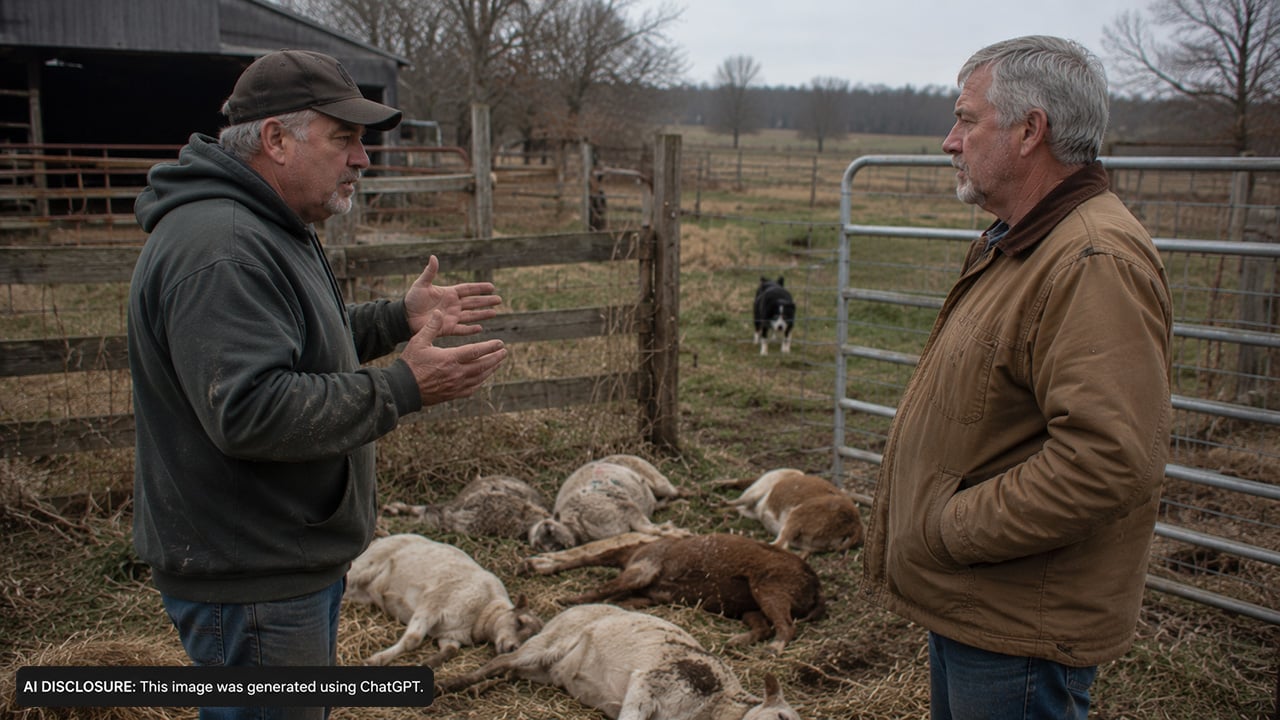
Photo credit: AI-generated image created using ChatGPT. Illustrative only
When a pack of dogs learns it can cross a fence, hit a pasture, and eat without consequences, it doesn’t take long before “a neighbor problem” turns into a dead-serious livestock problem. That’s what one Mississippi farming family says they’ve been dealing with—repeated nighttime attacks that left cattle ripped up so badly the animals either bled out or had to be put down.
The family member who shared the story said their parents have lost nine cows over the last year or two, and the most recent two killings happened within a 24-hour window in late January 2021. One of those cows was mothering a new calf, which is about as gutting a scene as you’ll ever find in a pasture.
A pack problem that didn’t look like coyotes
The poster was clear about one key detail: this wasn’t guesswork about predators. Their parents had “visual confirmations of the attacks,” and they believed the same neighbor’s dogs were coming onto their property and attacking cattle.
Folks who raise cows know what normal predator pressure looks like in their area. Coyotes may take a calf under the wrong conditions, but “ripping flesh from bone” on full-sized cows, repeatedly, points to something else—especially when you’re seeing the animals doing it.
The toll: nine cows gone and the clock still ticking
Nine head of cattle isn’t a minor loss, especially for a working farm. Even before you talk about money, it’s the time, feed, vet work, breeding plans, and plain old sweat that goes into keeping a herd healthy. Losing animals that way—one at a time, over months—turns every quiet night into a worry.
The poster said two cows were killed in the previous 24 hours as of 01/24/2021. That kind of rapid repeat attack is usually what convinces people they’re not dealing with a one-off dog that got loose, but a habit that’s set in.
“Sheriff says they can’t do anything”
According to the account, the parents went to the sheriff multiple times and were told there was nothing the office could do. The only suggestion they got was to hire an attorney and sue the dog owner, with the warning that it might not lead anywhere because the neighbor “doesn’t have any money.”
That’s a frustrating spot rural families get pushed into sometimes: the damage is real, the threat is ongoing, and the official response is basically, “Take it to civil court.” Meanwhile, the next attack can happen tonight.
Trying to handle it themselves—without making it worse
The family didn’t just sit on their hands. In an edit, the poster said their family had attempted to shoot the dogs and even “camped out all day long” waiting for an opportunity. The problem was the timing: they believed the dogs had figured out how to avoid people and were striking in the middle of the night.
That’s also where these situations get dangerous. A person is tired, it’s dark, adrenaline is high, and you’re dealing with moving animals near property lines. Even when a landowner feels morally justified, the last thing anyone needs is a stray round, a mistaken ID, or a confrontation with a neighbor at 2 a.m.
What others emphasized: documentation and getting the right agency involved
The poster asked for laws and resources dealing with livestock losses caused by a neighbor’s dogs—anything from animal cruelty concerns to protections for the farmer. While the pasted material doesn’t include a full comment thread, it does show the kind of practical advice rural folks usually lean toward: proof, persistence, and pushing the issue to the right authority.
In real life that often means documenting every incident with dates, photos, vet records if applicable, carcass locations, tracks, fence conditions, and any firsthand identification of the dogs. It can also mean contacting animal control directly, county supervisors, or state-level agriculture or animal health offices, depending on how a given state structures enforcement. The poster’s own hope was that “someone with the correct authority could go put the dogs down, or some other intervention,” but they weren’t sure what Mississippi law allowed.
The full write-up is in the original post, including the family’s description of the attacks and the initial lack of response they felt they were getting.
Update: law enforcement finally coordinated removals
There was a meaningful update in the post: “Law enforcement finally stepped in and coordinated with animal control from another part of the state.” That’s a big change from “we can’t do anything,” and it’s often what it takes when a local office is stretched thin or doesn’t have the right tools.
According to the update, around 14 dogs were found. Some that showed up near the herd “were put down,” and the rest were taken away. The poster said they would pass the suggestions and information along and thanked those who had offered help.
That end result lines up with what a lot of country people already know: once dogs turn into livestock killers, it can escalate fast, and it usually ends one of two ways—owners taking action to permanently control their animals, or authorities stepping in when the damage stacks up high enough.
For landowners and hunters who spend time around cattle country, the takeaway is simple and practical. Fences help, lights help, dogs of your own can help, and so can cameras—but none of it replaces getting a repeat problem documented and pushed to an agency that will actually act. When the threat is happening at night and the losses are piling up, it’s not just about property anymore. It’s about safety, liability, and stopping the next kill before morning.
Like The Avid Outdoorsman’s content? Be sure to follow us.
Here’s more from us: