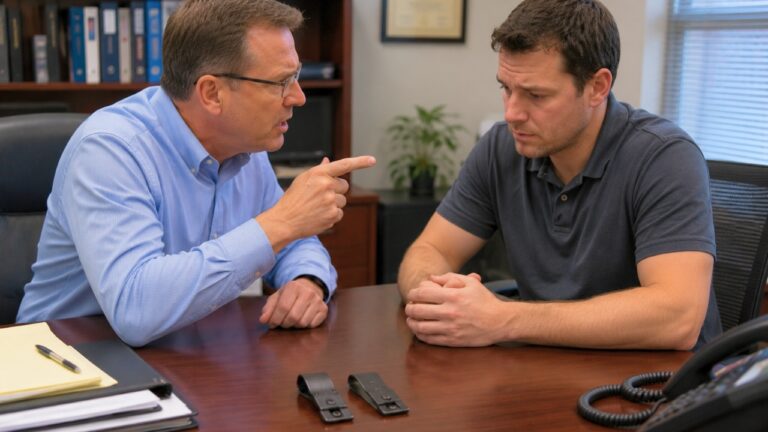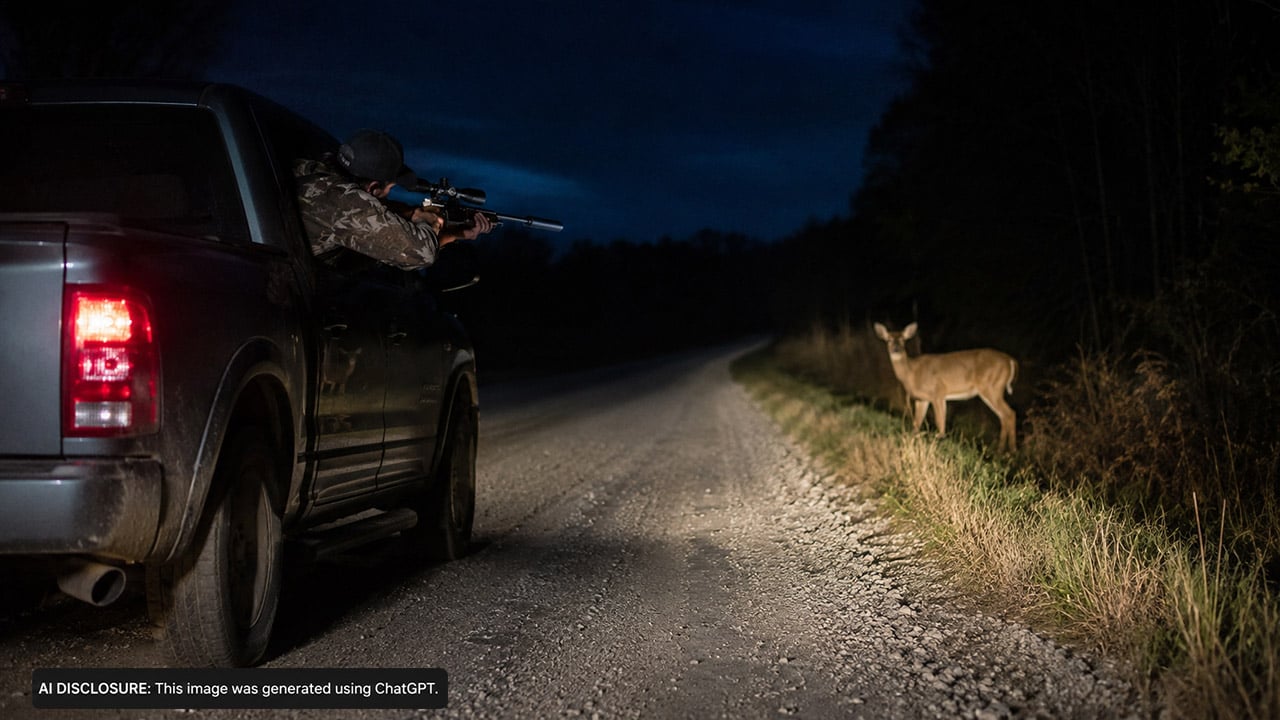
Photo credit: AI-generated image created using ChatGPT. Illustrative only
Most hunters I know keep it simple: tag your deer, make a clean shot, recover the animal, and be able to look a landowner in the eye afterward. When someone starts mixing roads, vehicles, darkness, and a rifle, you’re not in the hunting world anymore—you’re in the “somebody’s going to get hurt” world.
That’s why this one out of mid-Michigan got my attention. In a case laid out in the original post, the Michigan Department of Natural Resources says a 26-year-old Clinton County man has been arraigned on 50 combined firearm and wildlife violation charges after an investigation that started with a hotline tip.
The tip came in during deer season, and it wasn’t about “maybe”
According to the DNR, conservation officers received a tip through the Report All Poaching Hotline on Oct. 13, 2025. The information wasn’t vague: it alleged someone was shooting deer from a vehicle at night, using a suppressed semiautomatic rifle.
That’s the kind of report that puts officers on alert fast, because it’s not just about illegal take. It’s about shots fired from or near roads, unknown backstops, and the fact that the shooter is mobile—meaning you can’t predict where the next unsafe shot might happen.
Investigators say it turned into a pattern in two counties
The tip indicated the activity happened multiple times in northern Clinton County and southern Gratiot County. The DNR says its investigation determined the suspect would drive around at night, shining and shooting deer from the vehicle.
If you’ve lived out in farm country, you already know why that’s a gut-check for landowners. A truck creeping around after dark with a light is one thing. A rifle report—suppressed or not—adds a whole different layer, especially when homes, barns, livestock, and other vehicles are part of the landscape.
Leaving deer to rot is what turns a lot of hunters cold
Plenty of non-hunters don’t know the difference between legal hunting and poaching. Hunters do. And the DNR alleges House didn’t just kill deer illegally—he left the animals to rot without harvesting them.
That detail is the part that’s hard for ethical hunters to stomach. It’s wasteful, it’s disrespectful to the resource, and it’s the kind of behavior that drags every law-abiding deer hunter into the same conversation at the coffee shop and the township meeting.
How 50 charges happen: stacking violations adds up fast
The DNR says Thomas House, of St. Johns, was arraigned last Thursday on 50 combined firearm and wildlife violation charges. The source material doesn’t list each charge, but anyone who’s dealt with game laws knows how quickly this can snowball when the alleged behavior repeats.
One illegal act can touch multiple rulebooks at once: time of day restrictions, method of take, use of a vehicle, possession and use of certain equipment, and what happens afterward with the animal. Repeat it over multiple incidents, in more than one area, and the count climbs in a hurry.
This is why the hotline matters in the real world
This case didn’t start with an officer stumbling onto it. It started with a citizen deciding to speak up. Capt. David Malloch, DNR Law Enforcement Division supervisor, put it plainly: “This case demonstrates the importance of the public’s partnership with conservation officers.”
He also credited the combination of a hotline tip and “the officers’ thorough and lengthy investigation” for holding someone accountable for what he called “a blatant disregard for wildlife and hunting laws.” That’s an important point for rural folks: you don’t have to handle it yourself, and you shouldn’t. A good report—made quickly—gives conservation officers something to work with.
For landowners and hunters, the bigger issue is nighttime vehicle shooting
Poaching is always about more than the deer. When shots are coming from a vehicle at night, the danger isn’t theoretical. You’ve got reduced visibility, unknown target identification, and little control over what’s beyond the animal.
It also puts lawful hunters in a tough spot. The minute a community starts hearing about night shooting, landowners get nervous, permission gets tighter, and good hunters lose access because nobody wants to roll the dice on safety. One guy acting reckless can shut doors that took years to open.
The DNR is also clear about what they want the public to do when something looks off: report it. If someone witnesses suspicious natural resource activity, the agency encourages immediate reporting through the Report All Poaching Hotline at 800-292-7800 (call or text).
At the end of the day, the outdoors runs on trust—between hunters, landowners, and the public that shares these roads and fields. When someone trades that for a quick thrill and leaves a mess behind, it’s not just illegal. It’s the kind of thing that makes everyone else’s season harder.
Like The Avid Outdoorsman’s content? Subscribe to our newsletter so you never miss an article.
Here’s more from us: