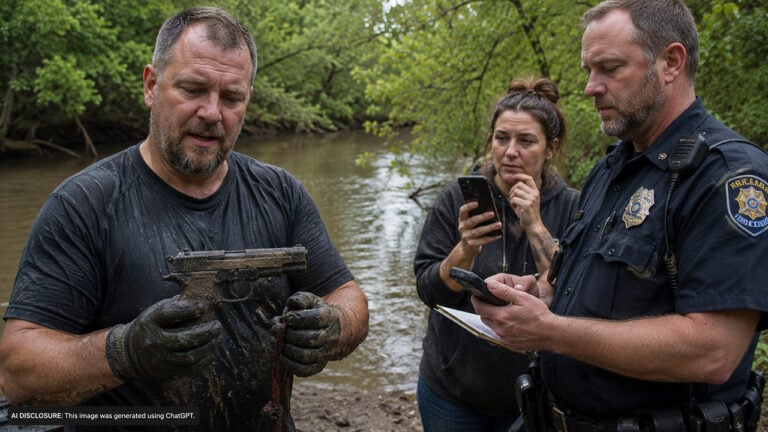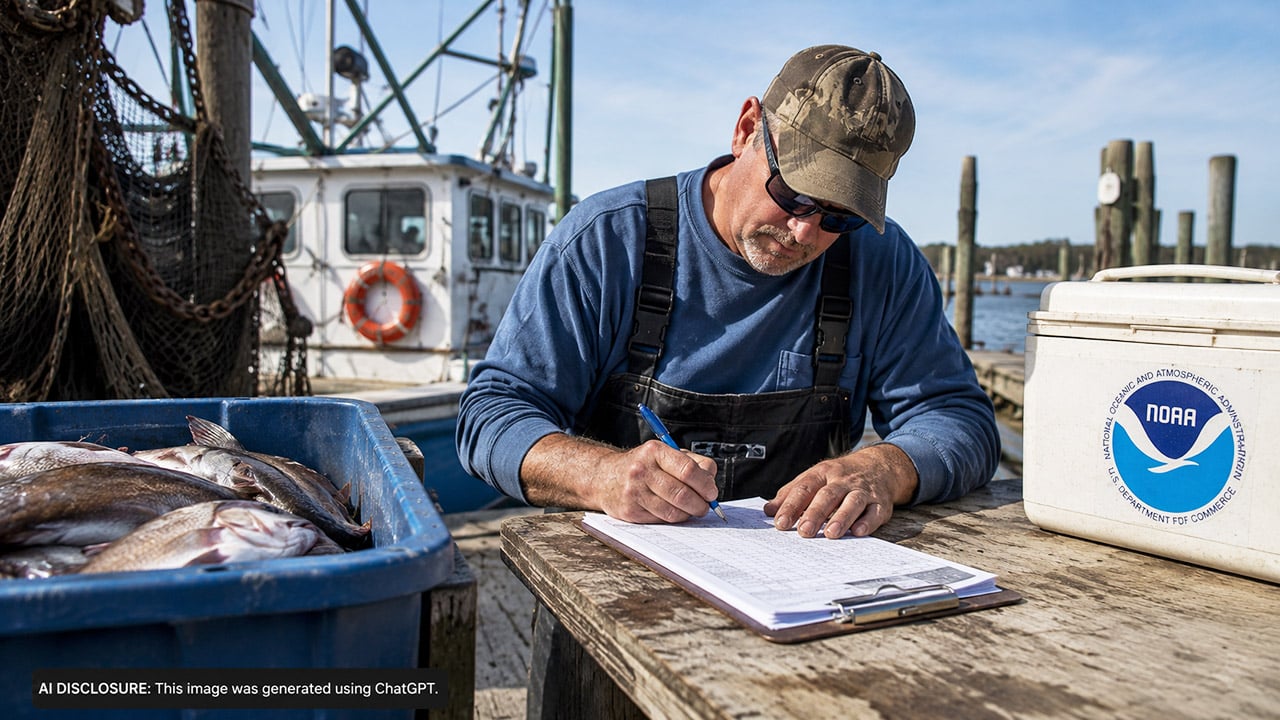
Photo credit: AI-generated image created using ChatGPT. Illustrative only
Commercial fishing has a lot in common with hunting and recreational angling: limits exist for a reason, and the paperwork matters more than most folks want to admit. When the numbers on the page don’t match what’s really in the boxes, it stops being a “mistake” and starts becoming a case.
That’s the situation NOAA says played out with South Carolina fisherman Don Rynn, who managed two commercial boats out of McClellanville. In a case detailed in the source post, investigators say trip reports were falsified to hide overages of federally managed fish—and when federal agents came asking questions, lying about it added another layer of trouble.
A tip to state officers opened the door
According to NOAA Fisheries, the investigation got moving in 2023 after South Carolina Department of Natural Resources’ Saltwater Unit received a tip about false reporting involving snowy grouper and tilefish. Those species are federally managed, and commercial trip limits are part of how managers try to keep stocks from getting hammered.
The vessel at the center of the fishing activity was a bottom longline boat called the Maximum Retriever. From the jump, this wasn’t described as a simple bookkeeping error. NOAA says the evidence they gathered included testimony, logbooks, and video footage that pointed toward intentional moves to get around the limits.
NOAA says the plan was to beat trip limits with a boat-to-boat transfer
Here’s where it gets pretty plain. NOAA says the Maximum Retriever exceeded its trip limits—nearly three times the limit for grouper and about one-and-a-half times the limit for tilefish. If you’re operating inside a regulated fishery, those numbers are the kind that can’t be explained away with a shrug.
Investigators say the overages weren’t handled like a crew that realized they’d messed up. NOAA’s account describes a timeline where Rynn instructed employees to keep everything caught, then transfer any overages to another vessel he managed, the Crystal C, when they returned. The idea, according to the investigation, was to make the over-the-limit fish “belong” to a different trip on paper.
Video, logbooks, and testimony tightened the net
The detail that jumps off the page is NOAA’s description of video footage showing an illegal transfer of fish between the two commercial vessels. They say the transfer happened dockside in the early morning, set up after the Maximum Retriever exceeded its limits and called Rynn to coordinate the move.
NOAA also says the Crystal C did not catch any of the snowy grouper or tilefish on its trip, but overages from the Maximum Retriever were placed onto it anyway. On top of the transfer itself, NOAA says Rynn submitted false reports to NOAA to conceal the overages. When you’re talking about federally managed species, trip reports aren’t busywork—they’re a tool enforcement and fisheries managers use to keep the whole system honest.
The lying part is what turned it into a serious sentence
A lot of outdoorsmen have dealt with a game warden or an officer at the ramp and felt their stomach drop, even when everything’s legal. But this case wasn’t about a confusing regulation or a forgotten stamp. NOAA says Rynn was found guilty not only of making false statements on trip reports about the amount and quality of fish, but also of lying to federal agents.
That matters because once federal agents are involved, “trying to talk your way out of it” can become its own criminal problem fast. In the outdoor world, plenty of enforcement contacts are straightforward—show your license, answer basic questions, everybody goes home. But when investigators already have documentation, footage, and witnesses, false statements can turn a bad situation into a much worse one.
Sentencing: 12 months and 1 day, supervised release, and a fine
NOAA Fisheries’ Office of Law Enforcement led the investigation, and the U.S. Attorney’s Office for the District of South Carolina prosecuted the case. On July 22, U.S. District Judge Richard M. Gergel sentenced Don Rynn to 12 months and 1 day of incarceration, followed by 3 years of supervised release and a $7,500 fine.
NOAA framed the case as part of its mission to maintain fish stocks in federal waters for long-term economic and social benefit, and it leaned on a point most ethical hunters and anglers agree with: rule-breakers don’t just risk their own hide—they drag down everyone trying to do it right. Manny Antonaras, assistant director for NOAA Fisheries Office of Law Enforcement’s Southeast Division, said, “It is our job to protect honest fishermen. This verdict should serve as a reminder that those who break the rules will be held accountable.”
NOAA also credited coordination between federal investigators, South Carolina’s Saltwater Unit, and prosecutors for getting the case across the finish line. And they made clear they want the public calling in marine fishery crimes through their NOAA Enforcement Hotline.
For folks who live by seasons, limits, and landings, this one is a blunt reminder: the paper trail is part of the hunt. If you’re commercial, those trip reports and how you handle an overage can be the difference between a hard lesson and a court date that changes your life.
Like The Avid Outdoorsman’s content? Subscribe to our newsletter so you never miss an article.
Here’s more from us: