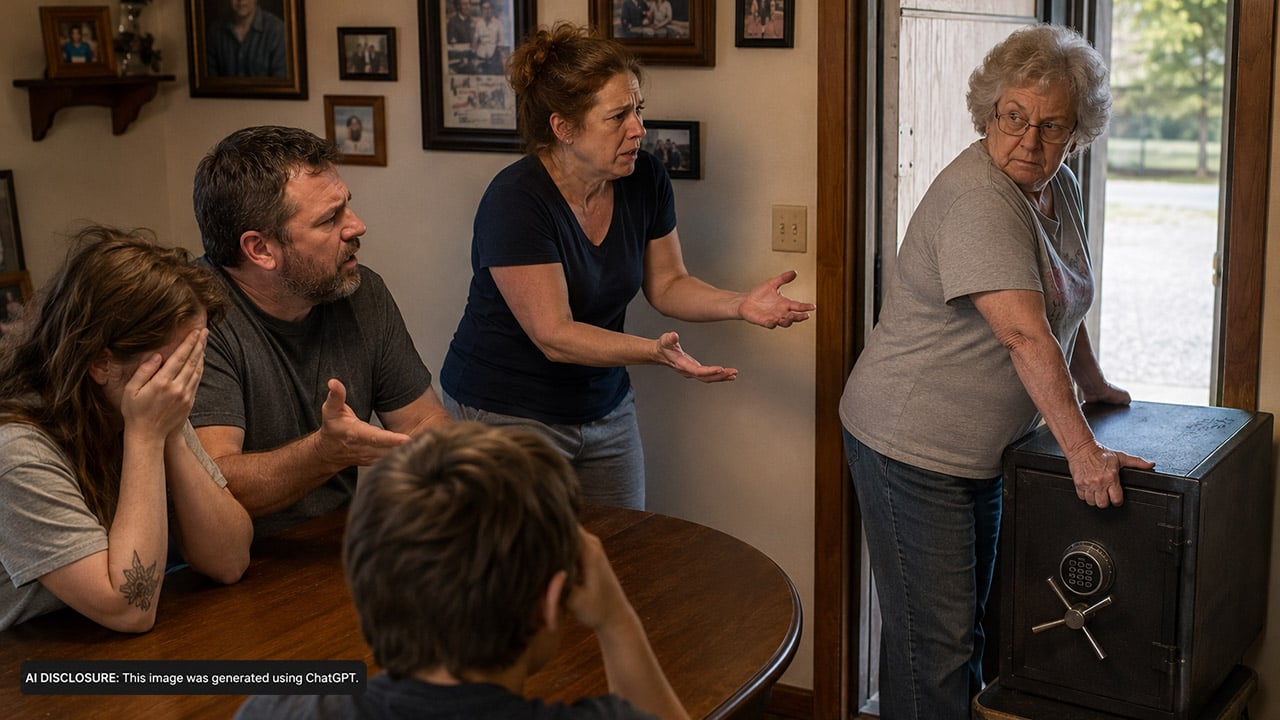
Photo credit: AI-generated image created using ChatGPT. Illustrative only
A gun safe doesn’t just walk out of a house. Somebody backs a truck up, puts hands on steel, and takes what isn’t theirs. That’s the kind of situation one West Virginia family says they’ve been living with ever since a refrigerator-sized safe full of firearms disappeared—at the hands of their own grandmother.
In the original post, the writer explains the alleged break-in happened about nine years ago, when they were around 12 years old. The safe reportedly held their father’s guns along with firearms that had belonged to their late grandfather—guns the family believed were supposed to be passed down to the two brothers.
A family “promise” replaced a police report
According to the account, the grandmother broke into the family home with help from relatives and took the entire safe. Afterward, she allegedly refused to return the father’s firearms and told the family she’d give them back when one of the boys turned 18.
That’s a move you’ll see in a lot of rural families: keep it “in the family,” don’t call the law, don’t make a scene. But when you skip the report, you also skip the paper trail—serial numbers, a formal theft record, and the early chance to recover stolen property before it changes hands.
The inheritance angle got messy fast
The writer says the guns originally belonged to their grandfather and were supposed to be inherited. But there’s a major complication: they say the grandfather’s will was never found, and the family suspects the grandmother destroyed it or otherwise kept it from being used.
That matters because “grandpa wanted the boys to have them” and “the estate legally transferred them” aren’t the same thing. In the gun world, folks treat heirlooms like handshake deals. In court, it often comes down to documents, probate records, and who legally owned what at the moment the safe got hauled off.
Nine years later, the trail goes cold—and crosses state lines
The writer didn’t pursue the guns when they turned 18, expecting them to show back up. When the younger brother turned 18, he did reach out—and was refused outright. That’s the point where the “we’ll return them later” line stopped being a delay and started looking like permanent possession.
This week, the writer started chasing the safe again, calling the grandmother directly. They say she claimed she sold the guns several years ago. Then the story shifted: the person the family was told was “harboring” the guns—her nephew—reportedly said he hadn’t seen them in a long time and that they were actually at his parents’ house. The guns were allegedly taken in West Virginia, stored at some point in Virginia, and the grandmother now lives in North Carolina.
For hunters and gun owners, the biggest issue is the missing documentation
The writer estimates there was at least $10,000 worth of firearms and ammo in the safe. That number is easy to believe if you’ve ever priced a decent safe, a handful of hunting rifles, shotguns, pistols, and a couple cases of ammo—especially if any of the guns were older, collectible, or wore good glass.
But value is only half the fight. The other half is proof: what exactly was in the safe, who bought it, and any serial numbers. When guns aren’t reported stolen and there’s no list, you’re trying to rebuild a vault inventory from memory almost a decade later. That’s tough in the best of circumstances, and it gets harder every year.
There’s also a safety and liability piece here that a lot of folks don’t think about. If those firearms were sold off quietly and one turns up at a crime scene or gets used in a negligent shooting, the first question investigators ask is where it came from. A clean theft report and serial numbers can help separate the rightful owner from the mess that comes later.
What people tended to focus on: time limits, who can sue, and whether “small claims” fits
The writer asked if there are grounds to sue and mentioned small claims procedure. They also added an edit acknowledging the likely reality: the parents (especially the father) may be the ones with standing to sue, not the adult child who was 12 when it happened.
That’s a big point. If the father owned many of the guns, it’s usually his claim to bring. If some guns truly belonged to the late grandfather, that may run through the estate—meaning an executor, an administrator, or whoever the court recognizes as the proper party in probate. In plain outdoorsman terms: you can’t just sue because you were “supposed to get them someday” unless the law recognizes that right.
The time factor is the other issue people lock onto in situations like this. States have statutes of limitations for theft-related claims and civil actions like conversion (wrongful control of property). When nine years have passed, even a strong story can run headlong into a deadline problem, especially if there wasn’t a police report and the dispute has been treated like a private family argument.
And small claims court may not be the best fit if the value really is in five figures, if multiple states are involved, or if ownership and inheritance have to be untangled first. That doesn’t mean nothing can be done—but it does mean “small claims” isn’t automatically the easy button.
The practical lessons: treat guns like guns, not like family furniture
This is the part that hits home for anyone who keeps firearms for hunting season, home defense, or as family heirlooms. A safe full of guns isn’t a box of old photos. It’s valuable property, it’s regulated in ways other property isn’t, and it carries long-term consequences if it disappears into the wild.
If you’re trying to prevent your own version of this: keep a written inventory with make, model, and serial number; store purchase receipts or photos; and consider how your estate plan actually reads on paper. If you inherit guns or plan to pass them down, make sure it’s spelled out clearly and stored where it can’t “vanish.” And if firearms are stolen—especially a whole safe—making a timely report isn’t being disloyal. It’s protecting yourself, your family, and the public.
For this West Virginia family, the hard reality is that a decade of silence can be as damaging as the original theft. Once guns are scattered, memories fade, people move across state lines, and the “it’ll come back when you’re 18” promise turns into a dead end. The best time to lock this down was nine years ago. The next best time is now—with documentation, level heads, and a clear plan that doesn’t rely on anyone’s word.
Like The Avid Outdoorsman’s content? Be sure to follow us.
Here’s more from us: