Photo credit: AvidOutdoorsman
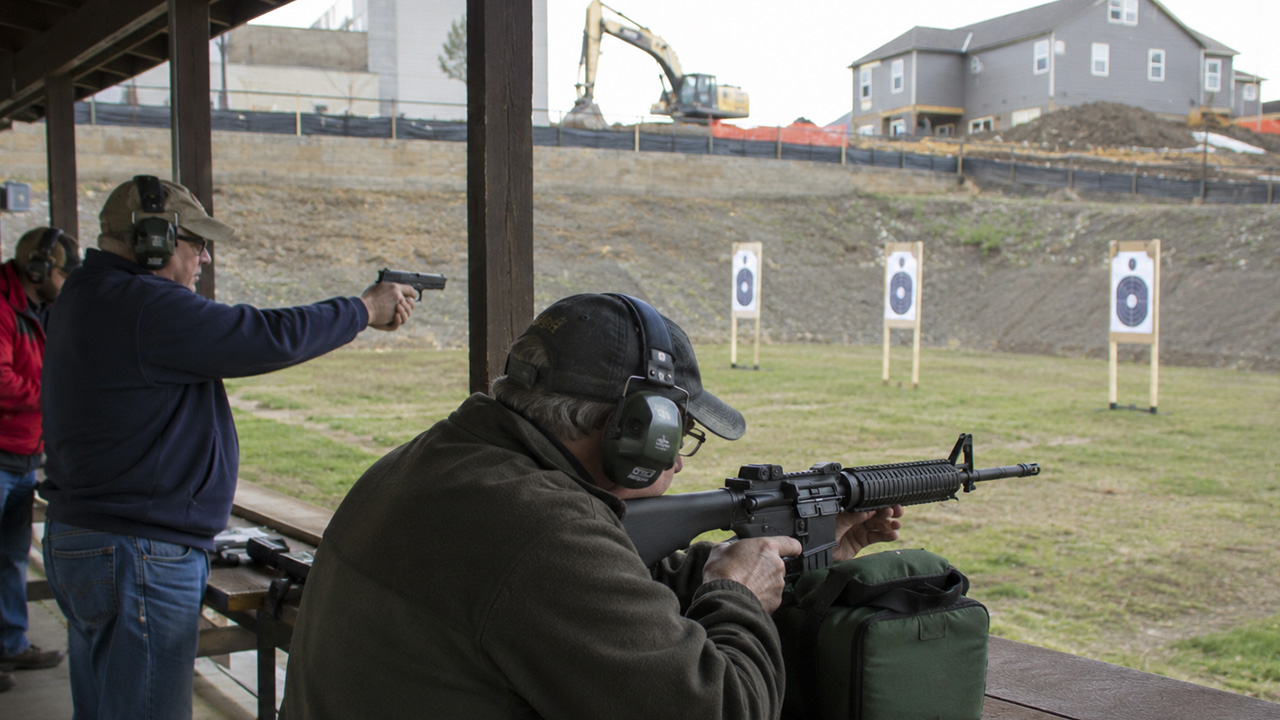
A lot of towns have a place where folks have been sighting in deer rifles since before some of today’s “luxury” subdivisions were even on the drawing board. A gravel drive, a sign that’s sun-faded around the edges, a couple of covered benches, and a backstop that’s been doing its job for decades. It’s not fancy, but it’s steady. And for years, it’s the kind of operation nobody talks about because it just works.
That’s why this latest fight hits a nerve: a long-running shooting range that went decades without trouble is suddenly staring down a shutdown attempt—right after a developer built next door and started pushing paperwork.
A range that kept its head down and did things the right way
For most of its life, the range ran like a lot of community ranges do. Posted rules at the gate. Hours that respected neighbors. No shooting over the berm. No steel too close. Keep the place clean or don’t come back. It served hunters getting ready for rifle season, retirees who liked to punch paper, and dads teaching kids to shoot a .22 without making it a circus.
And because it had been there so long, the people around it understood the deal. You’d hear a few shots on a Saturday morning, then it would quiet down. The range maintained a solid backstop, kept lanes pointed in a safe direction, and didn’t try to turn itself into a commercial “event” destination. That’s usually the recipe for peace.
The neighborhood changed, and the complaints showed up after the fact
The trouble started when a developer bought a chunk of land bordering the range and announced plans for new homes. Land that had been woods and pasture was suddenly full of survey stakes and equipment. Within a year or two, there were roofs and swing sets sitting within earshot of rifle fire.
Then came the complaints—noise concerns, safety fears, and the kind of language that tends to show up when someone’s trying to build a case. Instead of it being “that old range down the road,” it became “an unreasonable disturbance” and “a hazard.” A place that had been normal in the county for decades was now being treated like it appeared overnight.
The developer’s angle wasn’t subtle: if the range could be restricted, forced into expensive upgrades, or closed outright, the homes next door are easier to sell and less likely to draw buyers who don’t like gunfire.
The shutdown effort wasn’t about one bad day— it was paperwork and pressure
This didn’t look like a single incident where somebody did something reckless and the county had to react. It looked like the slow, administrative kind of squeeze that can put even a well-run range on the ropes. Petitions. Meetings. Requests for “re-evaluation.” Calls for new permits, new engineering studies, and new requirements that were never asked for when the range was established.
That’s the part a lot of rural folks recognize. You don’t always beat something by being right—you beat it by being able to afford the fight. If the range is volunteer-run or supported by member dues, a few rounds of lawyers and consultants can be enough to make people throw their hands up.
And developers know that. Even if the range ultimately has strong protections, the time and cost of proving it can be brutal. Meanwhile, the new neighborhood fills up with people who bought a “quiet country lifestyle” next to a place designed specifically for loud noises.
Safety got used as a lever, even with a berm and rules in place
Whenever a range is threatened, safety is the most powerful word in the room. It doesn’t matter if the range has decades of incident-free operation. If someone says “stray rounds” and “families,” the tone changes immediately.
To be fair, real safety issues do exist at some ranges—poorly built berms, shooters who ignore rules, or layouts that made sense when the land around it was empty but look questionable after development creeps closer. But in this case, the range’s supporters pointed to the long record: established firing lines, fixed directions, and a backstop that’s been maintained precisely because people care about not sending rounds where they don’t belong.
The argument from the pro-range crowd is simple: the range didn’t move. The houses did. And if a developer chooses to build next to a known shooting facility, the developer should be responsible for sound mitigation and buyer disclosure—not the folks who’ve been safely shooting there for generations.
Commenters zeroed in on “coming to the nuisance” and the importance of documentation
Outdoorsmen and gun folks tend to have a pretty unified reaction when a new neighbor shows up and tries to change the rules of a place that’s been there forever. The phrase that gets tossed around is “coming to the nuisance.” In plain terms: you don’t move next to a hog farm and then try to shut it down because it smells like hogs. Same goes for a range.
What people also focused on—and this part is practical—was documentation. Old aerial photos. County records. Any permits, letters, or approvals the range received over the years. Proof of operating hours. Proof of safety improvements. Proof of insurance. Even basic logs showing maintenance on berms and signage can matter when someone claims the place is unmanaged.
Another point that came up was communication without confrontation. A few hotheads always want to “show them” by shooting more. That’s a great way to hand the other side extra fuel. Most level-headed folks were pushing for the range to stay clean, stay professional, and let the record and the law do the talking.
The real consequences go beyond one range
If a range that’s been operating for decades can be pushed out just because development finally reached its fence line, it sends a message. It tells every other gun club, rod-and-gun association, and private landowner with a backstop that they’re one new subdivision away from becoming a “problem.”
And when ranges disappear, the effects show up fast. Hunters lose a place to sight in before season. New gun owners lose a controlled environment to learn safe handling. Concealed carry folks lose a place to maintain skill. The only thing left is driving farther out, or worse, people practicing in unsafe spots because there’s nowhere legal and established to go.
The irony is that pushing ranges out doesn’t reduce shooting. It reduces supervised shooting. It takes something structured and forces it into the shadows of public land pull-offs and questionable backstops.
What a range can actually do when development crowds the fence line
Range boards and landowners usually have a handful of realistic options, and none are fun. First is tightening operations: clear posted hours, strict enforcement, and visible safety practices that are easy to explain to an inspector or a judge. Second is investing in mitigation—better berm work, baffles where appropriate, and signage that removes ambiguity about where firing is allowed.
Third is political: showing up at meetings, bringing members, and speaking like regular people. Not angry, not defensive—just factual. The range was there first. The range serves the community. The range has a record of safe operation. If the county wants to require changes, those changes should be reasonable and based on real risk, not a developer’s marketing plan.
And finally, there’s the hard conversation about future-proofing. If the writing is on the wall, some clubs start looking for new property long before they’re forced out. It’s expensive, and it’s heartbreaking, but it’s sometimes the only way to keep a shooting community alive long-term.
Most folks I know don’t want conflict with new neighbors. They just want a safe place to shoot, to teach their kids, and to stay ready for hunting season. The problem is, when development meets an old-range fence line, “live and let live” gets replaced by lawyers and zoning boards. If this range survives, it’ll be because the people behind it stayed organized, stayed professional, and refused to be quietly erased by someone who showed up late and demanded the area change to fit a sales brochure.