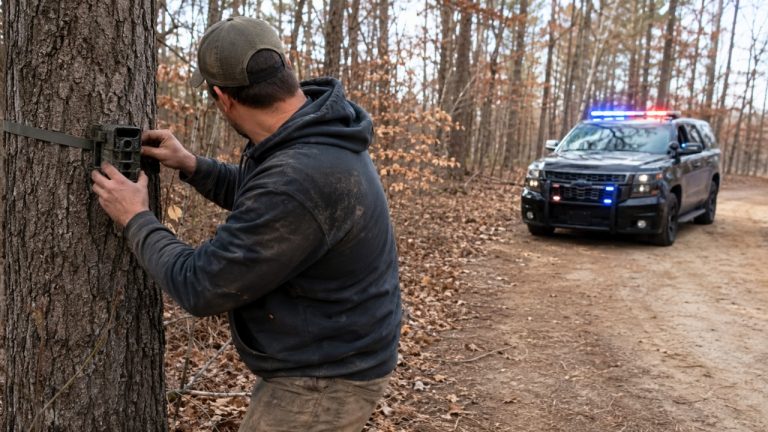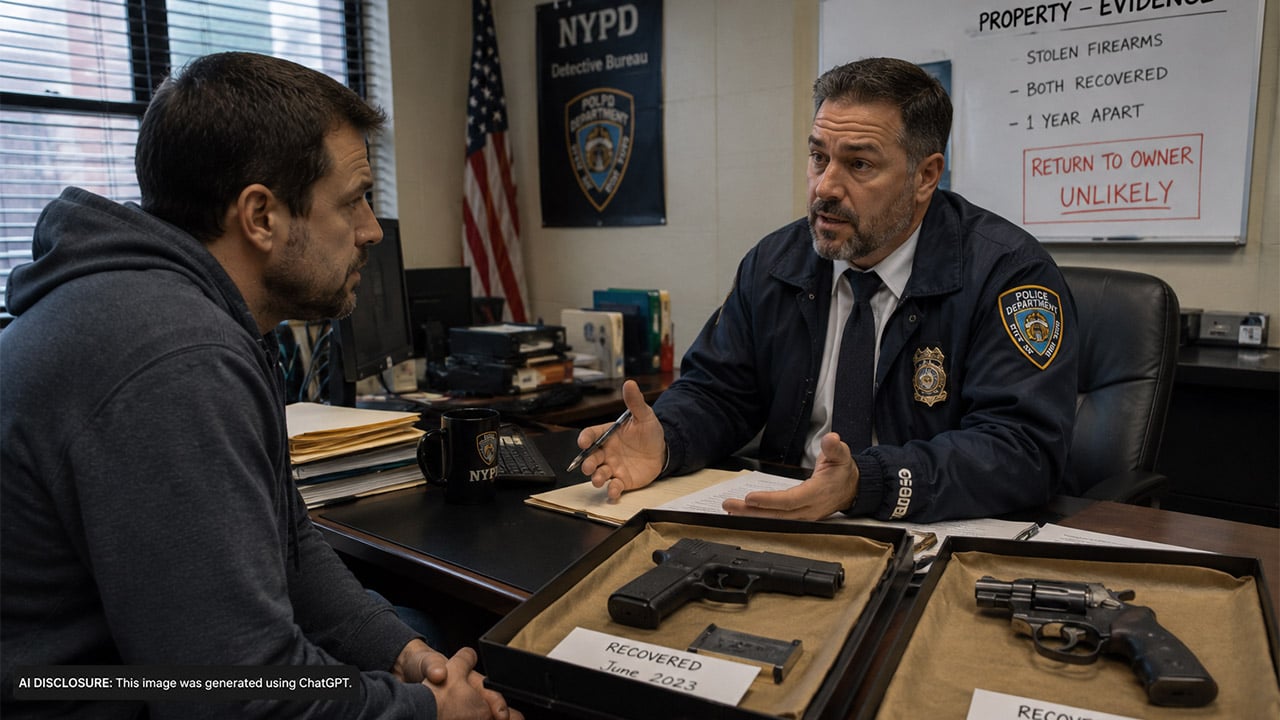
Photo credit: AI-generated image created using ChatGPT. Illustrative only
Getting a stolen gun back feels like it should be the easy part once law enforcement recovers it. You did the report, you kept your serial numbers, you can identify it—so hand it over, right? But a New York gun owner learned it doesn’t always work that cleanly, even when the firearms turn up.
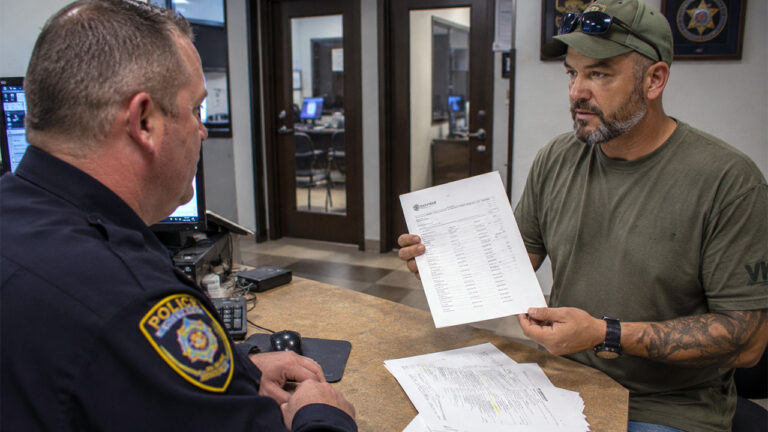
In the original post, the owner said both of his stolen guns were recovered—one a year ago, and the second just recently. When he met with detectives to verify the latest gun, he discovered the serial number on his police report didn’t match what had been recovered. He brought his own records, confirmed the recovered firearm was his, and then got hit with the news he wasn’t expecting: detectives told him he would “likely not” get it back even after the trial is over.
Two recoveries, a year apart, and paperwork problems from the start
The details are the kind that make any gun owner’s stomach tighten. The poster had two firearms stolen, then had them recovered in separate incidents spaced about a year apart. That’s already a long stretch to sit with the worry that a gun with your name tied to it might be floating around in the wrong hands.
When the most recently recovered gun came up, the owner met with detectives specifically because the serial number in the original police report didn’t match what investigators had. That’s a big deal. Serial numbers are the thread that ties ownership, reports, evidence, and return of property together. If that thread is frayed—wrong digit, transposed number, sloppy entry—everything downstream gets harder.
The moment of relief didn’t last long
Still, he did what you’re supposed to do: showed up, verified the firearm matched his serial number, and confirmed it was his. That should have been the “good news” ending, or at least the start of the process of getting his property back.
Instead, detectives told him—for the first time—that he’d probably never see it again, even after the trial. They advised he could write a letter to the county DA or ADA, but made it clear there was no guarantee that would change the outcome.
That’s the part that hits home for outdoorsmen. A rifle or shotgun isn’t always just an object; it’s a tool you trust, something you’ve carried in the woods, maybe something handed down. The owner said one of the recovered guns was sentimental. The other, he explained, was being held for a family member during a move and was “co-registered.”
Why “recovered” doesn’t always mean “returned”
Folks who don’t deal with the system assume recovered property goes back to the owner once the case is done. In practice, firearms can get tangled in evidence rules, administrative policies, and licensing requirements that don’t apply to a stolen chainsaw or a missing tackle box.
Even without getting into a specific county’s policy, the basic conflict is easy to understand: if a gun is tied to a criminal case, prosecutors may want it preserved as evidence. That can stretch out well beyond the arrest, especially if there are multiple defendants, charges that change, delays, or plea negotiations that don’t wrap everything up neatly.
And sometimes, even when the criminal part ends, the administrative part begins. Departments can be cautious about returning firearms, especially if they believe a return could create liability, violate a local process, or bump into state-level rules. The poster’s experience—being told “likely not” to get it back—suggests he’s facing more than a simple evidence hold.
What the detectives suggested: a letter to the DA or ADA
The practical option presented to him was writing to the county District Attorney’s office (or an Assistant District Attorney). That’s a very real, boots-on-the-ground step, and it’s often where these things actually get decided: not at the front desk, not in a quick phone call, but by the prosecutor’s office controlling evidence release.
The owner’s question was straightforward: Has anyone actually gotten recovered guns back, and did they have to write a letter? He also asked what he’d even say—especially with one gun having sentimental value and the other being connected to a family member and co-registered.
If you’re in that spot, the letter isn’t about emotion as much as clarity. You’re trying to make it easy for the prosecutor to say “yes” without taking on risk: confirming your ownership, referencing the police report and the correct serial number, asking for the procedure to request return of property, and asking for the release when it’s no longer needed as evidence. Sentimental value matters to you, but process and documentation tend to matter most to the office.
Why gun owners should treat serial numbers and reports like tags on a trophy
The serial-number mismatch is a lesson a lot of people learn the hard way. If the number on the report is wrong, you can end up having to prove what should already be obvious. That’s extra time, extra stress, and sometimes extra legal cost.
Gun owners do a better job than most at keeping records, but it’s worth being almost obsessive here. Keep photos of the serial number and the whole firearm. Keep copies of purchase documents if you have them. If you ever have to file a report, ask to review the serial number entry before it gets finalized, if that’s an option. It’s the same mindset as checking your hunting license before you leave the truck—because the mistake never shows up until it hurts.
And on the storage side, this is another reminder that theft isn’t just about losing property. A stolen gun creates risk for you and everyone around you. Safes, lock boxes, alarms, cameras, and not advertising what you’ve got aren’t “paranoid”—they’re practical.
The uncomfortable reality: you may need a lawyer just to get your own property back
The poster opened by asking for a lawyer recommendation in the western counties of New York. That tells you where his head is: he’s already anticipating a fight, and he’d rather get out in front of it than wait until months turn into years.
In a perfect world, you wouldn’t need legal help to retrieve lawfully owned firearms that were stolen from you and later recovered. In the real world, having an attorney who understands the local courts and the return-of-property process can be the difference between an indefinite “no” and a clear, documented path forward.
Whether he ends up getting either firearm back isn’t something we can predict from the details provided. What’s plain is this: “recovered” is not the finish line, and in places with heavy firearms regulation and cautious evidence practices, the road between those two words—recovered and returned—can be longer than the original year he waited to see the second gun again.
Like The Avid Outdoorsman’s content? Be sure to follow us.
Here’s more from us: