Photo credit: AI-generated image created using ChatGPT. Illustrative only
In a lot of small towns, the same handful of folks wear more than one hat. One guy might teach your kid’s history class, coach your boy’s Little League team, preach on Sunday, and still have time to set up a table at the local gun show on the weekend.
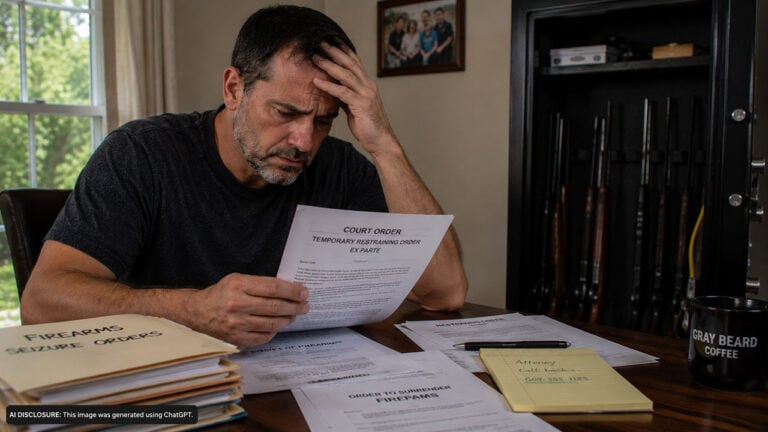
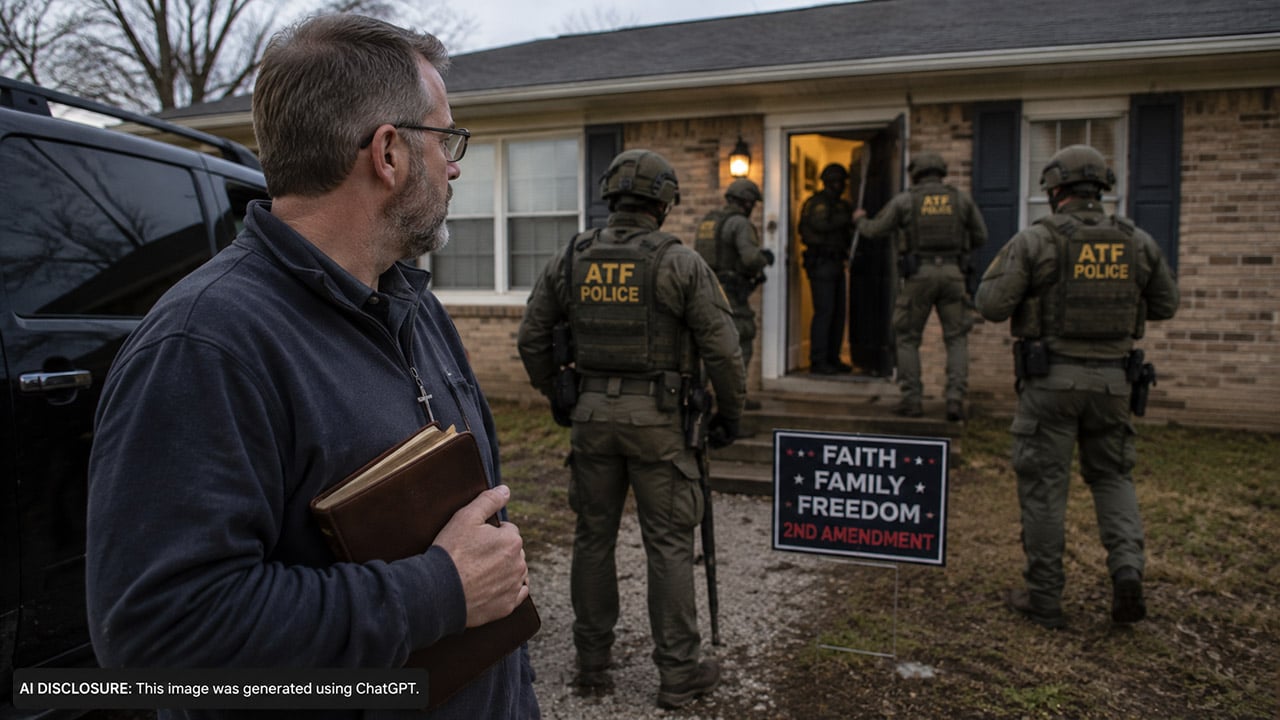
That’s the picture painted around Russell Fincher in the account shared in the original post: a part-time Oklahoma Federal Firearms License (FFL) holder whose home was raided by an ATF SWAT team and whose guns were confiscated. The details are thin, but what’s there is enough to make any law-abiding gun owner sit up straight.
A small-town “kitchen table” FFL with a full-time life
Fincher is described as 52 years old and living in Tuskahoma, Oklahoma—one of those places where “everybody knows everybody,” in no small part because there aren’t many people to begin with. The source material puts the population at around 151.
He isn’t presented as a full-time retailer with a big storefront. He’s had his federal firearms license for three years and operates the way many rural, part-time dealers do: no brick-and-mortar shop, just the paperwork, the compliance requirements, and the hustle of buying and selling to keep the side business going.
Gun shows were the core of the business
According to the account, Fincher sold most of his firearms at gun shows. That’s an important detail because, for a lot of hunters and working folks, gun shows aren’t a novelty—they’re where you find the oddball used rifle, the older revolver, the fair deal on a trade-in, or the guy who can actually get the model you’ve been looking for.
The source specifically mentions Wanenmacher’s Arms Show in Tulsa, which is a major event that draws buyers and sellers from well beyond Oklahoma. For a part-time FFL, shows like that can be the difference between making the numbers work or shutting the whole thing down.
The raid: SWAT team, home entry, and confiscated guns
The heart of the story is the claim that an ATF SWAT team raided Fincher’s home and confiscated his guns. That’s not a casual “knock and talk,” and it’s not what most people picture when they think about how licensing issues or paperwork problems get handled.
The source material doesn’t lay out what triggered the raid, what was said at the door, or what specific items were taken beyond “his guns.” It also doesn’t list any charges, an arrest, or a court outcome. But even without those pieces, the practical reality hits hard: when law enforcement shows up at your home with that level of force, your family’s day changes in a hurry.
Why this hits regular gun owners differently
Most outdoorsmen understand the difference between criminals and paperwork. If you’ve ever renewed a hunting license, dealt with a tag mix-up, or tried to straighten out a registration or serial-number issue on an older firearm, you know that small administrative problems can become big headaches—fast.
This situation also touches a nerve because “kitchen table” FFLs are common in rural America. They’re the guys who will meet you at a show, answer your questions straight, and sometimes help you find a rifle that fits a kid or a smaller-framed shooter without trying to upsell you. When one of those dealers gets hit with a raid, a lot of folks hear a warning shot over the bow, whether that was the intention or not.
The talk about shutting down gun shows
The phrase tied to the incident—“We’re shutting the gun shows down”—is the kind of line that spreads because it’s blunt and it cuts right to what people fear: losing access to lawful buying and selling venues they’ve used for years.
The source material doesn’t provide a full quote in context, who said it, or whether it was said exactly that way during the raid. But the fact that the story is framed around gun shows tells you where the pressure point is. If your business depends on traveling to shows, and your inventory gets seized, you don’t just lose products—you lose your ability to operate at all.
Practical takeaways for law-abiding gun owners and small FFLs
This isn’t legal advice, and the story doesn’t give enough specifics to diagnose what happened. But it does underline a few practical realities that matter to regular gun owners and especially to anyone who’s ever thought about getting an FFL or doing business through one.
First, compliance isn’t an abstract concept when you’re dealing with regulated items. Recordkeeping, secure storage, and having your process squared away matters—because when things go sideways, they tend to go sideways at full speed. Second, separating personal firearms from business inventory and maintaining clean documentation can be the difference between a hard conversation and a life-altering one, even if you’re otherwise a “normal” community guy.
And for everyday buyers: know who you’re dealing with, keep your own receipts and transfer paperwork organized, and don’t treat a gun-show purchase like it’s somehow outside the real world. If a seller’s inventory gets tied up in an investigation, even innocent customers can find themselves scrambling to prove what they bought, when they bought it, and how the transfer was handled.
Fincher is described as a teacher, a pastor, a coach, and a part-time gun dealer—exactly the kind of neighbor a lot of rural communities rely on. Whatever the backstory turns out to be, the immediate lesson is clear: when enforcement escalates to a raid and confiscation, the impact doesn’t stay contained to one person’s side business. It ripples out through families, customers, and the local gun culture that depends on those weekend tables and handshake conversations.
Like The Avid Outdoorsman’s content? Subscribe to our newsletter so you never miss an article.
Here’s more from us: