Photo credit: AI-generated image created using ChatGPT. Illustrative only
Seeing a black bear wander the edge of the yard can get your heart rate up, especially if you’ve got grandkids around, bird feeders hanging, or a dog that thinks it’s ten feet tall. But in Minnesota, what you do in that moment matters—and a Brainerd man is learning that the hard way after a neighbor reportedly heard shots and called it in.
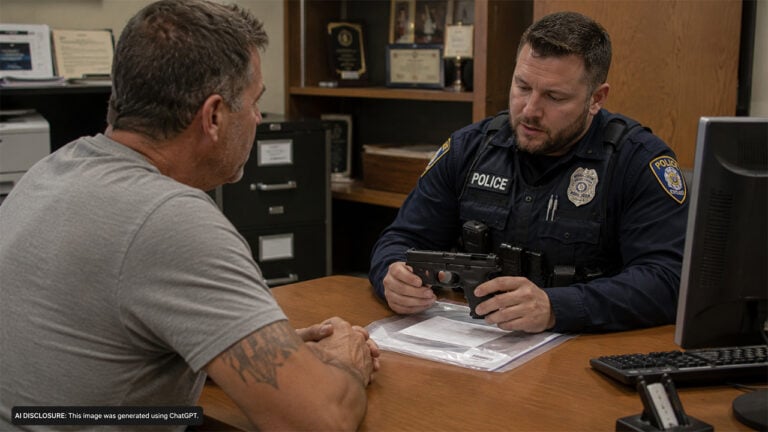
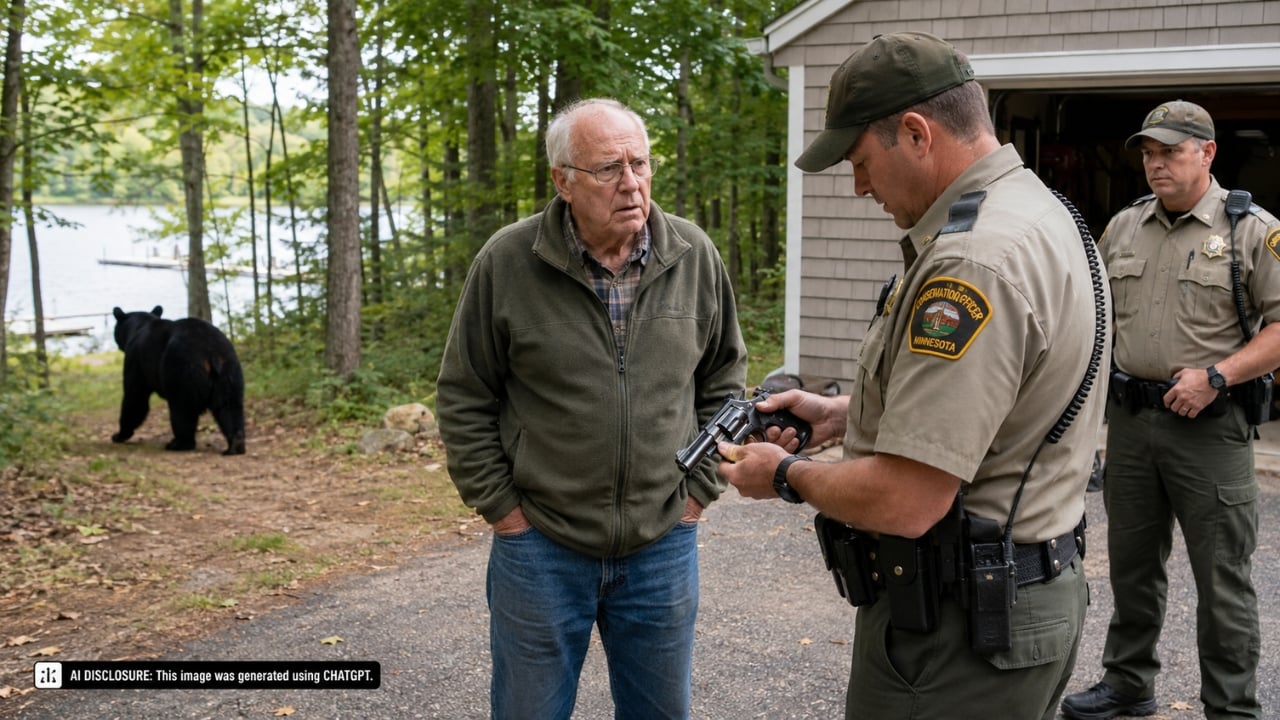
Details in the original post say 81-year-old Dwight Joseph Brown was cited by the Minnesota Department of Natural Resources after authorities say he shot at a black bear in a neighborhood near North Long Lake, about 10 miles north of Brainerd. The citation alleges he took big game outside the legal hunting season, a gross misdemeanor, and wardens seized a handgun and ammunition as evidence.
A neighbor’s call brought a conservation officer to North Long Lake
According to the citation, law enforcement received a report July 3 of someone shooting at a bear in a neighborhood setting. DNR conservation officer Jim Guida responded, but he didn’t find evidence the bear had damaged property. He also noted the bear was on someone else’s property and was “not a substantial threat.”
Those details matter because they frame the whole case: this wasn’t a bear tearing into a chicken coop, ripping soffit off a cabin, or actively threatening someone. It was, by the report, simply a bear moving through the area.
“The bear looked at him” isn’t a legal standard
The most blunt line in Guida’s report is also the one that’s going to stick with hunters and gun owners reading it: “Shooter indicated that the bear looked at him.” In the outdoors, animals look at you all the time. A whitetail will lock eyes with you at 40 yards. A raccoon will stare holes through you from a tree. A bear will absolutely size you up while it decides whether to leave or keep feeding.
But “it looked at me” isn’t the same as “it charged me” or “it was attacking my livestock.” Minnesota law allows people to kill nuisance bears only in limited circumstances—like significant property damage or immediate danger to people or animals. The story also notes that damage to bird feeders or unsecured garbage cans is not considered a legitimate reason.
Brown says he fired to scare it, and the neighbor wasn’t impressed
Reached by phone, Brown told MPR News he was driving a garden tractor into his garage when he saw the bear standing near the edge of his driveway. He said he shot at the bear to scare it, didn’t hit it, and the bear ran off into the woods.
Brown also said he lives “in the country” and believed there was no chance of him hitting other houses. But a neighbor reportedly yelled at him and called authorities. Brown didn’t hide his frustration about that part, saying, “I’m not happy with my neighbor.”
This is where rural reality and legal reality collide. Plenty of folks feel like they should be able to handle a problem animal on their own place. But in a neighborhood near a lake, even “country” can mean other homes, other property lines, and other people who don’t share your comfort level with gunfire—or your read on what’s threatening and what isn’t.
The bear wasn’t found, and that’s part of the problem
One of the ugliest parts of shooting at wildlife—especially with the stated goal of “scaring it”—is you can’t always know what you did. In this case, the bear wasn’t located afterward, and authorities don’t know if it was injured.
That’s not just a bureaucratic detail. Wounding an animal and sending it into the timber is about the worst outcome you can have: it may die slow, it may suffer, and nobody can even confirm what happened. Guida put it plainly in the story: “It’s hard for me to understand why somebody would shoot something to have it run off into the woods and die.”
Why wardens took the handgun, and why that surprises people
When a case involves an alleged illegal taking of big game, it’s not unusual for officers to seize the firearm and ammunition believed to be involved as evidence. That part tends to shock people who haven’t dealt with game violations before, because they think of it like a warning-level incident: no animal recovered, no confirmed injury, no carcass.
But from an enforcement standpoint, the action being investigated is the shot itself. The citation in this case was for taking big game outside the legal season, and the seized handgun becomes part of documenting what happened.
Whether someone agrees with it or not, it’s a reminder that “I only fired to scare it” can still bring real consequences if it doesn’t fit the nuisance-wildlife rules in your state.
What the DNR says works better when bears show up around the house
Black bears near homes aren’t rare in Minnesota, especially in spring and early summer when they’re roaming for food. The DNR’s advice is simple and it’s the same playbook that works in bear country everywhere: remove the attractants.
In this case, the story specifically mentions keeping garbage cans inside and putting away bird feeders. Once bears have a wild food source available, Guida said they often shy away from public interaction and would rather eat naturally produced foods than mess around with people.
And if you do find yourself looking at a bear in the driveway, Guida’s recommendation is about as practical as it gets: treat it like a deer. Admire it from a safe distance, take a photo if you want, and retreat indoors. “Retreat to your residence, shut the garage door,” he said, and think twice before going to grab a firearm.
Bear attacks on people are very rare in Minnesota, and the DNR says there have been no fatal bear attacks in the state. The agency also said it only kills bears after determining they pose a public safety threat, which happens fewer than six times per year on average.
At the end of the day, this Brainerd incident is a clean example of how fast things can go sideways when a “nuisance animal moment” turns into a gunshot decision. A bear strolls by, a neighbor hears it, wardens show up, and now there’s a gross misdemeanor citation and a seized handgun sitting in an evidence locker. If you live where bears do, the best move is usually the boring one: lock up food, give them space, and let them move on.
Like The Avid Outdoorsman’s content? Subscribe to our newsletter so you never miss an article.
Here’s more from us: