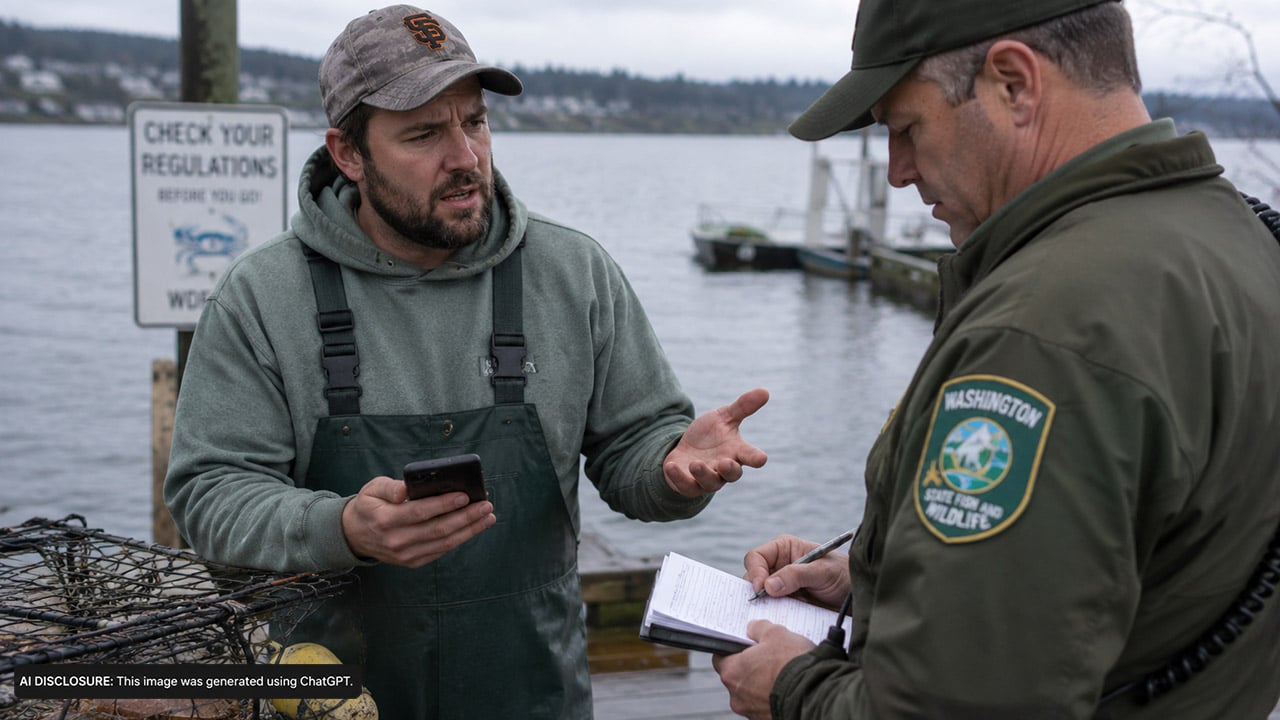
Photo credit: AI-generated image created using ChatGPT. Illustrative only
Most of us who crab or fish in Washington have done the same thing at least once: check the rules online, double-check the notes on your phone, and head out thinking you’re squared away. That’s why a recent crabbing citation story caught my attention—because the couple involved believed they were following the limits they’d found, only to be told on the pier that they were over. The details came from the original post describing the encounter and the questions that followed.
In short, a husband and wife were crabbing in Washington when two fish and wildlife officers showed up and did what they do: checked catches and counted crab. The couple thought they were at their limit for one species and still under on another. The officers’ count said otherwise, and the couple walked away expecting a citation and possibly a required court appearance.
A normal crabbing day that turned into a count-and-cite
According to the account, the couple had been keeping track of their catch on a phone while crabbing from a pier. They believed they were “at our limit for Red Rock crab and 2 under our limit for Dungeness,” so when they noticed officers checking other crabbers nearby, they didn’t panic.
About 25 minutes later, the officers came over and counted the couple’s crab. That’s where the day changed. The officers told them the count put the couple five crab over their combined red rock limit, and that a citation was coming.
Why rules confusion hits crabbers harder than they expect
The tricky part with shellfish regs isn’t just remembering a number. It’s that the rules can vary by marine area, species, and season, and they’re enforced by what the officers are using as the controlling regulation for that day and place.
The headline angle here is the kind of thing outdoorsmen complain about every year: somebody reads one rule set online, then the printed rulebook or official enforcement reference doesn’t match what they thought they read. Whether it’s a change mid-season, an area-specific exception, or just plain misunderstanding, the end result is the same on the pier—your cooler gets counted, not your intentions.
The moment that matters: cooperative doesn’t mean “no ticket”
The couple said they were cooperative and truthful, and they described the officers as generally friendly. That tracks with what most of us see in the field. A lot of game wardens aren’t out there looking to get into it with folks—they’re doing checks, keeping order, and trying to keep the resource from being hammered.
But friendliness and cooperation don’t erase an over-limit situation. In the couple’s own words, they believed that if they’d wanted to be sneaky they could have tossed crab back over the pier once they saw officers nearby. They didn’t do that, and it’s good they didn’t. Still, the enforcement decision comes down to what was possessed at the time of inspection.
Infraction or misdemeanor: the career worry is real
The biggest stress point in the post wasn’t the fine. It was the fear that the citation could turn into something more serious—specifically, the couple worried they might both be charged with “unlawful fishing in the second degree,” which they understood to be a misdemeanor.
That’s not an uncommon worry for working folks. An outdoors mistake can feel like it’s about to spill into your professional life, especially if you hold a job that’s sensitive to criminal convictions, background checks, or licensing. The couple said this would be their first offense, and they were trying to figure out what they were actually facing before the citation even arrived.
In plain terms: in many states, wildlife violations can range from civil infractions (ticket-like) to criminal charges depending on the statute, the species, the number over limit, and whether there’s aggravating conduct. And it’s not always obvious to the average person which bucket a specific violation falls into until they see what’s written on the actual citation.
What outdoorsmen can take from this before the next pier check
If you crab, there are a few habits that keep a fun day from becoming an expensive lesson. First, don’t rely on a single source you glanced at once. Regulations get updated, emergency rules happen, and area rules can change what “the limit” really means depending on where you’re standing.
Second, track your catch like it’s going to be inspected—because it might be. A phone note is better than nothing, but it’s also easy to fat-finger or miscount when you’re rebaiting pots, measuring, dealing with kids, or handling multiple species. A simple written log in a small notebook or a dedicated counter can be harder to mess up under pressure.
Third, know what “combined limit” means for the exact water you’re on. The couple believed their combined limit for red rock was 12. The officers’ count suggested they were five over that combined limit. Whether that came from a misunderstanding of species limits, sex limits, area limits, or the difference between what someone read online versus what enforcement referenced, the key point is that over-limit possession is what got enforced.
Finally, if you do get checked, don’t play games. Staying calm and respectful won’t magically void a violation, but it keeps the situation from getting worse. And it protects you from saying something dumb in the moment that you regret later.
The hard truth is this: on the water, “I thought the rule was different” usually doesn’t carry the day. The best defense is making sure you’re looking at the most current, area-correct regulation before you ever drop a line or set a pot—and then counting like a warden is going to show up right when you’re distracted.
Like The Avid Outdoorsman’s content? Subscribe to our newsletter so you never miss an article.
Here’s more from us: