Photo credit: AI-generated image created using ChatGPT. Illustrative only
Ordering a firearm online is supposed to be the easy part. Find what you want, pay for it, have it shipped to your local FFL, do the paperwork, and head home. But one buyer learned the hard way that if you don’t slow down for a basic check at the counter, a simple mistake can turn into an ugly mess.
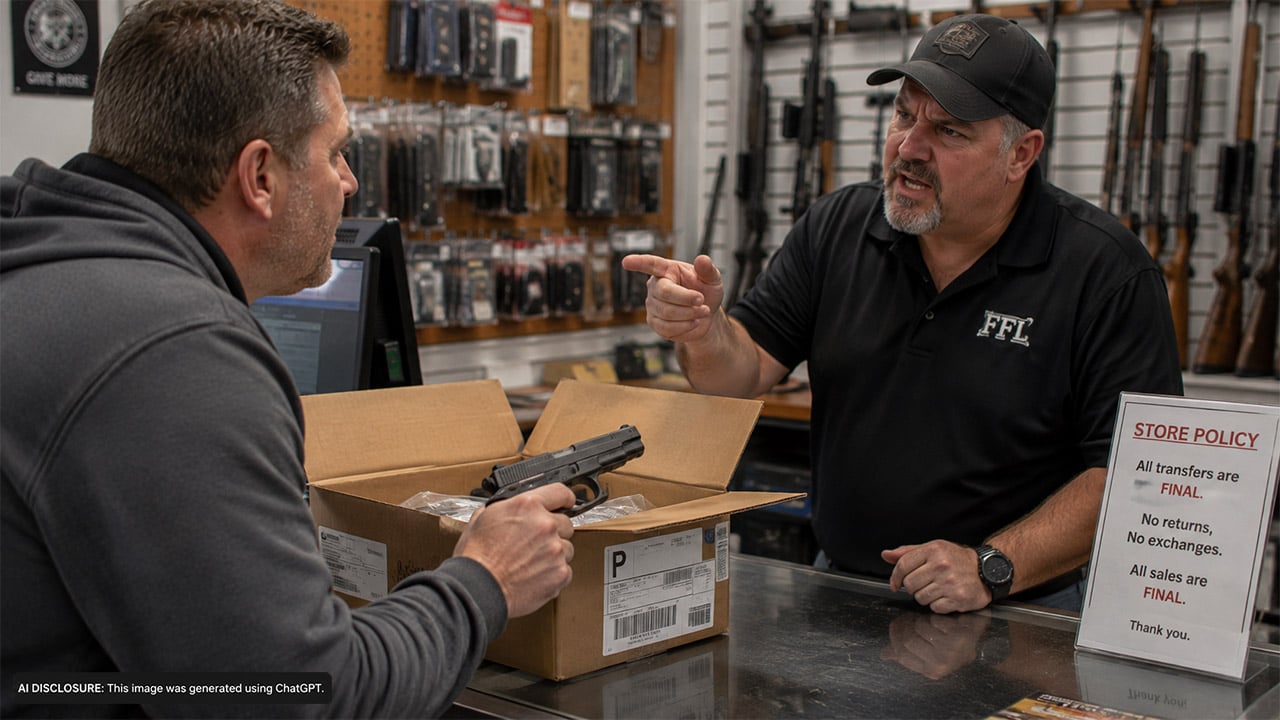
In the original post, the buyer picked up a handgun they’d ordered but didn’t open the box at the shop. Not long after, they got a call: the firearm they walked out with wasn’t the exact one they ordered. It was a different color and, to make it more complicated, it was also slightly more expensive.
The mix-up happened at the worst possible moment
This wasn’t a case of “wrong shipping label” on a pair of boots. A firearm transfer is one of those transactions where serial numbers and paperwork matter, and once you leave the premises, the situation gets harder to unwind.
According to the post, the buyer picked up the firearm without opening the box first. That’s a pretty relatable mistake—most folks assume the shop handed them the correct item because that’s the whole point of using an FFL. But that one skipped step meant the buyer didn’t catch the color mismatch until after the transfer was complete.
A small detail made it more complicated: it had been used
The buyer didn’t just discover the wrong gun and set it aside. The post indicates the firearm was “slightly used.” That detail changes everything, because now it’s not simply a wrong-item return the way it might be with other gear.
In gun-owner terms, “slightly used” can mean a range trip, a function check, a bit of handling, or even just the normal signs that come with loading/unloading and holstering. Regardless of what “slightly” means here, it gave the FFL a reason to dig in their heels and treat it like the buyer created the problem instead of the shop doing it.
The buyer tried to do the reasonable thing
What most outdoorsmen would do in that spot is exactly what the buyer offered: bring it back and straighten it out. That’s the common-sense move—nobody wants the wrong gun, and nobody wants mismatched serial numbers floating around on paperwork.
But instead of a calm, professional “Come in and we’ll make it right,” the response from the local FFL reportedly came with a price tag. They wanted $80, even though the buyer was offering to return the firearm.
The FFL’s threat turned it from a mistake into a standoff
The part that really raised eyebrows was the alleged threat: pay $80 or they’d report the firearm stolen. That’s a serious escalation over what started as a color mix-up and a handling issue.
Most gun owners hear the phrase “reported stolen” and immediately think about traffic stops, insurance headaches, and getting dragged into a situation you didn’t ask for. Even if you know you didn’t steal anything, the idea of your serial number being entered into a system as stolen is the kind of thing that can ruin your week in a hurry.
It also puts the buyer in a terrible spot. On one hand, they don’t want to pay a fee that feels like a shakedown. On the other hand, they want to avoid any situation where they’re holding a firearm someone is claiming was stolen—especially when they picked it up through the proper channel.
What people zeroed in on: paperwork, serial numbers, and leverage
The reactions summarized in the source material are pretty blunt: “As if.” That tone tells you what a lot of experienced folks were thinking—an FFL making a shipping mistake and then threatening a stolen-gun report unless money changes hands doesn’t pass the smell test.
When gun people talk through scenarios like this, they tend to focus on a few nuts-and-bolts realities. First, the serial number is the whole ballgame, and the buyer’s transfer paperwork should reflect what they actually took possession of. Second, the shop has obligations, too—if they transferred the wrong item, that’s not the buyer sneaking something out the back door.
And third, threats are often a form of leverage. The $80 itself isn’t a fortune, but it’s enough to make a buyer consider paying just to make the stress disappear. That’s exactly why these situations need to be handled calmly and documented, not negotiated under pressure.
The best lesson here is one you can use at your own gun counter
There are a few practical takeaways for anyone who buys guns online—especially hunters and rural folks who may have a long drive to the “closest” FFL and don’t want to make two trips. The big one is simple: open the box at the counter and confirm the basics before you walk out. Check the model, color, and—most importantly—the serial number against the paperwork.
If something is off, don’t accept the transfer and “sort it out later.” Once it’s in your name and you’ve left, you’re no longer dealing with a clean shipping error. You’re dealing with a transferred firearm, a business relationship, and potentially a disagreement about who is responsible for making it right.
This story also underlines why it pays to choose your FFL like you choose a mechanic. A good shop is straightforward: they explain the process, they handle mistakes professionally, and they don’t use threats when a customer is trying to fix a problem. If a shop’s first move is to demand a fee and bring up a stolen-gun report, that’s not the kind of place most folks want handling their transfers in the future.
At the end of the day, a wrong-color firearm should be an annoyance, not a showdown. But once money demands and stolen-gun threats enter the picture, it’s no longer just about preference or price—it’s about protecting yourself, your record, and your peace of mind.
Like The Avid Outdoorsman’s content? Be sure to follow us.
Here’s more from us: