Photo credit: AI-generated image created using ChatGPT. Illustrative only
Lending a firearm to somebody you trust feels simple in the moment. A friend is scared, the nearest deputy is a long way off, and you figure a little help buys them some peace of mind. But when months turn into a year, and the person who borrowed it suddenly goes silent, that “favor” turns into a real-world problem fast.
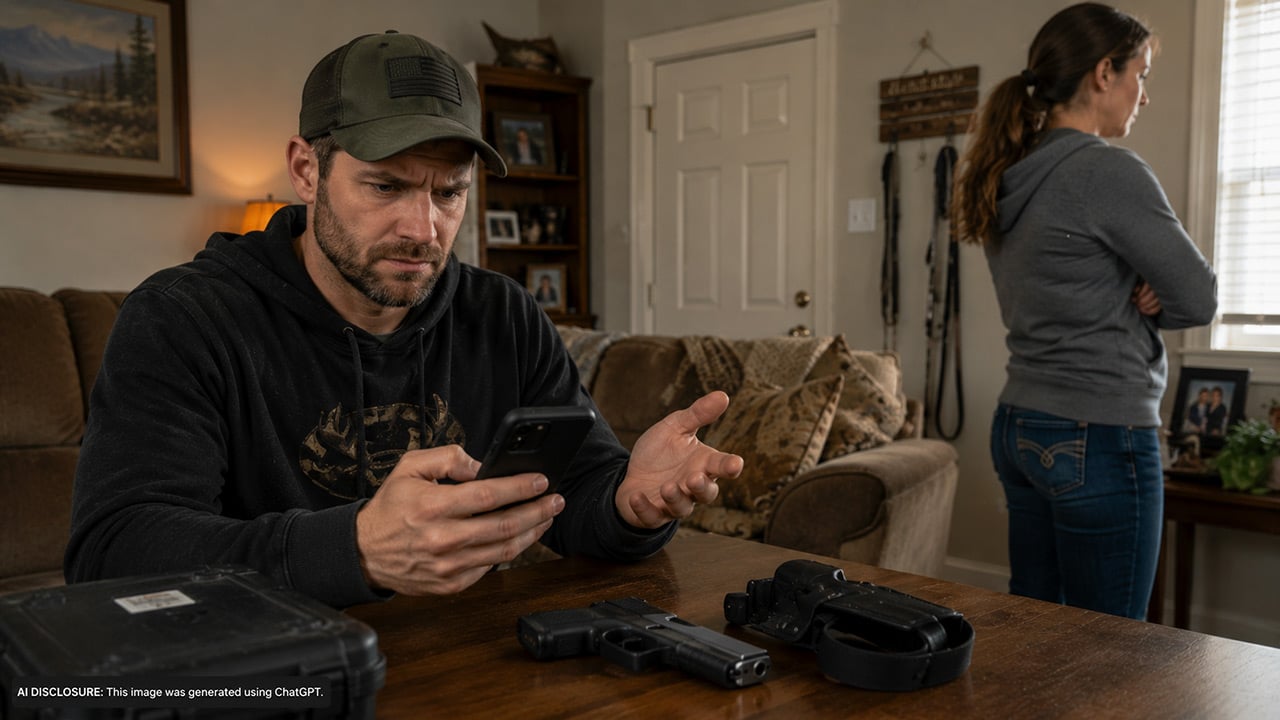
That’s the spot one Idaho gun owner says he’s in, based on the original post. He loaned a pistol to a friend who was dealing with a stalker and living far enough out that police response could take an hour. Now he wants his handgun back—and the friend has blocked him on his phone and social media.
A handshake loan turned into a one-way transfer
According to the Idaho man’s account, he bought the pistol through an FFL and still has the paperwork, serial number, and photos. At the time, he believed he was helping a friend through a tense situation: a stalker had been on her property multiple times, and she lived remote enough that help wouldn’t be quick.
A year later, the owner asked for his firearm to be returned. That’s when things shifted. Instead of a conversation, he got blocked—cell number, Facebook, Instagram, the whole deal. He also says he knows the friend’s address, which creates a temptation a lot of rural folks understand: just drive out there and handle it face-to-face.
Why this gets serious for both people
Gun owners tend to think in practical terms: possession, responsibility, and what happens if something goes sideways. When a firearm is out of your hands but still tied to your purchase records, it can keep you up at night for good reason. Even if you didn’t “transfer” it formally, your name is still attached to that gun in a way that matters when questions start getting asked.
On the other side, the friend is now holding onto a firearm she didn’t purchase—while also refusing contact with the owner. Even if she feels she still needs it for protection, cutting off the person who owns it is a bad move. It turns something understandable—fear of a stalker—into something that looks like theft and makes everyone’s situation more dangerous.
Showing up in person can turn a bad situation into a dangerous one
The poster wondered whether confronting the friend directly was the right option. From a boots-on-the-ground perspective, driving to someone’s property to demand a gun back sounds straightforward until you picture the scene. You’re walking onto land where someone is already on edge, maybe still worried about a stalker, and they have the pistol you’re there to retrieve.
That’s how misunderstandings turn into threats, and threats turn into somebody getting hurt—or somebody getting charged. Even if you’re in the right, it’s not hard to see how an argument on a porch in the woods could become a “he said, she said” situation. The safest move is usually the one that keeps you from being part of a volatile face-to-face encounter.
Documentation matters: serial numbers, paperwork, and a clear timeline
This is one place where the Idaho owner did something smart, even if he didn’t plan on needing it later. He kept purchase paperwork from the FFL, had the serial number, and had photos. That’s not just good record-keeping—it’s the kind of detail that separates a clear report from a vague complaint.
If you ever loan out a firearm (and plenty of folks do, especially in rural areas), it’s worth thinking ahead: write down when it left your possession, what you loaned, and why. Even a simple text message thread confirming “borrowed the pistol” and “I’ll bring it back” can help establish a clean timeline if you later have to explain the situation.
The “ruin their life” worry, and the reality of reporting a missing gun
The poster also wrestled with the idea of going to law enforcement first, saying he didn’t want to “ruin their life.” That’s a real feeling. In small communities, you don’t want to be the guy who brings heat on a friend—especially when you originally loaned the gun because you believed they were in danger.
But there’s another side to it that gun owners understand: if you can’t get your firearm back and the person has blocked you completely, you’re already past the point of this being a friendly misunderstanding. A gun that’s effectively “gone” is a liability—especially if it ends up used in a crime, carried somewhere it shouldn’t be, stolen again, or mishandled. At some point, protecting yourself and establishing that you’ve tried to retrieve your property becomes the responsible thing to do.
None of that requires being vindictive. It can be as simple as documenting your attempts to contact the person, keeping the tone calm, and using official channels instead of a driveway argument.
A hard lesson for rural gun owners: don’t loan what you can’t afford to lose
This story is a reminder that a “quick loan” can become a long-term problem, even when your intentions are good. When someone is scared and isolated, it’s natural to want to help. But firearms aren’t jumper cables, and they aren’t a tool you can forget about until hunting season rolls around.
If a friend needs protection, there are options that don’t put your gun in limbo for a year. That might mean encouraging them to buy their own firearm the right way, getting training, improving locks and lighting, adding cameras, or simply helping them think through a safety plan that doesn’t depend on keeping your pistol indefinitely. And if you ever do loan one, treat it like loaning out a chainsaw: set expectations up front, keep it documented, and don’t let “temporary” turn into “forever.”
In the end, the Idaho man’s situation boils down to a simple truth most outdoorsmen learn sooner or later: trust matters, but accountability matters more. When someone blocks you and keeps your gun, it’s no longer a favor between friends—it’s a problem that needs a safe, deliberate solution.
Like The Avid Outdoorsman’s content? Be sure to follow us.
Here’s more from us: