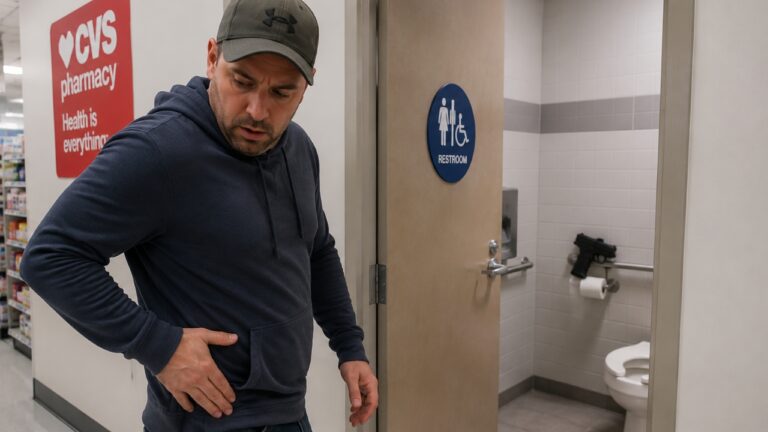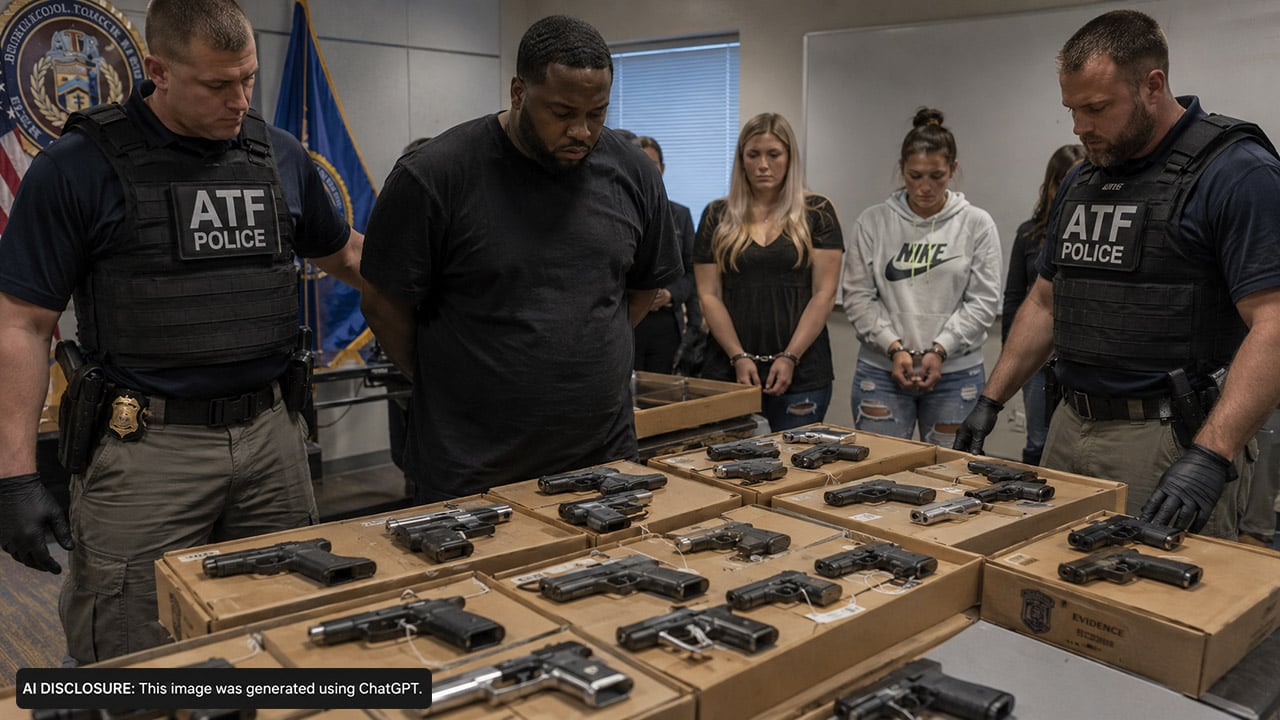
Photo credit: AI-generated image created using ChatGPT. Illustrative only
When a gun shows up at a crime scene a few states away, the story usually starts long before the blue lights. In a case out of Columbus, federal prosecutors say a convicted felon built a pipeline by leaning on people who could pass a background check—then the firearms started turning up where they never should have.
In the source post, the U.S. Attorney’s Office for the Southern District of Ohio says Delonte Robertson, 33, pleaded guilty in federal court to crimes tied to a straw-purchasing conspiracy that ultimately put more than 20 guns into the hands of criminals in other states, with recoveries reported in Washington, D.C. and Maryland.
How the scheme worked: “clean record” buyers and false paperwork
According to court documents referenced by prosecutors, Robertson’s scheme ran from 2021 through 2023. The basic play was simple: recruit women with no criminal records, have them buy firearms, and then have them hand the guns over to him.
That matters because the background check and the paperwork at the counter are built around one key question: who is the “actual buyer.” Straw purchasing is the workaround criminals use to dodge that system—getting someone else, someone “clean,” to do the buying and sign the forms.
More than 20 guns didn’t stay in Ohio
For folks who hunt, shoot on the back 40, or keep a handgun for home defense, this is the part that hits hardest: these weren’t just sketchy purchases that stayed local. Prosecutors say Robertson then provided the firearms to criminals in other states.
Law enforcement recovered more than 20 firearms in Washington, D.C. and Maryland that were purchased in Ohio as part of the conspiracy. That’s the real-world result of a straw-buying ring—guns moving across state lines, ending up in the kind of places that give every responsible gun owner a bad name.
The guilty plea and the federal charges he admitted to
Federal authorities announced that Robertson pleaded guilty to conspiring to and making false statements during the acquisition of a firearm, along with transferring firearms interstate. The guilty plea was offered on June 11 before U.S. Magistrate Judge Norah McCann King, and the announcement followed on June 12, 2026.
On the penalties, prosecutors noted that making false statements during the acquisition of a firearm carries a potential penalty of up to 10 years in prison. The conspiracy charge and transferring firearms out of state are federal crimes punishable by up to five years in prison. Sentencing will be set later by the court using advisory guidelines and other statutory factors.
Why this matters to regular gun owners at the counter
If you’ve bought a rifle before deer season or picked up a shotgun for turkey, you already know the routine: ID, forms, and the questions you have to answer plainly. Straw purchasing flips that normal process into a tool for trafficking, and it’s one of the fastest ways for lawful gun owners to get swept into serious trouble.
The practical lesson is blunt: if someone asks you to “just buy it in your name” because their ID is messed up, they “don’t want to be on a list,” or they “can’t pass the background check,” that’s not a favor—it’s a felony trap. Even if the person asking is a boyfriend, a relative, or somebody you’ve known forever, it can turn into federal time when that gun gets traced after a robbery or shooting across state lines.
What to take away from a case like this
This case doesn’t read like a one-off mistake at a gun counter; prosecutors describe an organized scheme that lasted roughly two years. And the recovery of more than 20 guns in D.C. and Maryland shows how quickly “paperwork games” in one state can turn into real consequences in another.
Most outdoorsmen will never be anywhere near something like this—and that’s the point. Buy your own guns, keep your transactions clean, and don’t let anyone talk you into being the “clean record” buyer. The system only works when the person filling out the form is the person taking the gun home, locking it up, and owning the responsibility that comes with it.
Like The Avid Outdoorsman’s content? Subscribe to our newsletter so you never miss an article.
Here’s more from us: