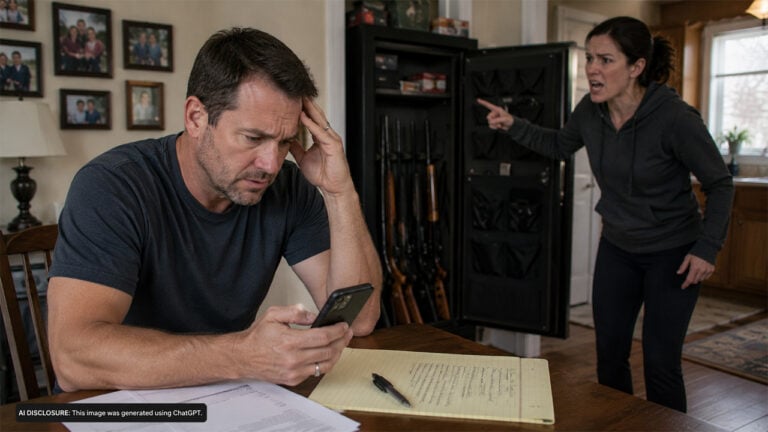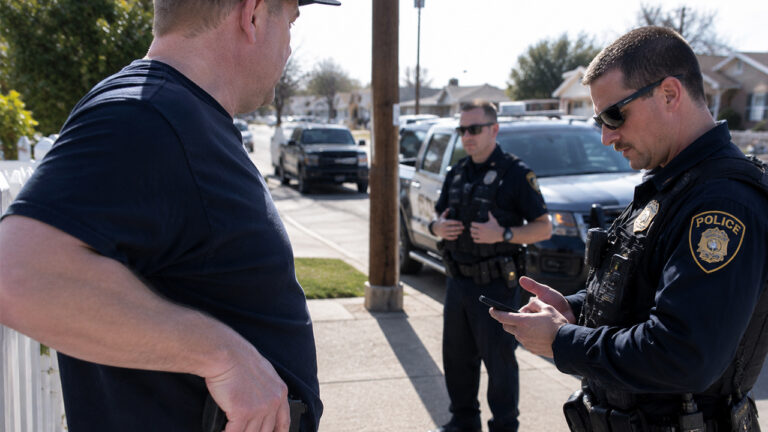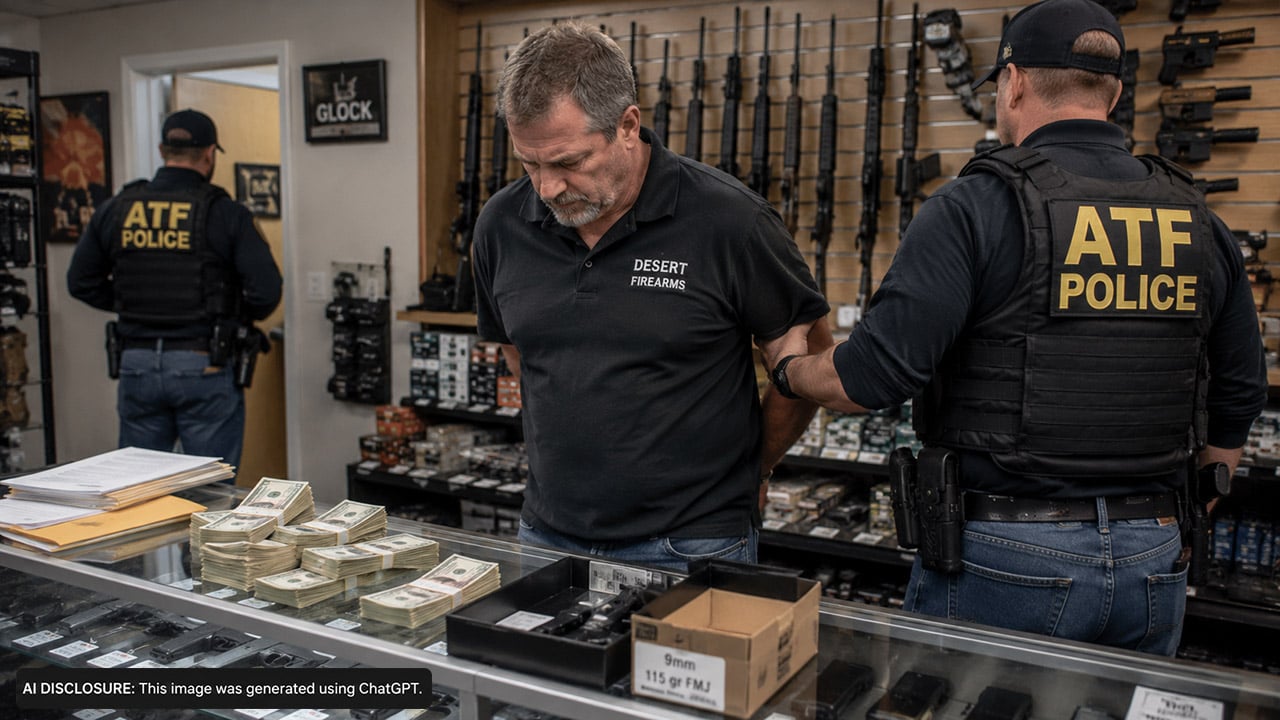
Photo credit: AI-generated image created using ChatGPT. Illustrative only
Most gun folks know the drill at the counter: the paperwork matters, and the person standing there is supposed to be the actual buyer. Federal prosecutors in Arizona say a shop owner didn’t just look the other way—he helped make it happen, and then allegedly failed to report big cash payments tied to gun sales. The U.S. Attorney’s Office laid out the case in the source post detailing an eight-count federal indictment.
The defendant is Esteban Yanez, 34, of Gilbert, Arizona. He’s identified as the owner of Virtus Armament and The Armory, Virtus Armament, a federal firearms licensee (FFL), and he was arraigned April 14 after a grand jury returned the indictment on April 8.
What prosecutors say happened at the gun counter
The indictment alleges Yanez aided and abetted three separate straw-purchase situations. In plain terms, the accusation is that people filled out ATF Form 4473 and knowingly made false statements about who the “actual purchaser” was, and that Yanez helped them do it.
That “actual buyer” question isn’t a technicality. It’s one of the core guardrails of the system, because it’s supposed to stop exactly what investigators say happened here—someone using a stand-in to buy guns they’re not allowed to have.
Two of the alleged buyers were convicted felons
The release says that in two of the instances, the firearms were being purchased for an individual convicted of a felony. Federal law prohibits felons from possessing firearms, and straw purchases are one of the most common ways prohibited possessors try to get around that barrier.
For everyday hunters and gun owners, this is the part that changes the tone. A sloppy transfer is one thing. Allegedly steering guns toward someone you know can’t legally have them is another, and it’s the kind of allegation that brings heat on every legitimate buyer who just wants to fill a tag, protect the house, or have a range gun that runs.
The other piece of the case: cash sales over $10,000
Along with the straw-purchasing allegations, Yanez is also accused of failing to file IRS Form 8300. That form is used to report the receipt of more than $10,000 in cash in a trade or business, and the indictment alleges those reporting requirements weren’t followed in connection with firearm sales.
A lot of folks don’t realize how many different compliance lanes an FFL operates in. There’s the ATF side—records, 4473s, NICS checks, bound book—and then there are separate reporting requirements when large cash transactions show up. Prosecutors are saying the paperwork trail on the money side didn’t get filed the way it’s required.
The charges and what’s at stake if there’s a conviction
The indictment includes charges of False Statement During the Purchase of a Firearm, Straw Purchasing of Firearms, and Failure to File Forms 8300 Relating to Cash Received in Trade or Business.
The U.S. Attorney’s Office listed maximum penalties for each category: false statement during purchase (up to 5 years in prison and up to a $250,000 fine), straw purchasing (up to 15 years and up to a $250,000 fine), and failure to file Form 8300 (up to 10 years and up to a $500,000 fine). Those are maximums, not promises—but they show you how seriously the federal system treats this mix of allegations.
Why this matters to regular gun owners and local shops
Most small-town gun counters are run by people who are strict because they have to be. If you’ve ever watched an employee slow things down because a buddy tries to pay for “your” gun, you’ve seen the practical version of anti-straw-purchase enforcement. It’s awkward for a minute, but it protects the shop, protects the license, and keeps the whole community from dealing with preventable trouble.
Cases like this also tend to have a ripple effect: more scrutiny on nearby dealers, more suspicion from the public, and more pressure on lawful buyers who already feel like they’re constantly proving they’re the good guys. The frustrating part is that the rules don’t get tighter for the person willing to break them—they get tighter for the people willing to follow them.
There’s also a safety angle that’s hard to ignore. When firearms are allegedly steered toward prohibited possessors through paperwork tricks, it undercuts the point of background checks and puts more risk on everyone else—families at home, people at the range, and hunters out on public land who don’t need more unpredictability in the mix.
Who investigated, and where the case goes from here
The Bureau of Alcohol, Tobacco, Firearms and Explosives conducted the investigation, and the U.S. Attorney’s Office for the District of Arizona is handling the prosecution. The case number listed is 26-CR-00326.
It’s also worth saying plainly: an indictment is an accusation, not a conviction. The release notes that defendants are presumed innocent unless proven guilty beyond a reasonable doubt in court. But if you’re a gun owner watching this from the outside, the lesson is still pretty simple—straw purchases aren’t a wink-and-nod favor, and big cash deals carry their own reporting rules. The fastest way to lose your rights or your business is to treat either one like it’s optional.
Like The Avid Outdoorsman’s content? Subscribe to our newsletter so you never miss an article.
Here’s more from us: