Photo credit: The Avid Outdoorsman
A boater who lost his patience at a crowded launch said he ended up starting a confrontation he later regretted, turning a frustrating boat ramp moment into a reminder that ramps can make even normal people act foolish.
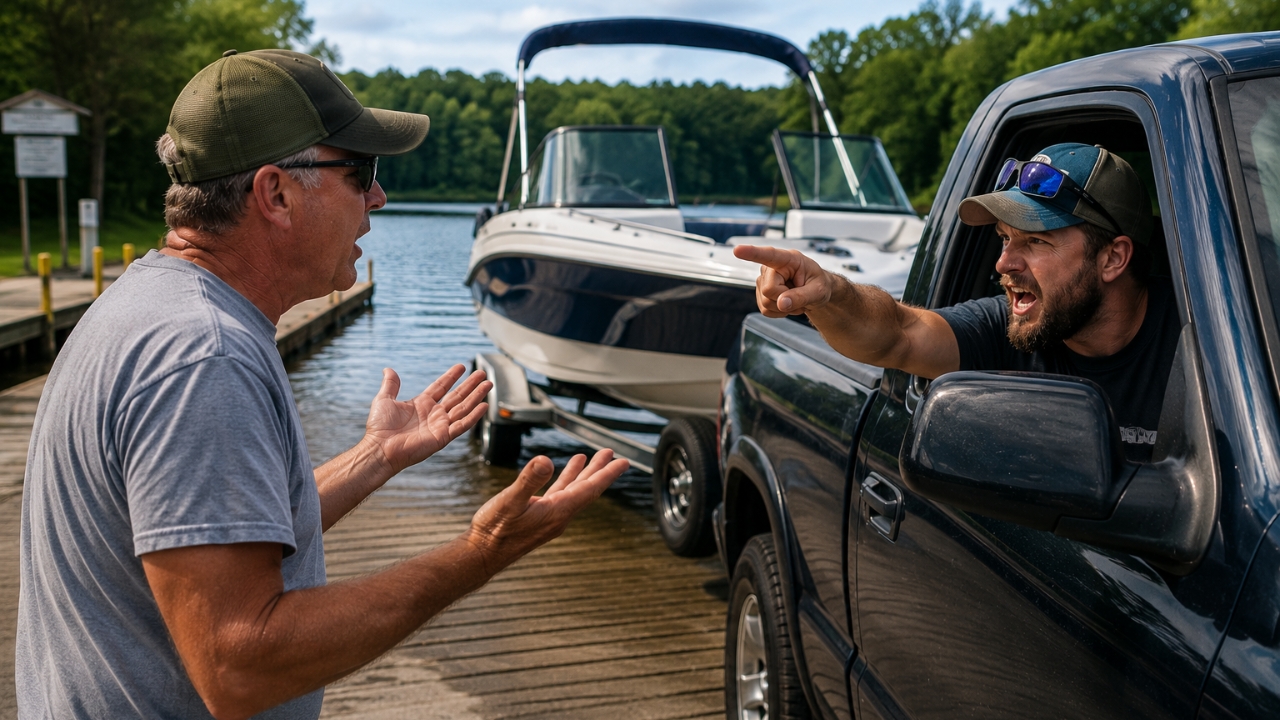
The boater shared the story in a post on r/boating titled “I started a confrontation at the boat launch this weekend”. He explained that he was at a busy boat launch and felt like another person was not following basic ramp etiquette. The details were the kind that drive boaters crazy: people taking too long, getting in the way, or not moving with the urgency everyone expects when trailers are backed up and tempers are already thin.
Boat ramps have their own weird pressure. Everyone is trying to launch or load while other people watch. Trucks are idling. Trailers are lined up. Someone is usually blocking an angle. Someone else forgot a plug, left straps on, or is still loading gear while sitting in the launch lane. Even patient people can start feeling their blood pressure climb when one slow move holds up the whole line.
In this case, the poster said he was the one who started the confrontation. That honesty mattered. He was not pretending he handled it perfectly or that the other person was the only problem. He knew he had let the ramp frustration get to him, and that made the post less like a complaint and more like a confession from someone who realized later that he could have handled it better.
Boat Ramps Bring Out the Worst Timing
The problem with boat ramp etiquette is that everyone has a slightly different idea of what should happen and when.
Experienced boaters usually expect people to prep before they hit the ramp. Load coolers, remove straps, check the plug, get ropes ready, and make sure passengers know what they are doing before the trailer is sitting on the incline. Once it is your turn, the ramp should be used for launching or retrieving, not reorganizing the whole boat.
But not everyone knows that. New boaters get nervous. Families forget things. People borrow boats and do not know the routine. Someone may be teaching a spouse or a kid how to back a trailer. Someone else may be dealing with wind, current, a motor that will not start, or a boat that refuses to settle right on the bunks.
That is why ramps get ugly. One person sees a delay as incompetence or disrespect. The other person may be doing his best and already embarrassed. A comment from a stranger can turn that stress into defensiveness fast.
The poster seemed to understand after the fact that a launch-day delay may not have been worth turning into a face-to-face problem. Boat ramps are frustrating, but they are also public spaces full of people who may be inexperienced, rushed, or overwhelmed.
That does not excuse bad ramp behavior. It just means a confrontation rarely makes the line move faster.
The Confrontation Became the Lesson
The title of the post made clear that the boater knew he had crossed into confrontation territory.
That is the part many commenters likely focused on. It is one thing to be annoyed. It is another to make the moment bigger by calling someone out in a way that turns the ramp into a scene. Once voices rise at a boat launch, everyone nearby knows it. People stop loading, glance over, and start waiting to see whether the argument will blow over or get worse.
That public pressure can make both sides dig in. Nobody wants to look foolish in front of a line of trucks and trailers. Someone who might have apologized privately may get defensive when called out in front of others. Someone who started with a minor complaint may feel like he has to keep pushing once the other person pushes back.
That is why boat ramp arguments can feel so ridiculous afterward. Most of the time, nobody is arguing over anything worth that level of anger. They are arguing because it is hot, busy, stressful, and everyone wants to get on or off the water.
The poster’s regret showed that. He did not walk away proud of himself. He seemed to know that he let irritation make the call for him.
Commenters Said Ramps Are Where Patience Goes to Die
Boaters in the comments understood the frustration immediately.
Anyone who spends time at launches has seen the usual ramp problems: people blocking lanes while loading gear, groups standing around instead of helping, drivers who cannot back a trailer, boats tied up where others need to launch, and people who act like the ramp belongs to them. It can test a person’s patience fast.
But many commenters also know that losing your cool rarely helps. A ramp argument can slow everything down even more. Instead of one person taking too long, now two people are arguing while everyone else waits.
The better approach is usually to stay calm, offer help if it makes sense, or wait it out. If someone is being truly reckless or blocking access for an unreasonable amount of time, a marina employee, ramp attendant, park officer, or local authority may be the better route. But for ordinary slow-ramp frustration, the most useful skill is keeping your mouth shut long enough to get through it.
That may sound easy from behind a keyboard. It is harder when the sun is hot, the trailer line is backed up, and someone in front of you seems to be learning every step in real time. Still, commenters seemed to agree that boat ownership comes with learning to survive ramp chaos without becoming part of it.
Good Ramp Etiquette Starts Before the Tires Hit the Water
The thread also pointed back to the basics of boat ramp etiquette.
Most ramp headaches can be avoided if people prepare in the staging area instead of on the ramp. That means putting gear in the boat, removing transom straps, checking the drain plug, attaching lines, getting passengers settled, and making sure the driver and boat operator know the plan before backing down.
The same goes for loading. If possible, get the boat on the trailer, pull out, and finish unloading or tying things down away from the ramp. The ramp itself should be treated like a shared checkout lane. Use it efficiently, then move so the next person can go.
That kind of etiquette helps everyone. It keeps the line moving, lowers tension, and gives new boaters a clearer example to follow.
But even when someone fails at those basics, the person behind them still has a choice. A calm reminder might help. A friendly offer might help more. A heated confrontation usually only adds another problem.
The poster’s story worked as a reminder from the other side: sometimes the person who knows better still reacts badly.
Commenters largely understood why the boater got frustrated, but many seemed to think he already knew the biggest lesson: he should not have started the confrontation.
Some said boat ramps are naturally stressful and that nearly everyone who boats long enough has watched someone do something slow, confusing, or careless at the launch. That does not mean every delay needs to become an argument.
Others focused on etiquette. They agreed that people should prep before backing down, move quickly once on the ramp, and clear the lane before tying down, loading gear, or holding long conversations. A crowded ramp only works when everyone treats it like shared space.
Several commenters likely said patience is part of boating. New boaters have to learn somewhere, and yelling at them usually makes them more nervous, not more efficient. If someone is struggling but not being reckless, offering help can sometimes solve the problem faster than getting mad.
The useful takeaway was not that bad ramp behavior is fine. It was that a confrontation at the launch often creates the exact thing everyone is trying to avoid: a longer wait, a bigger scene, and a worse day on the water.
For the boater, the ramp frustration was real. But by his own admission, the way he handled it became the bigger lesson. Sometimes the smartest thing at a crowded launch is not proving you know the rules. It is waiting one more minute, launching clean, and refusing to let the ramp turn you into the guy everyone else remembers.