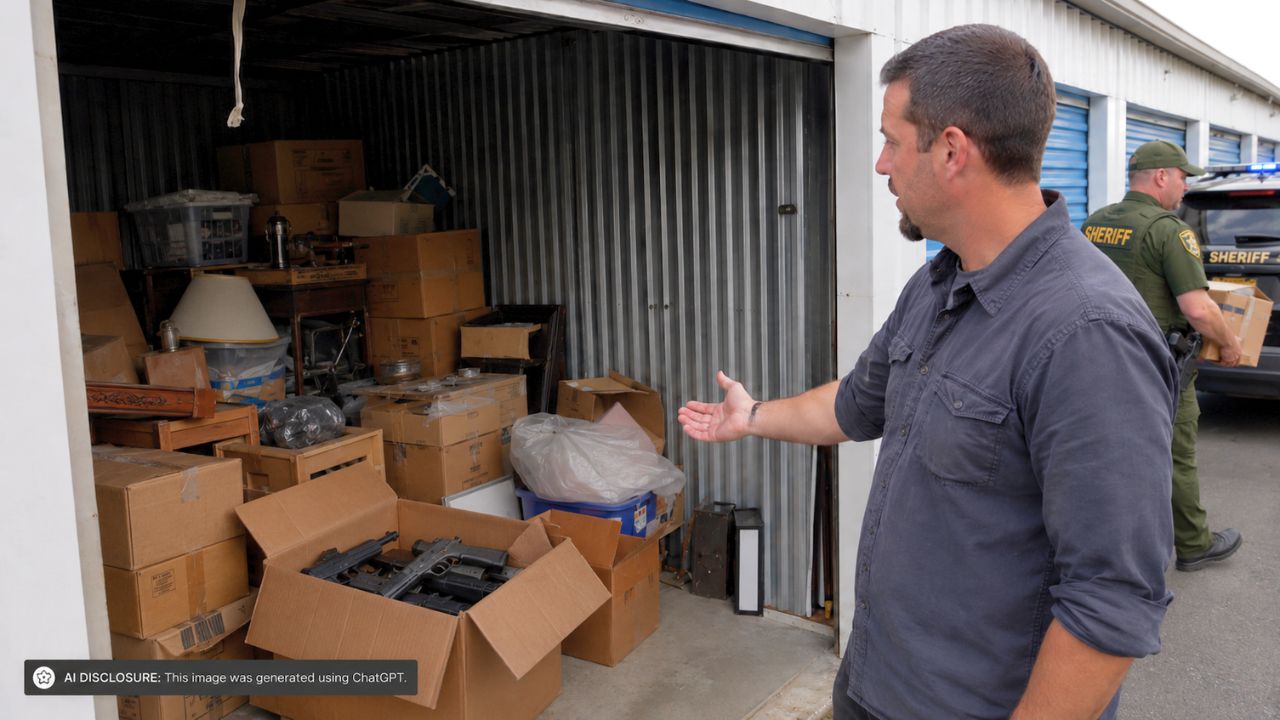
Photo credit: AI-generated image created using ChatGPT. Illustrative only
Most folks who’ve rented a storage unit know the routine: you fall behind, you get notices, and if you don’t catch up the place schedules an auction. But one Virginia unit renter said the real trouble started before the auction ever happened—when the facility opened the unit early, spotted several firearms, and then let the sheriff’s office come in and take every gun and all the ammo.
In the original post, the renter explained the unit was two months behind. An auction was set for July 7. On July 3, they contacted the facility and paid the past-due balance to stop the sale, and said they confirmed the auction would not take place. That should’ve been the end of it.
The “prep for auction” entry opened the door to a much bigger mess
According to the account, the property manager told them staff had entered the unit that same morning to “prepare it for auction.” During that entry they reportedly saw multiple guns and contacted the sheriff’s office, then gave law enforcement access to the unit.
That detail matters. In the gun world, where you store firearms and who can access them isn’t just a privacy issue—it can quickly become a legal and evidence issue. Even if you’re a law-abiding owner, once guns get swept up into an investigation, the timeline and paper trail start driving everything.
A second unit got pulled into it, even though it was supposedly unrelated
The renter said they had two units—one personal and one business. They claim the facility also told law enforcement there were “a bunch of guns” in the other unit and allowed entry there as well.
They say there were no firearms in the second unit and nothing that “could have even been confused for guns.” For outdoorsmen who use storage units for seasonal gear, that’s a gut-check: one person’s assumption or misstatement can broaden the scope fast, and once that happens you’re no longer dealing with a simple late-payment problem.
A serial-number mistake set off the seizure
Once the sheriff’s office was inside, they reportedly ran serial numbers on the firearms. One came back as stolen. The renter said that didn’t make sense because the gun had been in the family for years—passed down from a father-in-law to the husband.
Later, they say they found out it was a mistake caused by the wrong serial number being entered into the system. That’s a detail a lot of gun owners worry about but rarely plan for: databases and data entry aren’t perfect, and a simple typo can turn an ordinary firearm into “hot” property on paper.
But in the moment, the system said “stolen,” and that was enough for the sheriff’s office to remove all firearms and ammunition from the unit.
Instead of getting the guns back, they were told to wait on ballistics
The renter said the only reason the guns were in storage was “due to safety concerns” and that it was meant to be temporary. Then the seizure happened, and the family has been trying to get everything returned.
They reported the police department told them the firearms are being held until ballistics and other procedures are completed. If you’ve ever tried to retrieve property once it’s tagged and shelved, you know the feeling: it’s no longer “your stuff in a unit.” It’s “property” in a process. And that process runs on their timeline, not yours.
The practical questions gun owners should be asking in a situation like this
The renter’s questions were blunt and practical—exactly the kind of things a hunter or gun owner would ask when the dust settles and you’re staring at an empty safe.
First: can a storage facility legally open a unit and let law enforcement remove property before any lien or auction date, without notice or a court order? Second: if the sheriff’s office took the guns without a warrant, does that matter? Third: what rights do they have to get the guns back?
Those questions land because they hit three pressure points: the storage contract, the facility’s authority when you’re delinquent (and what changes once you’re paid up), and the rules that govern law enforcement entry and seizure. People tend to lump all that together, but it’s usually three separate fights—contract, civil property rights, and criminal procedure—all tangled up in one day.
What other gun owners tend to focus on: paperwork, access, and the fastest path to return
Even without a stack of comments included in the source material, the themes that typically matter to gun owners are clear from the questions being asked: was the facility allowed to enter in the first place, did law enforcement have proper authority, and what steps actually get firearms released.
In the real world, the fastest path usually starts with documentation. That means keeping proof of payment showing the delinquency was cured, getting the facility’s written explanation of why and when they entered, and requesting a property receipt or inventory from the agency holding the guns. Hunters are used to keeping tags, license numbers, and landowner permissions straight; this is the same mindset, just with higher stakes.
The other thing folks focus on is access. Storage places often have contracts that spell out what happens when you’re behind—rights to enter, deny access, add locks, and start lien procedures. But many people never read those pages until something goes sideways. Whether the unit was still considered in default at the moment of entry, and whether curing the default changed anything, can be the kind of detail that decides what remedies you have later.
And then there’s the law enforcement side. In plain English: if the sheriff’s office thinks there’s stolen property involved, they tend to treat it like an evidence issue first and a customer-service issue never. That doesn’t mean everything was handled correctly—it just explains why “it was a typo” doesn’t automatically flip a switch and send your guns home the next day.
From an outdoorsman’s angle, it also raises a simple but important point about storage: if you’re using a unit as a temporary workaround during a rough patch, understand that you’re adding another keyholder to your life. You may be the legal owner, but you’re not the only one with the ability to influence access when payments slip or policies get triggered.
If there’s a silver lining here, it’s that the renter says the “stolen” hit was ultimately tied to a serial-number entry mistake. But the hard lesson remains: once guns are removed and placed into an evidence pipeline—especially with ballistics mentioned—getting them back can be slow, procedural, and frustrating, even when the underlying reason for the seizure falls apart.
Like The Avid Outdoorsman’s content? Be sure to follow us.
Here’s more from us: