Photo credit: The Avid Outdoorsman
The buyer said the gun deal started as something casual between people who knew each other. According to the Reddit post, he bought a firearm from a friend in Mississippi and did not think much of it at first. Private sales can feel simple when both people know each other and the gun changes hands without trouble.
Then he started worrying the firearm might be stolen.
The original Reddit post can be found here: https://www.reddit.com/r/legaladvice/comments/82fd5n/ms_i_may_have_bought_a_stolen_firearm_how_can_i/
That concern changed the entire situation. Buying a used gun is one thing. Finding out it may have a bad history is another. A firearm that turns out to be stolen can create problems for the person holding it, even if they did not steal it and did not know anything was wrong when they bought it.
The buyer’s concern seemed to grow after he learned more about the friend’s background. The seller apparently had a rougher history than the buyer realized, and that made the gun’s origin feel less certain. The buyer did not want to keep a stolen firearm, but he also did not want to accidentally incriminate himself or make the situation worse by handling it the wrong way.
That is the uncomfortable part of private firearm sales. The buyer may have no easy way to verify the gun’s history before money changes hands. If the seller is trustworthy, the deal may be fine. If the seller is hiding something, the buyer may not find out until later, when the firearm is already in his possession.
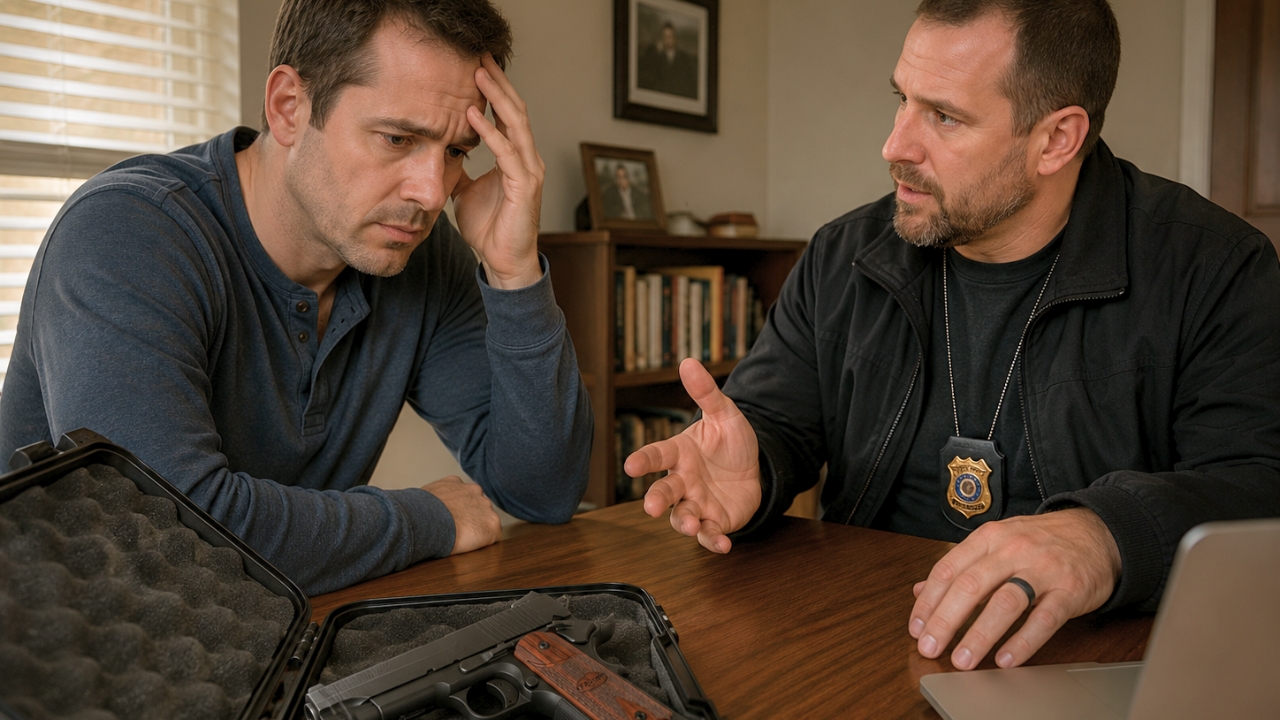
The buyer wanted to know how to check whether the gun was stolen. That seems like a simple question, but it can be more complicated than people expect. There is not always an easy public database where a private buyer can type in a serial number and get a reliable answer. Calling law enforcement may be the safest route, but it also means the buyer has to be ready for the possibility that the gun is taken as evidence if it comes back stolen.
That is not necessarily a bad outcome. If the firearm belongs to someone else, it should not stay with the buyer. But it is still stressful for someone who may have paid money in good faith and now has to untangle what really happened.
The post did not read like someone trying to keep stolen property. It read like someone who realized a private purchase might have been a mistake and wanted to fix it before the gun became a bigger problem.
Commenters told him not to ignore the concern. Several said that if he genuinely believed the firearm might be stolen, he should contact law enforcement and explain the situation honestly. If the gun was reported stolen, police could confirm it and handle the recovery properly.
Others warned him not to try to quietly sell or trade the firearm just to get rid of the problem. Passing along a gun he suspected might be stolen could make things worse and look much harder to explain later.
Some commenters said he should gather whatever proof he had about the purchase. Messages with the seller, payment records, a bill of sale, the seller’s name, and the date of the transaction could all help show he did not knowingly buy stolen property.
A few people pointed out that if the firearm turned out to be stolen, his money issue would be with the friend who sold it to him. The rightful owner or law enforcement would not be responsible for making the buyer whole just because he paid the wrong person.
The post ended with the buyer facing a hard but necessary choice. He could keep wondering and hope the gun was clean, or he could create a record, check it the right way, and accept the outcome if the firearm turned out to belong to someone else.
Like The Avid Outdoorsman’s content? Subscribe to our newsletter so you never miss an article.
Here’s more from us: