Photo credit: winchester
When you’ve spent enough seasons in the woods, you start to learn which calibers pull their weight and which ones turn a good hunt into a bad story. Deer aren’t difficult animals to bring down when you make a solid shot, but you still need a cartridge that gives you enough penetration, reliable expansion, and a margin for error when things don’t go perfectly.
Some calibers simply fall short—either they lack the energy, they’re unreliable past bow-range distances, or they make recovery harder than it should ever be. A deer camp isn’t the place for experiments, and it’s definitely not where you want to learn the hard way that certain rounds weren’t made for the job.
These are calibers that don’t belong anywhere near a tag, a treestand, or a buck track.
.17 HMR
The .17 HMR is impressive for varmints, but it stops being impressive the minute you expect it to act like a deer cartridge. It’s flat-shooting and accurate, sure, but that tiny bullet simply doesn’t offer the weight or penetration needed for ethical deer hunting. Even perfect shots can fail to exit, and without a blood trail, recovery turns into a guessing game. You’re relying on precision that deer hunting rarely gives you.
Even with premium loads, the physics aren’t in your favor. Shoulder impacts rarely produce the penetration needed, and even rib shots leave too much room for unpredictable performance. It’s a round that excels at what it was designed for—small game—and it falls apart when you try to stretch it into bigger roles. If you’re headed to deer camp, leave the .17 HMR at home.
.22 LR

The .22 LR might be legendary for small game, but it’s not suited for deer hunting in any ethical capacity. The round simply doesn’t carry enough energy to guarantee a clean kill unless conditions are perfect—and in the field, conditions are rarely perfect. Even close-range shots risk poor penetration, inconsistent expansion, and a wounded deer that’s incredibly hard to track. It’s not a matter of skill; it’s a matter of physics.
Some states allow it under tight restrictions, but legality doesn’t make it a smart choice. The .22 LR is excellent for introducing new shooters to rifles, for plinking, and for filling the freezer with rabbits and squirrels. But when deer camp rolls around, this caliber is completely out of its league and puts you at risk of losing more animals than you recover.
.22 Magnum
The .22 Magnum gives you more velocity than a .22 LR, but it still doesn’t cross the threshold where you’d consider it reliable for deer. Hunters sometimes push it in close-range situations, but even then, it struggles with penetration and bullet performance. Expansion is unpredictable, and the wound channels simply aren’t large enough to drop deer consistently.
It’s a fantastic cartridge for predators and smaller game, and it’s accurate enough to stretch out across fields when you’re chasing varmints. But those strengths don’t convert to big-game performance. A deer requires more bullet weight, more energy, and more reliable construction. In deer camp, the .22 Magnum creates more problems than solutions.
.410 Bore Slugs

The .410 slug looks good on paper until you start comparing real-world performance. It’s light, slow, and carries far less energy than larger shotgun options. Even at short ranges, penetration can be marginal, and expansion tends to vary wildly depending on the load. The round simply doesn’t provide the stopping power you need for consistent results on deer-sized animals.
While some hunters have taken deer with a .410 under perfect conditions, you can’t count on that performance. In dense woods, awkward shot angles, and cold-weather scenarios, the .410’s shortcomings show quickly. Larger gauges offer a much better safety margin, and that alone is reason enough to leave the .410 in the safe when deer season arrives.
5.7x28mm
The 5.7x28mm was built for lightweight defensive carbines and pistols, not for hunting medium game. The bullets are designed for controlled penetration on soft targets, not deep, reliable expansion through ribs and shoulders. Even out of a carbine-length barrel, the energy levels remain far below what you want for deer.
It’s a fun round at the range and effective for small predators, but the bullet construction simply isn’t up to the task. Hunters using the 5.7 risk shallow wounds and long, frustrating tracking jobs. Deer deserve better, and there are far more appropriate choices that don’t carry this level of compromise.
.25 ACP

There’s no realistic scenario where the .25 ACP belongs near a whitetail. It carries minimal energy, lacks meaningful penetration, and was designed solely for pocket pistols at close distances. Even at point-blank range, it won’t reliably reach vital organs on a deer. The margin for failure is enormous, and the chances of a humane kill are practically nonexistent.
You might hear hunters reference old stories about using whatever they had on hand, but those stories usually end badly. This cartridge has a role, but it’s limited to very small defensive handguns—not ethical hunting. Even considering it for deer camp is a mistake.
.32 ACP
While more powerful than the .25 ACP, the .32 ACP still falls far short of what’s needed for big game. Bullet construction isn’t designed for deep penetration or controlled expansion, and the round simply can’t deliver the energy necessary for reliable kills. Even out of carbines chambered for it, performance remains inconsistent and unpredictable.
It’s a fine round for compact carry guns and excels in that context. But when you step into deer country, it becomes one of the worst choices you could load. Recovery becomes guesswork, and wounded deer often travel far beyond what most hunters are prepared to track.
9mm Luger (standard loads from pistols)
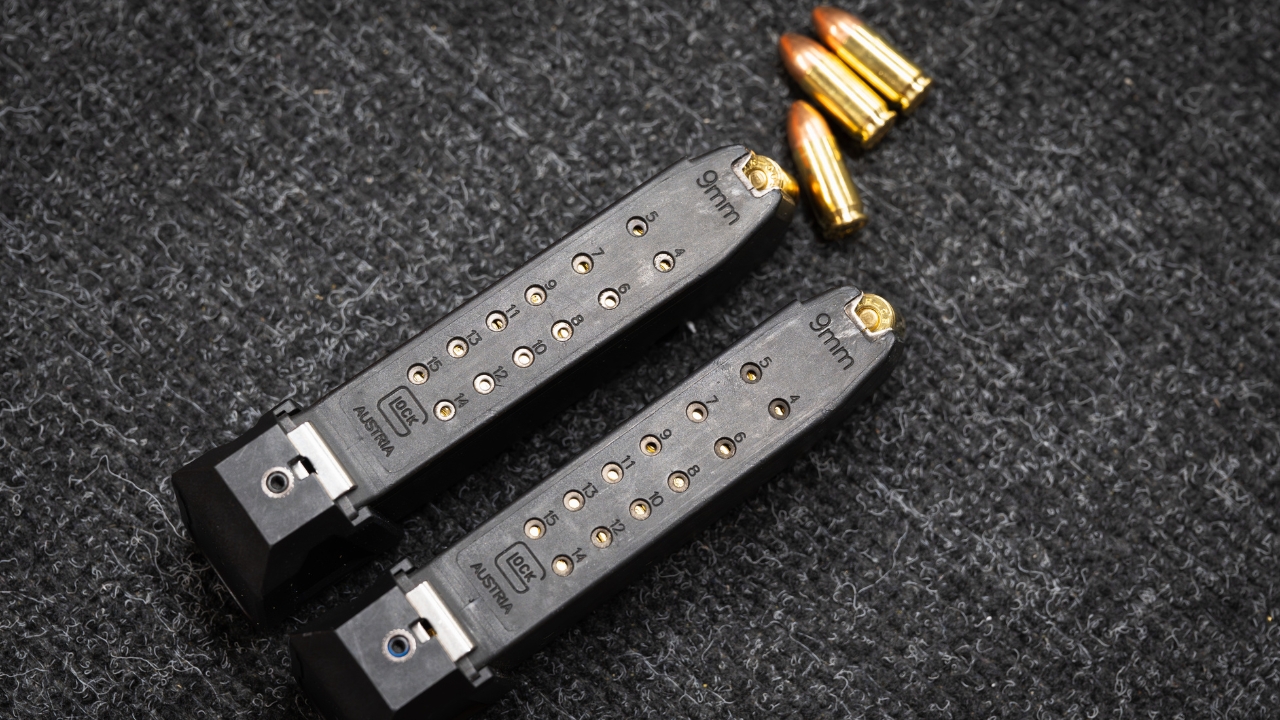
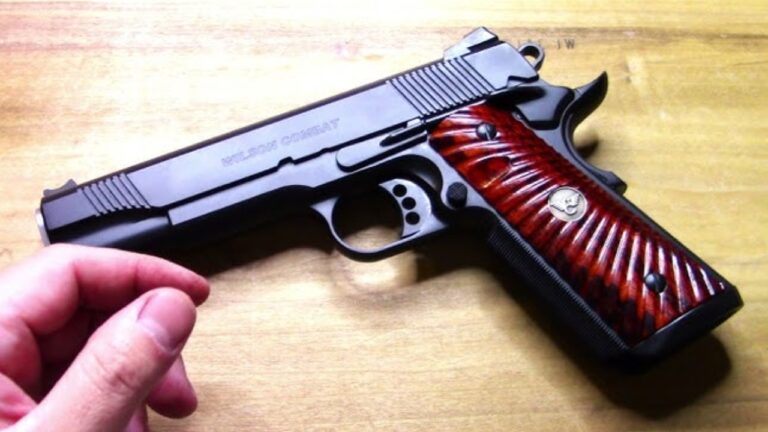
The 9mm can take a deer under very specific conditions, but those conditions rarely line up with the realities of deer hunting. Standard handgun loads aren’t built for deep penetration on larger animals, and expansion is inconsistent when velocities drop at extended ranges. Even from a pistol-caliber carbine, the round lacks the energy that most hunters consider the minimum for ethical deer shots.
While the 9mm is an excellent self-defense round, that doesn’t translate to reliable performance on a whitetail. You’re far better off using a cartridge designed for hunting rather than trying to adapt a defensive round to a job it wasn’t built for.
.45 ACP (from handguns)
The .45 ACP delivers a lot of frontal area but not much speed, and that combination limits penetration on deer-sized animals. Even with heavy loads, the round struggles when you introduce bone or quartering angles. Expansion can be dramatic—but dramatic expansion without sufficient penetration often leads to poor blood trails and wounded animals.
Some hunters have done it successfully at very close distances, but success stories don’t change the underlying reality. You’re using a round designed for defensive ranges and soft targets, not for reliable penetration through a deer’s vitals. It’s simply not a responsible choice in most hunting scenarios.
.300 Blackout (subsonic loads)

The .300 Blackout can be an excellent deer round—but only with supersonic ammo. Subsonic loads are a completely different story. They rely on very low velocity and extremely heavy bullets, and most of those bullets were designed for stability, not controlled expansion. Without expansion, you get narrow wound channels and slow blood loss, which leads to long tracking jobs and lost deer.
Even expanding subsonic designs are inconsistent on deer-sized game. If you’re committed to the .300 Blackout, stick with supersonic loads for hunting. Subsonics simply do not belong in deer camp unless you’re willing to risk losing animals and dealing with unpredictable terminal performance.
Like The Avid Outdoorsman’s content? Be sure to follow us.
Here’s more from us:
The worst deer rifles money can buy
Sidearms That Belong in the Safe — Not Your Belt
*This article was developed with AI-powered tools and has been carefully reviewed by our editors.