Photo credit: Rifleman/Shutterstock.com
Every handloader knows there are cartridges worth the time—and those that just gather dust on the shelf. When you reload, you quickly learn which rounds are efficient, consistent, and easy to source brass for, and which ones are pure headaches. The cartridges below might have once looked promising, but they’ve fallen completely out of favor with reloaders. Some are hard to find brass for, some burn out barrels too quickly, and others never lived up to the hype. These are the cartridges that reloaders simply stopped bothering with—either because better options came along or because they were a pain to keep fed.
.41 Action Express

The .41 AE was supposed to bring .41 Magnum performance to a 9mm-sized platform, but it never took off. The idea was smart—convert your 9mm pistol to .41 AE with a barrel and spring swap—but ammo was rare even when it was new. Once the .40 S&W hit the market, the .41 AE became pointless.
Reloaders quit keeping it around because brass disappeared, dies were expensive, and performance gains were marginal. You can still find a few cases online, but most handloaders stopped wasting bench space on it. It’s one of those cartridges that lives on as an idea, not something anyone actually loads for anymore.
.357 SIG

The .357 SIG had its fans for a while, offering .357 Magnum-like velocity in a semi-auto. But reloaders quickly learned it’s a finicky round. The bottleneck case demands perfect neck tension, and case setback can spike pressures fast. That means one bad crimp or resized case can ruin a session—or worse.
On top of that, brass life is short, and bullets suited for the cartridge’s narrow neck are limited. It’s fast and loud, but not worth the hassle for most reloaders. Many switched to 9mm +P or 10mm for similar performance without the constant brass headaches. The .357 SIG might look good on paper, but the reality is it’s too touchy to keep on the bench.
.25 ACP

Nobody reloads for .25 ACP anymore, and there’s a reason. The brass is tiny, the primers are fiddly, and it’s not cost-effective at all. The round barely clears 70 foot-pounds of energy, and even if you handload it perfectly, you won’t gain anything over factory ammo.
Most reloaders agree it’s one of the most impractical cartridges to work with. The cases are easy to crush, and you can’t even see powder levels clearly. It’s a novelty, not a handloading project. If you want to waste an afternoon cursing at tweezers and magnifiers, fine—but no serious reloader keeps .25 ACP brass around.
.30 Carbine

The .30 Carbine earned fame in the M1, but it’s a pain for reloaders today. Brass is hard to find, and when you do, it’s pricey. The cartridge has a reputation for being picky with powders, and it doesn’t respond well to reduced loads. Many reloaders also complain that primers flatten early and necks split after a few firings.
Performance-wise, it sits awkwardly between pistol and rifle territory—too loud for handguns, too light for big game rifles. With modern options like 300 Blackout offering better flexibility and performance, the .30 Carbine became more nostalgia than practicality. Most reloaders who once saved brass for it have moved on.
.22 Hornet

The .22 Hornet used to be a varminting classic, but modern small-caliber cartridges have made it irrelevant. Reloading it is tricky—thin case walls split easily, and small powder charges make consistency tough. A tenth of a grain off can change accuracy noticeably.
Brass life is short, and the performance gains over .223 Remington or .204 Ruger just aren’t worth the hassle. Many reloaders gave up after losing too many cases to splits and neck damage. It’s fun if you like challenges, but most practical handloaders moved on to easier rounds long ago.
.45 GAP

The .45 GAP was Glock’s attempt to replicate .45 ACP performance in a smaller frame. It worked briefly—but then ammo dried up, and reloaders realized it wasn’t worth the trouble. Brass availability dropped off a cliff, and the cartridge offers nothing you can’t get from .45 ACP.
Reloaders also found that the shorter case made it harder to seat some bullets without overpressure issues. It’s a cartridge built for a niche pistol design, and when that design faded, so did interest in the round. Today, .45 GAP brass sits in the same category as .41 AE—curiosity only.
.32 H&R Magnum

The .32 H&R Magnum was meant to modernize the old .32 revolver rounds, but reloaders rarely bother with it anymore. Brass and bullet availability are limited, and pressure ceilings are low. The .327 Federal Magnum outclassed it in every way, leaving .32 H&R without a purpose.
For reloaders, the problem is simple: too much work for too little return. You can get more power and better performance from the .38 Special or .327 Fed, and the brass lasts longer. Unless you’re maintaining a vintage revolver, there’s no reason to keep the .32 H&R on your bench.
.17 Remington

The .17 Remington is notorious among reloaders for being messy and hard to manage. It burns hot, fouls barrels fast, and requires meticulous cleaning between shots for consistent performance. Even a small amount of carbon can wreck accuracy.
Reloading it means handling tiny cases with even tinier powder charges. Static, spillage, and neck tension issues are constant. It’s fun for a handloader who loves tinkering, but most moved on to the .204 Ruger or .17 HMR, which give similar results without the pain. The .17 Remington’s overbore nature and fragile brass make it a “reload once and quit” kind of cartridge.
.25-06 Remington
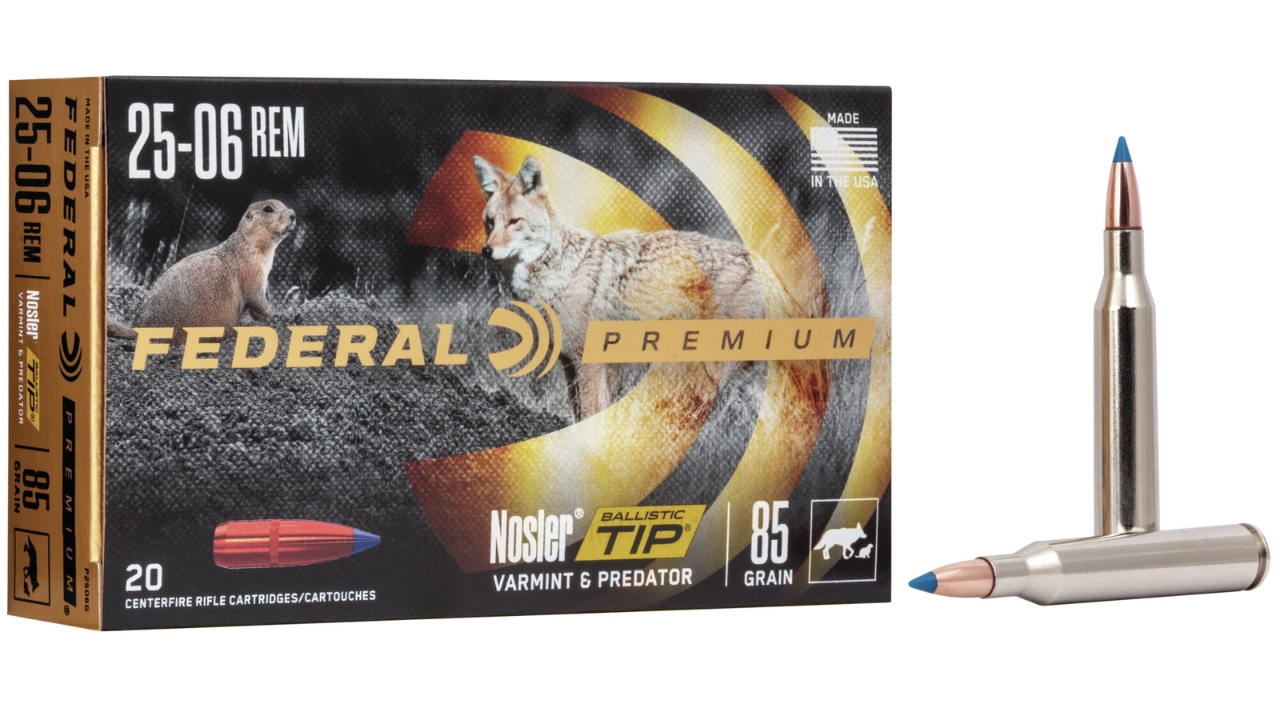
The .25-06 is a solid hunting round, but it’s one that reloaders are slowly letting go of. It’s overbore, meaning it burns through barrels faster than most. You can tune it for good accuracy, but at the cost of accelerated throat erosion. Powder consumption is high, brass stretches quickly, and case trimming becomes a constant chore.
Modern 6.5mm rounds outperform it in both ballistics and barrel life, so most reloaders don’t see the point anymore. It still works if you’re loyal to it, but for most benches, the .25-06 dies sit unused while 6.5 Creedmoor dies stay mounted.
.280 Ackley Improved

The .280 AI has a cult following, but it’s never caught on with casual reloaders. It needs fireformed brass, specialized dies, and careful load development. The velocity gains over a .280 Rem or 7mm-08 aren’t enough to justify the extra work.
Most reloaders eventually realize they can get nearly identical performance from easier cartridges. Between brass cost, neck turning, and constant trimming, the .280 AI becomes a chore few stick with long-term. It’s accurate and capable, but “niche” describes it perfectly — and niche rounds rarely stay on busy benches.
.300 H&H Magnum

The .300 H&H Magnum is a classic that’s aged poorly for reloaders. The long, tapered case doesn’t feed easily in modern presses, and brass is expensive. Powder capacity is huge, meaning you burn through supplies fast for performance you can now match with shorter, more efficient cases.
Case stretching is constant, and resizing is finicky due to the shallow shoulder angle. For nostalgia, it’s unbeatable; for practicality, it’s not even in the running. Modern reloaders keep .300 Win Mag or .300 WSM brass instead, both easier to load and find components for.
.348 Winchester

The .348 Winchester was once a powerhouse in the Model 71 lever-action, but reloaders dropped it fast. Brass is rare, and resizing from other cases takes heavy equipment and patience. The bullet diameter (.348) is odd, limiting options dramatically.
You can handload it if you’re stubborn, but most agree it’s not worth the frustration. With modern big-bore lever rounds like the .444 Marlin or .45-70 offering easy brass and bullet sourcing, the .348 sits in permanent retirement. Even die sets are collector’s items now.
.224 Weatherby Magnum

The .224 Weatherby Magnum was accurate, fast, and instantly doomed by its own uniqueness. Brass is proprietary, shoulder design is odd, and forming it from other cases is nearly impossible. Reloaders never warmed to it because .22-250 and .223 already existed — both easier and cheaper.
The tiny case necks also make bullet seating delicate, and powder charges vary wildly depending on brass batches. In the end, it was too much hassle for too little gain. Nobody keeps the dies out anymore unless they’re trying to load nostalgia, not practicality.
.338-06 A-Square

The .338-06 A-Square looked smart on paper — big bullets, moderate recoil — but reloaders never embraced it. It required custom brass early on, and performance gains over the .30-06 were minor. As magnum cartridges took over, there was no reason to invest in obscure components.
Brass life is short, and load data limited. It’s not bad — it’s just irrelevant. Most reloaders who wanted a .338 simply went with the .338 Win Mag or .340 Weatherby instead. The A-Square is a fine idea that never found a reason to stay on anyone’s reloading bench.
.221 Fireball

The .221 Fireball is an odd little cartridge that tried to stay relevant but never really did. It’s efficient, quiet, and fun — but nobody loads it anymore because brass and data dried up. You can form it from .223 cases, but it’s tedious, and tiny powder charges are unforgiving.
For reloaders, it’s an exercise in precision with no real reward. The .204 Ruger and .22 Hornet outperform it in either direction, and the Fireball sits awkwardly in between. It’s one of those rounds reloaders experiment with once, then box up forever.
*This article was developed with AI-powered tools and has been carefully reviewed by our editors.