Photo credit: AI-generated image created using ChatGPT. Illustrative only
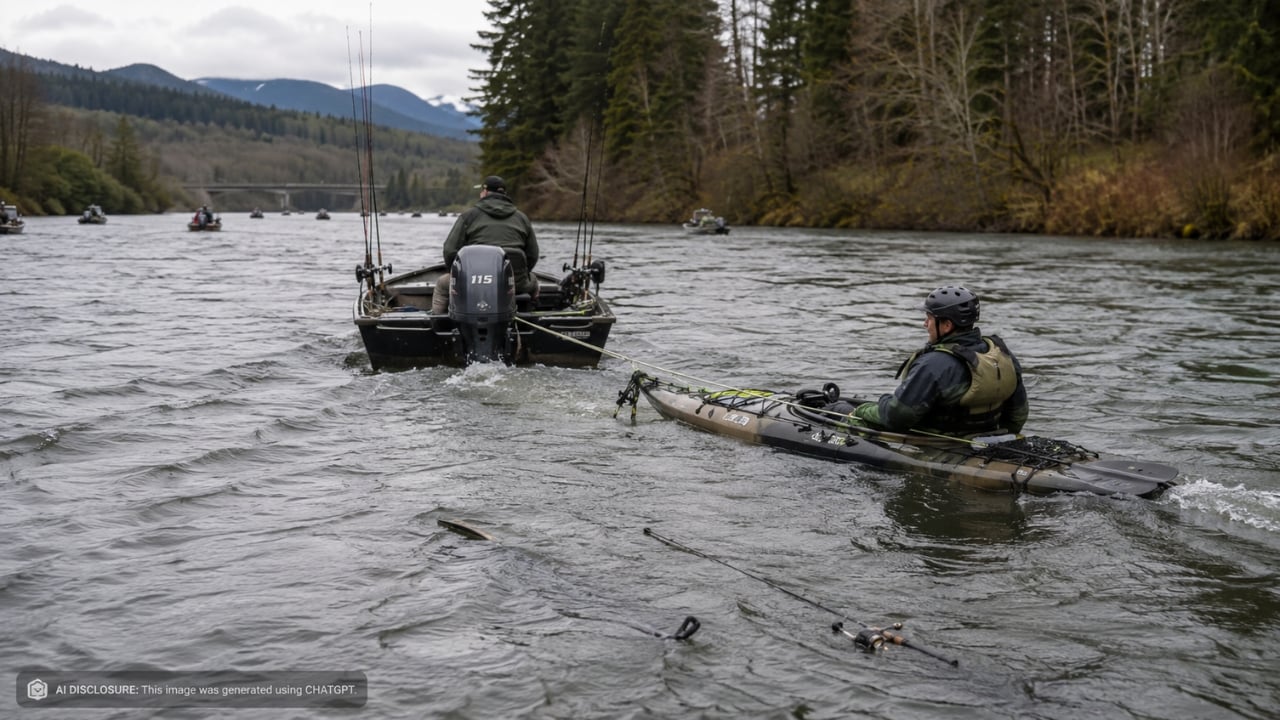
It only takes a second on a busy salmon river for a normal day of kayak fishing to turn into a cold-water yard sale. One angler found that out the hard way when a fishing boat ran him down from behind, clipped the stern of his kayak, and rolled him into the drink.
In the original post, the kayaker said the boat operator didn’t see him even though he believes he was visible from 200 to 300 yards away. The hit flipped the kayak and scattered gear—rod and reel, sunglasses, shoes, and other odds and ends—though he said he was lucky enough to come out unhurt.
A crowded salmon river and a worst-case meeting
If you’ve spent any time on a big river during a salmon run, you know the scene: sleds and drift boats working seams, guys backtrolling, others side-drifting, and the occasional kayak angler trying to slide into a lane without getting bullied off it. It’s not always hostile, but it’s busy, and “busy” is when mistakes get expensive.
According to the kayaker, the boat “came right at” him and clipped the back end of the kayak. That’s the kind of impact that doesn’t have to be hard to be dangerous. A bump in the wrong place will spin a kayak, dump you, or pin you if you’re close to the bank or a sweeper.
The flip, the lost gear, and the part that could’ve gone worse
The kayaker described the immediate aftermath the way most of us would: he flipped and lost equipment. A rod and reel gone is painful. Sunglasses and shoes are the kind of stuff you don’t realize matters until you’re barefoot on a rocky ramp squinting into glare.
But the bigger point is that he came out unscathed. Cold water, current, anchors, propellers, and confusion don’t mix. Plenty of guys have been hurt in less dramatic situations than a collision, especially when people panic or start grabbing for gear instead of getting their head up and breathing.
The boater came back—and did the right thing in the moment
Here’s where the story takes a turn most people hope for. The boat operator circled back. The kayaker said the guy was really nice, felt bad, and towed him back to the boat ramp—about a mile.
That tow matters. Getting a swamped kayak to safety on moving water can be a long, miserable grind, and it’s where people make more mistakes. Getting back to the ramp means warmth, help, and a chance to take inventory instead of fighting the current while you’re stressed out.
Documenting it without turning it into a war
The kayaker also did something practical: he took pictures of the boat registration and the operator’s driver’s license. That’s not “giving him the book.” That’s basic documentation after a collision, the same way you’d exchange information after a fender bender in a parking lot.
He also made it clear he wasn’t looking to scorch the earth. In the post, he called it an honest accident and asked what he should do next. That’s a pretty common spot for outdoorsmen to land in—mad about the damage, grateful nobody got hurt, and unsure whether to handle it with a handshake, an insurance claim, or a report.
What people tend to focus on after a boating collision
When something like this happens, most of the useful advice usually circles around a few themes: safety, documentation, and making sure the cost of the mistake doesn’t get dumped on the victim. If you lose a rod-and-reel setup and other gear, that can add up fast. And if your kayak takes a hit, damage isn’t always obvious until later.
There’s also the question of reporting. On many waters, a collision can trigger certain legal or reporting requirements depending on damage and injury, and that can involve local law enforcement or a boating agency. Even when everyone is polite at the ramp, a report can matter later if there’s a disagreement about what happened or what was lost.
On top of that, river etiquette and visibility always come up. A kayak sits low. On a bright day with chop and glare, even a careful boater can miss one—especially if he’s focused on lines, rods, other boats, or running a drift. None of that excuses the hit, but it explains why experienced kayak anglers go out of their way to be seen.
Common-sense lessons for boaters and kayak anglers on salmon water
This is the kind of incident that should make everybody tighten up, whether you run a sled or paddle plastic. If you’re the boater, the main job is simple: keep a proper lookout and assume there’s a low-profile craft in front of you even if you don’t see it yet. On busy runs, slow down and give yourself space to react.
If you’re in the kayak, visibility is your friend. Bright clothing, a high-vis PFD, and a tall flag or light can help, especially in low light or heavy glare. Also think about how you position yourself in traffic. Being “right” doesn’t keep you from getting run over, and a kayak doesn’t win arguments with a fiberglass hull.
And for both sides: after any collision, get to a safe spot, check for injury, and don’t let the pressure of the moment keep you from getting names, registrations, and photos. You can still handle it respectfully. You can still accept an apology. But you don’t have to eat the cost of someone else’s mistake just because they were polite afterward.
The kayaker in this case had the best possible outcome to a bad hit: no injury, a boater who returned, and enough presence of mind to document who was involved. The gear loss still stings, but at least he made it back to the ramp under tow instead of trying to sort it out in the current.
Like The Avid Outdoorsman’s content? Be sure to follow us.
Here’s more from us: