Photo credit: AI-generated image created using ChatGPT. Illustrative only
Most waterfowl hunters don’t take a bird to the taxidermist because they want “decor.” They do it because that drake means something—first limit, first hunt with a buddy, a tough season that finally came together. That’s why one hunter’s situation, laid out in the original post, is the kind of headache that keeps a guy up at night.
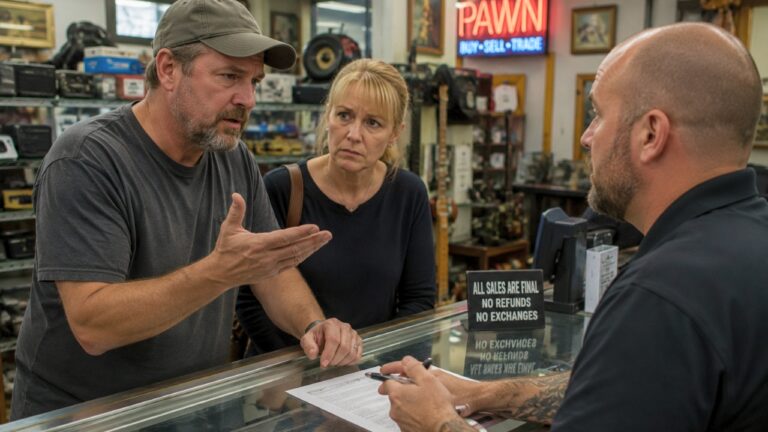
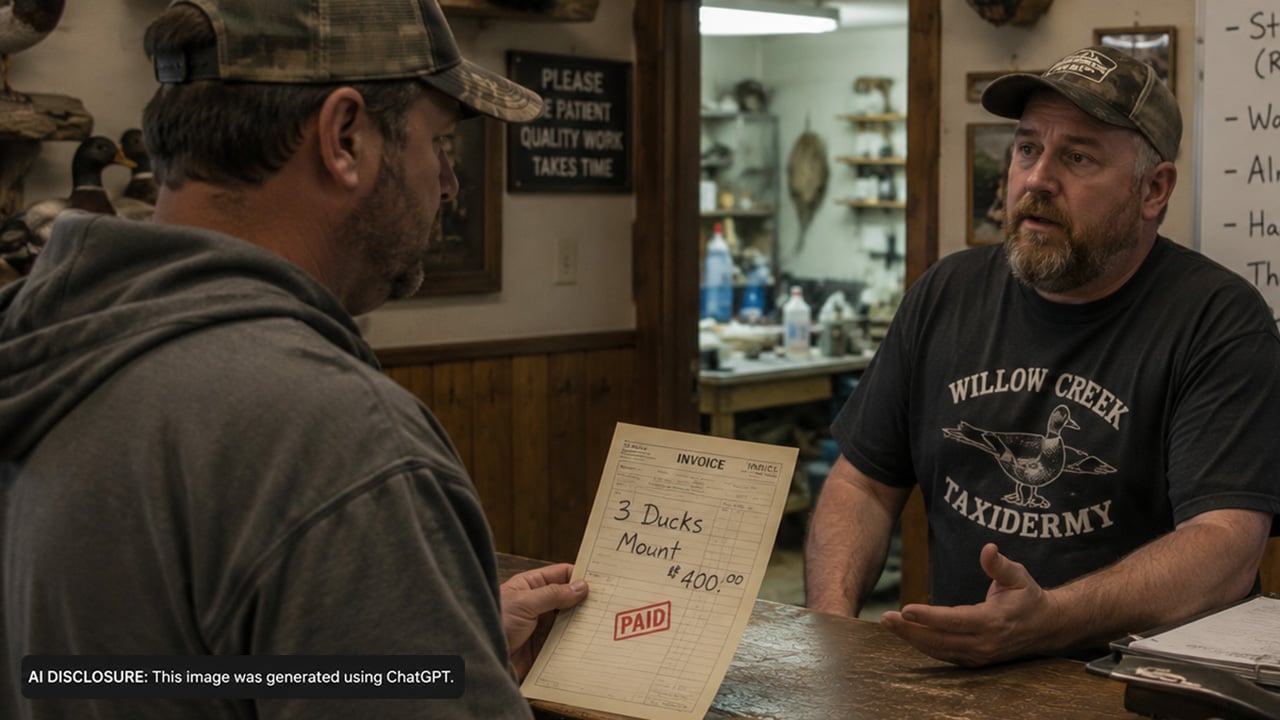
He says he dropped off three ducks with a taxidermist in Washington state who had been in business for over a decade and had good reviews. He paid $400 up front to get the work started, with the understanding he’d owe another $300 when the birds were finished. The quoted turnaround time: eight to 12 months.
One drop-off turned into a string of delays
The hunter explains that after a year went by, he called to check on the mounts. The taxidermist told him he’d been sick and in and out of the hospital. The hunter says he was understanding and told him to take the time he needed.
But time kept rolling. When he called again later, the excuse changed—this time the taxidermist said his wife had died and he’d been having a rough stretch, but promised he’d start working on the birds that year. The hunter says his patience was starting to wear thin, especially because birds don’t stay viable forever.
“These birds only have so long”
If you’ve ever handled your own birds for the freezer, you already know the truth: time and temperature are everything. And for taxidermy, proper tagging, freezing, and storage are the whole ballgame until the work gets done.
That’s why this part of the story matters. The hunter says he was getting worried that the ducks might be ruined if they sat too long. He’d already paid a deposit—about $100 per bird, plus more money paid up front—and he was watching the original eight-to-12-month window turn into multiple years.
The story shifted from “life happened” to “it’s on you”
When he pressed again, he says the taxidermist told him something that would set most customers off: if he’d brought the birds in “2 to 3 years ago,” the taxidermist would have been done with them and shipped them out. That didn’t match the hunter’s timeline, since he says the birds had already been there for years.
From there, the hunter tried to set a clear expectation. He told the taxidermist he’d give him a couple more months. If work had actually started, he’d wait it out and pay the remainder when finished. It was a reasonable way to separate “slow shop” from “no shop.”
After two more months, he called again and says he tried a different tactic—he phrased it like the taxidermist had called to say he’d started. According to the hunter, the taxidermist responded that if he had called, the hunter would know the birds were not started and were not getting done anytime soon.
When the phone stopped getting answered, the worry got real
At that point, the hunter says he lined up another taxidermist and planned to pick his ducks up and move them—essentially, salvage what could still be salvaged. His plan was straightforward: retrieve the birds out of the shop freezer and take them somewhere else.
Then came the part that will sound familiar to anyone who’s ever tried to recover property from a business that’s circling the drain. The taxidermist stopped picking up the phone. That’s when the hunter started to fear the birds might already be gone—lost, destroyed, or possibly worked on improperly.
He also suspected the shop might be avoiding him because of money. He wrote that he wasn’t even focused on getting the deposit back. He wanted the ducks, because they had sentimental value.
What outdoorsmen keyed in on: documentation, timelines, and property
The hunter also raised the practical question a lot of folks end up asking too late: what laws apply when you willingly hand over property, pay money, and there’s no written contract spelling out the timeline? He said the only paperwork that existed was in the taxidermist’s possession.
In plain terms, this is where hunters get burned. A handshake agreement feels normal in the outdoor world, and in a lot of small towns it still works fine. But when an animal is involved—especially birds that require careful handling and storage—there’s a difference between “a delay” and “a loss.” Without clear paperwork in your own hands, it gets harder to prove what was dropped off, when, and under what terms.
Even without a contract, common sense tells you a shop can’t hold someone’s property forever without doing the work or returning it. But the big practical problem is that a customer often doesn’t know whether the mounts are sitting safely in a freezer, thawed and spoiled, misplaced, or thrown out. And once birds are damaged, you can’t go back and recreate that hunt.
The hard-earned lesson: treat trophy birds like evidence
This story is a good reminder that taxidermy isn’t just art—it’s logistics. When you drop off ducks, you’re trusting that shop to keep them properly frozen, tagged, and accounted for until they’re skinned and mounted. If that chain breaks, your “trophy” can turn into a trash bag without you ever knowing.
For hunters looking to avoid this kind of mess, the habits are simple: get a detailed receipt that lists species and quantity, take photos of the birds at drop-off, write down the date and quoted timeframe, and make sure you have a copy of anything you sign. If the shop won’t give paperwork, that’s information too.
In the end, this wasn’t just about $400 and a long wait. It was about three ducks that mattered to a hunter—and the sick feeling that comes when you think they might be gone for good, with nothing but excuses and unanswered calls to show for it.
Like The Avid Outdoorsman’s content? Be sure to follow us.
Here’s more from us: