Photo credit: AI-generated image created using ChatGPT. Illustrative only
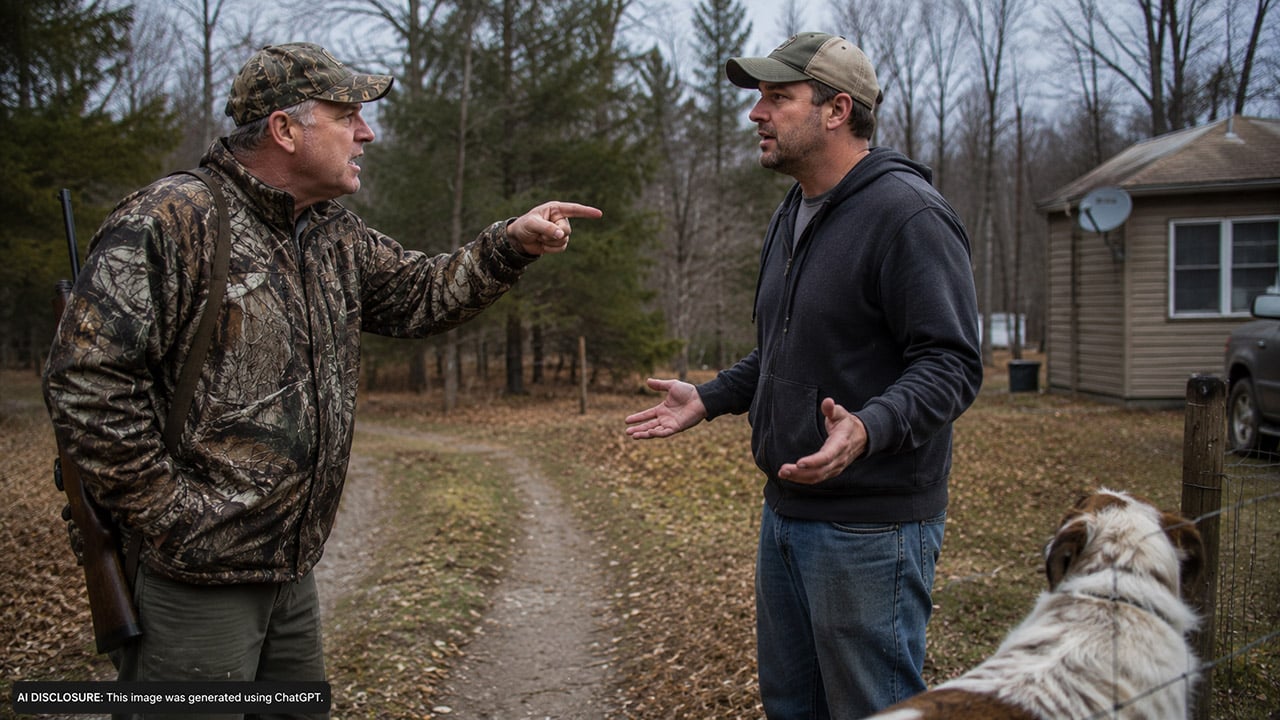
Living out in the woods comes with a certain understanding: dogs roam a little, folks hunt, and most problems get handled with a quick conversation at the driveway. But one Michigan homesteader says that’s not how it went when a neighbor he’d never met showed up “way off the road and in the woods” and threatened to kill the family’s dog over hunting frustrations.
In the original post, the landowner describes a big, young Great Pyrenees—“a big white floof and absolute lover-boy”—that sometimes wanders to nearby houses. The dog’s owner admits they’re working on training the roaming out of him, but says the dog has never shown aggression and is normally in the pasture “doing his job protecting our cows.”
A rural “dog problem” that didn’t start with aggression
If you’ve spent time around farm dogs, you know the type: part working hand, part family pet, and sometimes a little too curious for their own good. The owner describes Rover as barely over a year old, energetic, and still learning boundaries. They also say neighbors who’ve met him have typically “loved him” and simply let the family know when he wandered over.
That’s why this situation reads like a sudden gear-change. The neighbor—called “Chet” in the post—didn’t show up with a calm complaint or a “Hey, your dog’s been over here.” He showed up angry, confrontational, and made it personal fast.
The threat wasn’t tied to an actual incident
The detail that makes this one stand out is that the neighbor allegedly admitted the dog hadn’t even been a problem in the first place. According to the owner, Chet said Rover is “very friendly” and had even played with him before. Even with that, the neighbor still said he’d “take Rover out” the next time the dog came around.
That’s a different animal than a hunter protecting himself from an aggressive dog in the moment. It’s a premeditated statement about what he plans to do later, and it’s hard to hear that as anything but a threat meant to intimidate.
When a hunting dispute turns into a family safety issue
A lot of rural neighbor problems stay between adults. This one didn’t, at least not the way it’s described. The owner says the neighbor was “very aggressive,” berated them during the exchange, and frightened the kids.
That’s where the situation stops being about dogs and starts being about people. When somebody comes onto your place acting heated and talking about shooting, you have to think about where that goes next—especially when the next interaction might happen during hunting season, in the woods, with firearms already in the mix.
Property lines, roaming dogs, and the hard truth about expectations
There are two realities that can both be true at the same time. First: a neighbor showing up to threaten to shoot a friendly dog is out of line, and it’s the kind of thing that can escalate if nobody pumps the brakes. Second: if Rover is crossing property lines, even as a sweet dog, that’s still a problem the owner has to solve.
Out in the country, people have livestock, they run traps, they’ve got kids and grandkids outside, and they may have valid reasons for not wanting a large dog they don’t control wandering around during hunting season. A Great Pyrenees is a gentle breed in the right hands, but it’s also big, white, and hard to miss—exactly the kind of dog that can end up in the wrong place at the wrong time if it’s ranging too far.
The responsible move is tightening up containment and training, not because the threat is justified, but because a roaming dog is vulnerable. Even decent folks can make bad calls in the moment when adrenaline is up and they think an animal is interfering with a hunt.
Why documenting the threat matters in the real world
The landowner’s main question was straightforward: should they make a report “just for the sake of having it on the record,” even if they don’t want to take direct action right now? They also noted they don’t have a door camera or security system that captured the exchange, but plan to install something now.
From a practical, boots-on-the-ground standpoint, a paper trail changes how future problems are handled. If the neighbor comes back, if the dog is harmed, or if there’s another confrontation, being able to say, “This was reported when it happened,” is very different than trying to reconstruct it after the fact. It also helps separate “he said, she said” from a documented pattern of behavior.
Just as important, documentation can create a calmer path forward. If things escalate, you’re not forced into a driveway argument or a standoff energy. You’ve already treated it like a safety issue, not a shouting match, and you’re letting the system do what it’s supposed to do.
What other outdoorsmen zero in on: cameras, boundaries, and cooling things down
Even without a long comment thread included in the source material, you can predict what experienced hunters and landowners tend to focus on when a story like this comes up: control your dog, verify property lines, and stop the face-to-face drama before it becomes a headline nobody wants.
The owner already sounds like they’re moving in that direction—tightening training, acknowledging the roaming, and adding cameras. In country living, cameras aren’t about paranoia; they’re about clarity. A simple recording of a future interaction can keep tempers in check and protect both sides from false claims.
At the same time, it’s worth remembering that “neighbor hunting” can mean a lot of things. Is the neighbor hunting his own property, permission ground, or somewhere else nearby? Is he worried about the dog pushing deer, or is it just frustration looking for a target? The post doesn’t pin that down, but the fix on the landowner side is the same: keep Rover home and remove the excuse.
Out in the woods, good neighbors are gold. Bad ones can make your place feel smaller than it is. When somebody shows up aggressive, admits the dog is friendly, and still talks about killing it, that’s not a normal disagreement—it’s a warning sign. The smart play is to lock down the dog’s range, add cameras, and get the threat documented so the next chapter—if there is one—doesn’t start from zero.
Like The Avid Outdoorsman’s content? Be sure to follow us.
Here’s more from us: