Photo credit: The Avid Outdoorsman
The carrier was in one of the worst places for gear to fail.
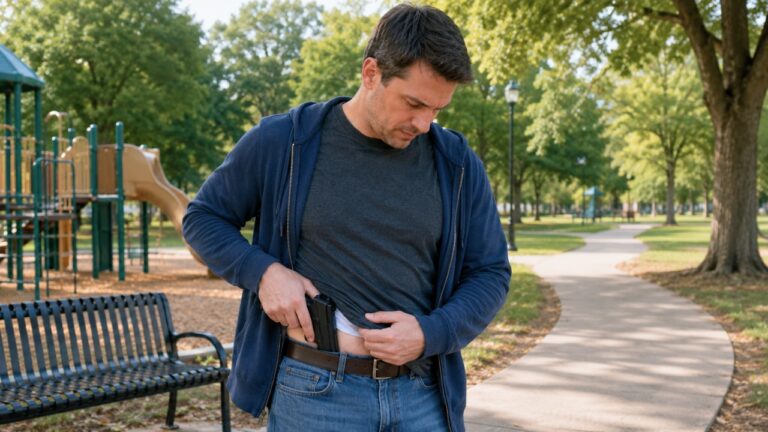
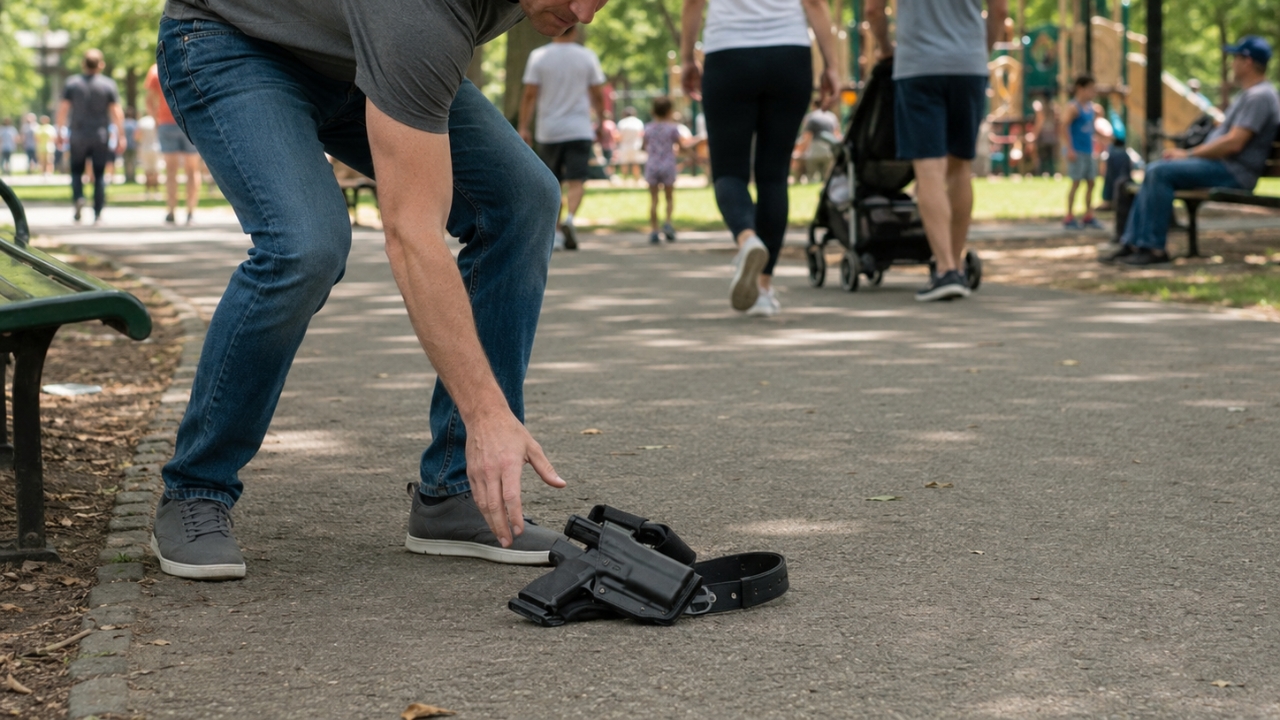
A busy park.
That is not the same as having a holster problem alone in the garage or while standing beside the truck. A park has kids running around, parents watching everything, people walking dogs, strollers passing by, and plenty of strangers close enough to notice when something weird happens.
Then his holster failed.
In a Reddit post, the concealed carrier described an embarrassing accident at the park when his carry setup failed and the holster came loose. He was able to pick up the whole rig and walk away before anyone noticed, but that does not make the moment small.
It just means he got lucky.
A holster failure in public is the kind of thing that makes your stomach drop before your brain even catches up. One second, the gun is where it belongs. The next, the setup is moving, falling, shifting, or hitting the ground. Even if the pistol stays inside the holster, the whole point of concealed carry has already failed for that moment.
The firearm is no longer controlled the way it should be.
That is especially serious in a park. Around children and families, a visible gun can cause panic fast. It does not matter that the carrier may be legal, responsible, and completely harmless. If someone sees a gun fall or a holster hit the ground, they may not wait around for an explanation. They may yell, grab their kids, call police, or assume something dangerous is happening.
That is why the carrier’s quick recovery mattered.
He picked up the whole rig and walked away before anyone noticed. That is probably the best possible outcome once the failure happened. No scene. No stranger grabbing it. No kid spotting it. No police call. No angry parent demanding answers.
But a quiet recovery is not the same as a fixed problem.
The real issue is why the holster failed in the first place. A concealed-carry setup has to stay attached to the person through normal life. Walking through a park, sitting on a bench, bending to tie a shoe, picking something up, pushing a stroller, playing with kids, or getting in and out of a car should not be enough to separate the holster from the carrier.
If it is, the setup is not ready.
Some holster failures come from weak clips. Some come from soft belts. Some come from carrying without a proper belt at all. Some happen because the holster was clipped over fabric that could not support the weight. Others happen when a holster does not have enough retention, a clip is not fully seated, or clothing catches and pulls the rig loose.
The result is the same.
The gun ends up somewhere it should not be.
There is a big difference between a gun staying holstered during a fall and a gun falling out bare. If the whole holster comes loose with the firearm still inside, at least the trigger is likely still covered. That is better than a loose pistol sliding across the ground. But it still means the carrier has lost control of the system. And once the holster is no longer attached, it can be picked up by someone else, kicked, seen, or mishandled.
A holstered gun on the ground is still a problem.
This is where a lot of carriers have to get honest about convenience gear. Cheap holsters, weak clips, sticky holsters used beyond their limits, soft waistbands, and “just running out for a minute” setups can all feel fine until they fail. Concealed carry does not care that the trip is casual. The gun is still loaded. The public is still public. The setup still has to work.
Parks also add movement that people do not always test at home. You may bend down more. Walk on uneven ground. Sit and stand repeatedly. Reach for a child. Carry bags. Move around playground equipment. Twist, squat, kneel, or lean in ways that are not part of the mirror test.
That is why real-life testing matters.
A holster that stays put while standing straight in the bedroom may not stay put when you are living an actual day. Before trusting a setup, a carrier should test it unloaded through normal movements: sit, stand, bend, climb, reach, walk, crouch, and get in and out of the car. If the holster shifts, detaches, or dumps the gun, that is the answer.
Do not carry that way until it is fixed.
The embarrassing part of this story is easy to understand. Nobody wants to be the person whose carry gear fails in a park. But the useful part is better. He found the weakness without anyone getting hurt, without a child getting near it, and without a stranger noticing.
That is a warning worth taking seriously.
A carry rig should not require luck, fast hands, or a baby-step walk away from the crowd. It should stay attached. It should keep the trigger covered. It should keep the firearm under control until the carrier deliberately removes it in a safe place.
If the holster can fall off in a park, the holster is not just embarrassing.
It is done.
Commenters mostly treated the park incident as a gear failure that needed to be corrected immediately.
Several people said the holster should not be able to detach during normal public movement. If a clip, belt, or carry method allows the whole rig to fall, that setup has failed the most basic daily-carry test.
Others focused on the public setting. A park is full of children, parents, and people who may react strongly if they see a firearm hit the ground. The fact that nobody noticed was lucky, not proof that the issue was minor.
A lot of advice came down to using better gear. A real gun belt, stronger clips or loops, proper retention, and a holster made for the specific firearm all matter. Convenience setups are not worth much if they cannot stay attached.
Some commenters also said the carrier should test any new setup at home with an unloaded gun before wearing it in public. Move the way you actually move. Bend, sit, crouch, walk, and see if the rig stays put.
The main takeaway was simple: a holster that falls off in public has told you everything you need to know.