Photo credit: Tools&Targets/Youtube
The gun owner wanted to trust the ammo.
That is usually why people buy defensive hollow points in the first place. They are not buying them because they are cheap. They are buying them because they want something dependable in the gun they may have to count on when things go bad fast.
Then one of those rounds jammed hard on the feed ramp.
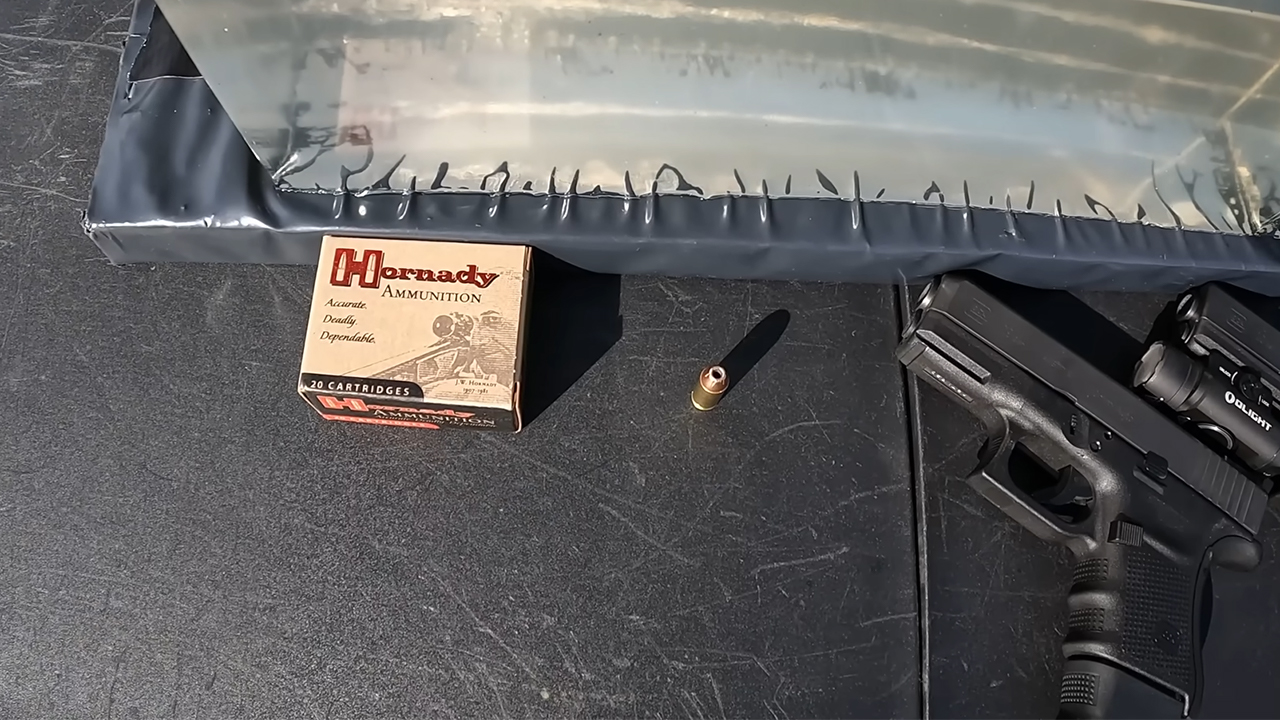
In a Reddit post, the gun owner said he was having failure-to-feed issues with Hornady Custom Defense ammo. The round was hanging up on the feed ramp instead of chambering cleanly, which is exactly the kind of problem that makes a person stop looking at a carry load the same way.
A range malfunction is one thing.
A defensive round getting stuck before it ever reaches the chamber is another.
The whole point of carry ammo is that it should work in the gun you carry. It does not matter how good the bullet design is on paper if the pistol cannot feed it reliably. A hollow point that expands beautifully in testing does not help much if it gets caught halfway into the chamber while the gun is supposed to be cycling.
That is the uncomfortable part of ammo choice.
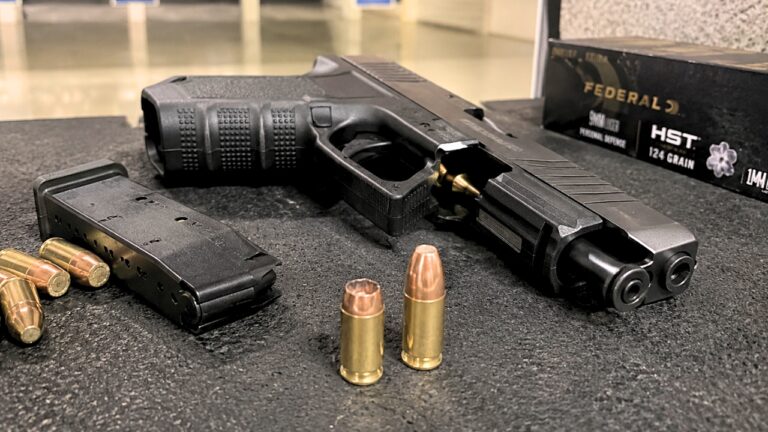
A lot of gun owners assume a known brand solves the reliability question. Hornady has a major name. Federal has a major name. Speer has a major name. Winchester, Remington, SIG, Barnes — same deal. But a respected box on the shelf does not guarantee that every specific pistol will like every specific load.
Bullet shape matters.
Some hollow points have a wide mouth. Some have a sharper profile. Some sit at a slightly different overall length. Some feed like ball ammo in one gun and hang up in another. Feed ramp angle, magazine geometry, recoil spring strength, extractor tension, and even how the shooter grips the gun can all affect whether that round makes it into battery.
That is why this kind of failure is so frustrating. The ammo may not be “bad” in a universal sense. The gun may not be “bad” either. The combination may simply be unreliable.
And for carry, unreliable is enough.
The poster was right to question it. If a round jams during normal chambering or live fire, the first job is not to defend the brand. It is to figure out whether the gun can run that ammo consistently. If it cannot, that load does not belong in the gun for defensive use.
Some people try to solve feed issues by polishing feed ramps, changing magazines, adjusting springs, or switching ammo. Sometimes that works. Sometimes the better answer is simpler: carry a load the gun already feeds without trouble. Defensive ammo is not a loyalty test. The gun gets a vote, and the gun’s vote matters more than the shooter’s preference.
The scary thing about a feed-ramp jam is how it would show up under stress.
At the range, the shooter can stop, look at the round, clear the malfunction, and think through the cause. In a real defensive moment, there may be no time for that. A failure to feed means the pistol is down until the shooter clears it. That takes training, awareness, and enough space to work the gun. None of those are guaranteed when someone is already close enough to be a threat.
That is why people get so serious about testing carry ammo.
It is expensive, yes. Running a couple boxes of premium hollow points hurts more than burning through FMJ. But the alternative is carrying a magazine full of rounds you have never asked the gun to feed under recoil. That is not confidence. That is assumption.
And assumptions are cheap until they fail.
The better approach is to test the exact load in the exact gun with the exact magazines you plan to carry. Not just one round. Not just hand-cycling at home. Actually shoot it. See if it feeds from a full magazine. See if it feeds the top round, middle rounds, and last round. Test both carry magazines. Watch for repeat problems. If the gun hangs up once, pay attention. If it hangs up more than once, stop making excuses.
The poster’s stuck round was not a disaster, but it was a warning.
A carry gun should feel boring when it cycles. Bang, eject, feed, bang again. No drama. No nose-diving into the feed ramp. No hollow point stuck at an awkward angle. No little voice in the back of your head wondering if the next round is going to chamber.
Once that doubt appears, the load has to earn its way back.
Maybe the fix is a different magazine. Maybe the gun needs cleaning. Maybe it needs break-in. Maybe the ramp has a burr. Maybe another Hornady load runs fine. Maybe Federal HST, Speer Gold Dot, or another defensive round feeds better in that pistol.
But until it is tested and proven, it does not get carried.
That is the lesson the feed ramp taught him. The box can say defensive ammo. The brand can be trusted by thousands of people. The bullet can look perfect. But if your pistol will not feed it, it is the wrong load for you.
Commenters mostly pushed him toward testing and switching loads if the problem repeated.
Several people said hollow-point feeding issues can be gun-specific. A load that runs perfectly in one pistol may hang up in another because of bullet profile, magazine angle, or feed-ramp shape. That does not always mean the ammo is defective, but it does mean the combination is not proven.
Others said not to rely on hand-cycling alone. A gun can feed differently under live fire than it does when someone racks the slide slowly at home. Defensive ammo needs to be shot through the gun, not just chamber-checked.
A lot of the practical advice came down to magazines and cleaning. Try different magazines, mark the one that caused the issue, clean the gun, inspect the feed ramp, and see if the failure repeats.
Some commenters were blunt: if a carry load jams more than once, stop carrying it. There are too many good defensive loads available to force one that your gun clearly does not like.
The main takeaway was simple. Carry ammo has to do more than look good in the box. It has to feed in your gun every time.