Photo credit: AI-generated image created using ChatGPT. Illustrative only
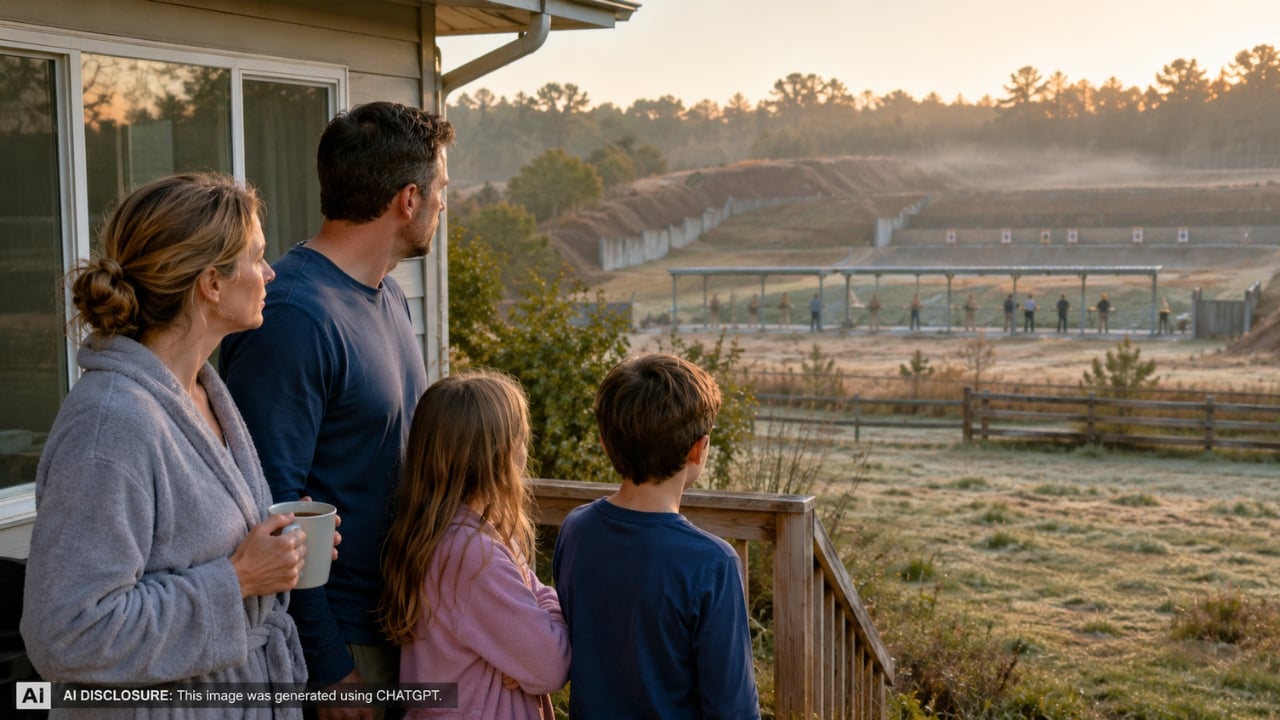
Buying a new place is supposed to feel like a fresh start. New paint, clean driveway, that first cup of coffee while you look out over your backyard and think, “Alright, we did it.” For one Texas couple, that first morning came with a sound they expected—gunfire—and a risk they didn’t.
In the original post, the homeowner explained that he and his wife bought a newly built house in Texas and only after closing learned they were positioned “directly in line of fire” behind a shooting range. The noise wasn’t the issue. The issue was bullets.
A range in the neighborhood is one thing—stray rounds are another
The homeowner said he did what most responsible folks do before buying property. He checked practical stuff—cell towers, high-voltage lines, flood zones, nearby schools, fire stations. And when it came to the range, he figured the deal was simply living with the sound of early-morning shooting.
What he didn’t expect, and says he wasn’t told, was that homes in the neighborhood were already getting hit. He described garage doors, back doors, windows, roofs, and even front doors being struck by stray bullets. That changes the whole conversation from “country living” to “this could get someone hurt.”
The couple says nobody warned them during the sale
According to the post, neither the real estate agent nor the builder informed them of the bullet problem before they signed. That’s the part that would make any homeowner’s stomach turn, because the risk wasn’t theoretical—it was already happening to other houses.
He also claimed other builders in the same neighborhood handled it differently, requiring customers to sign a waiver acknowledging the situation. His builder did not. And in a detail that makes it harder to chalk up to simple ignorance, he said a soon-to-be neighbor told him he personally warned the salesperson after his own front door was hit.
Damage reports piled up, but accountability didn’t
The homeowner said the gun range even bought his neighbor a new front door after it was struck. That alone tells you everyone involved knew rounds were leaving the range property and ending up where they shouldn’t.
But when residents reported incidents, he said police would write it up as “criminal mischief,” and then…nothing. No one was held accountable. That’s a rough place to be: you’ve got physical evidence—holes in doors and roofs—but no clear path to stop it.
Local officials reportedly pointed to strong range protections under Texas law
Looking for help, the homeowner said they met with local police, the city, and attorneys. The response they got was blunt: there was nothing local government could do because the range is protected by Texas state law.
Texas does have laws that shield established ranges from certain complaints and lawsuits, especially nuisance claims tied to noise as development spreads around them. That makes sense when the argument is “I don’t like hearing gunshots.” It’s a different deal when people are talking about projectiles leaving the property and hitting residences. Still, this family said the message from the city side was essentially, “Our hands are tied.”
What outdoorsmen and homeowners tend to focus on in situations like this
When a neighborhood is getting peppered with stray rounds, the first instinct is to argue about who moved next to who. The homeowner addressed that head-on: he accepted the noise, and he wouldn’t have guessed the area would be zoned residential if there was an inherent danger to life. Most reasonable gun owners would agree—noise is one thing, rounds escaping a range is another.
From a practical, boots-on-the-ground standpoint, a few priorities usually rise to the top. Documentation matters: photos of impacts, dates and times, police report numbers, communications with builders and range staff, and any repair invoices. Safety matters too: if a home is truly in a line that’s catching rounds, you think about where kids play, where bedrooms sit, and what parts of the house are most exposed. And then there’s the big one: figuring out who actually has authority to force changes—whether that’s the range’s insurer, a state agency, or through civil action aimed at the parties who knew and didn’t disclose.
The hard choices: sell, fight, or force a fix
The homeowner laid out the same options a lot of families would stare at in this spot. They could sell and take a loss, but he said he’d feel awful putting someone else in that situation. That’s an honest reaction—because if you know, you know, and passing the problem down the road doesn’t sit right with most folks.
So he wanted to solve it for the safety of everyone affected. In the real world, that usually means pushing for a fix at the source: range safety improvements, changes in berms/backstops, firing line adjustments, or stricter control of where and how shooting happens. Those details get technical and legal fast, but the goal is simple—keep every round on range property.
It also puts a spotlight back on the development side. If some builders were having buyers sign waivers and one wasn’t, that’s a major difference in disclosure and risk. Even if the range is legally protected in some ways, a builder’s and agent’s duty to disclose known hazards is a separate question—one the homeowner was clearly trying to understand.
At the end of the day, most gun owners want ranges to thrive, and most homeowners want to enjoy their property without worrying about a bullet showing up in their garage door. Those two things can coexist—but only when the range is built and operated in a way that keeps rounds where they belong. When that fails, it’s not a noise complaint anymore. It’s a safety problem, plain and simple.