Photo credit: AI-generated image created using ChatGPT. Illustrative only
It usually starts simple: a family member passes, everyone’s grieving, and somebody says, “What are we doing with all his guns?” In this case, the collection wasn’t a handful of deer rifles and a bird gun. It was “quite the collection,” and the person who died didn’t leave a will or trust.
That’s when the arguments begin—because firearms aren’t like a couch or a toolbox. They’re valuable, they’re regulated, and if the wrong person ends up in possession, it can turn into a criminal problem in a hurry.
The “just take them” instinct is where families get in trouble
The family member asking for help laid out the basics in the original post: the deceased owned a sizable collection of regular, non-NFA firearms, but had no will, no trust, and “no heirs to speak of.” The immediate question was practical—can a brother or other next of kin just have the guns transferred, or does there need to be a legal process first?
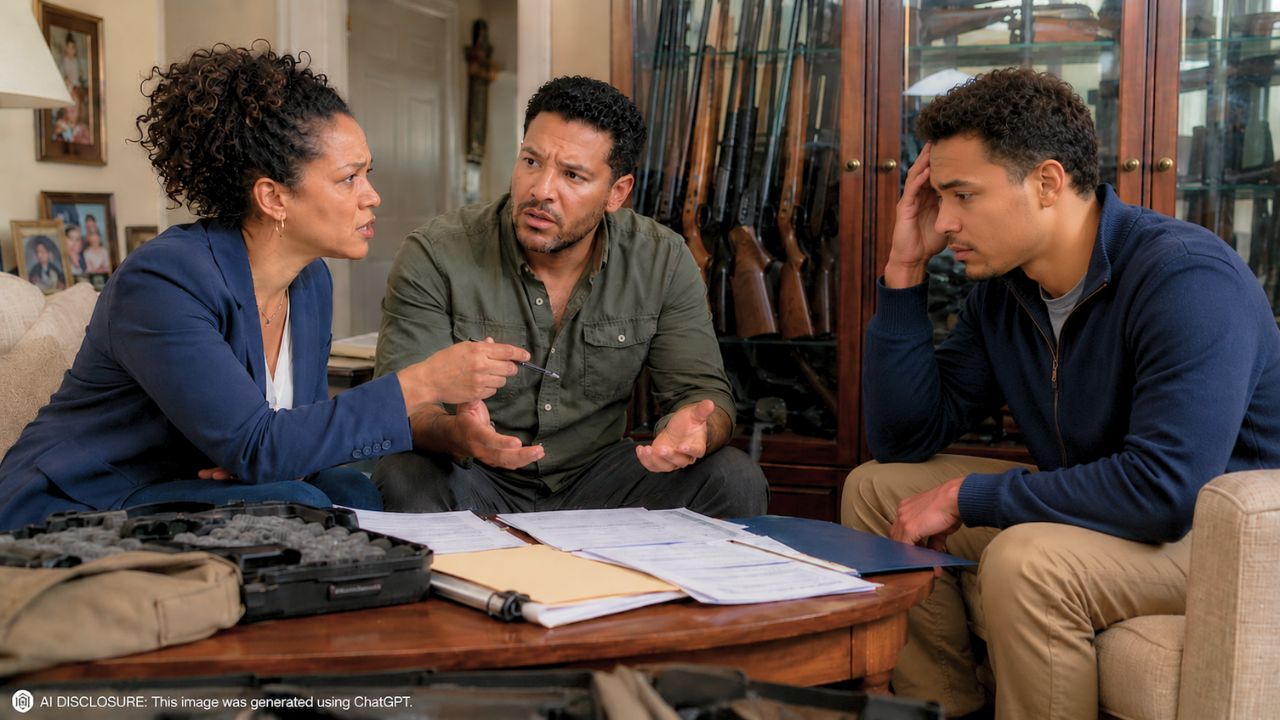
In the real world, this is exactly where families get sideways. Somebody starts boxing guns up “for safekeeping.” Somebody else starts calling dibs. And if there’s already tension over property, firearms become the sharp edge of the whole mess.
No will doesn’t mean “no rules”—it means probate and state law
When there’s no will, the estate doesn’t disappear. What happens is the state’s intestate succession rules kick in. That means who gets what is decided by a legal order of priority—spouse, kids, parents, siblings, and so on—depending on the state.
Even if the family is sure a brother should get the collection, it often still has to be handled through an estate process so there’s legal authority to transfer property. In plain terms: someone needs to be the person who can sign paperwork, settle debts, and distribute assets lawfully. Without that, you’re in “good intentions, bad results” territory.
And guns add another layer. Transfer rules vary by state, and sometimes the cleanest path is for the estate’s representative to distribute them according to the law—or sell them through a dealer—so there’s documentation showing the firearms didn’t just vanish into the wind.
The fight changes when one “heir” can’t legally possess firearms
Family blowups over inheritance are common enough. But the tone changes fast when it dawns on everyone that one of the folks pushing to inherit the collection is a prohibited person—most commonly a convicted felon.
That’s not just an awkward family detail. If a prohibited person takes possession of firearms, they can be looking at serious charges. And the family members who knowingly hand them over—or “store them” at the felon’s house, or let him take them “just for now”—can create legal exposure for themselves, too.
This is where people who don’t live and breathe gun laws get tripped up. They think, “He’s family,” or “He’s not going to do anything with them,” or “They were Dad’s guns.” But prohibited possession isn’t about whether the person plans to commit a crime with the gun. It’s about possession itself.
What a responsible family does next: secure, document, and slow down
With a collection involved, the first priority is simple: secure the firearms safely and keep track of what exists. That means unloaded, stored responsibly, and not passed around like trading cards while everyone argues.
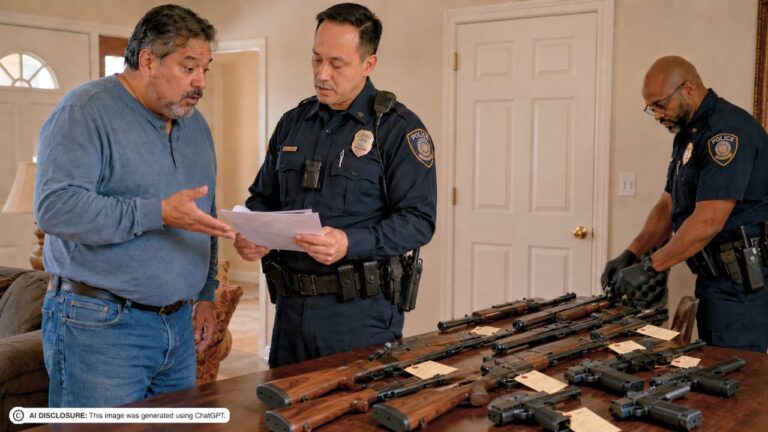
The next priority is documentation. A written inventory—make, model, serial number—can feel like busy work when you’re grieving, but it’s how you prevent guns from “walking off.” It also protects the honest relatives when somebody later claims there were 40 guns and now there are 28.
Then slow down. If there’s no will, the family needs to treat the guns like what they are: estate property. In many cases, that means getting an estate opened and having a personal representative/executor (or administrator, depending on the state) appointed so transfers are made by the person who has the authority to do it.
If there’s a known prohibited person in the mix, that’s also the moment to set a hard boundary. They don’t get to “hold” them. They don’t get a key to the safe. They don’t get to transport them. That’s not being mean—that’s keeping the entire family out of the blast radius.
The practical options: distribute legally, or sell through a clean channel
For families that want the guns to stay in the family, the lawful path is typically an estate transfer to eligible relatives, following state rules. Depending on where you live, that may be straightforward or may require transfers through an FFL, background checks, or other steps.
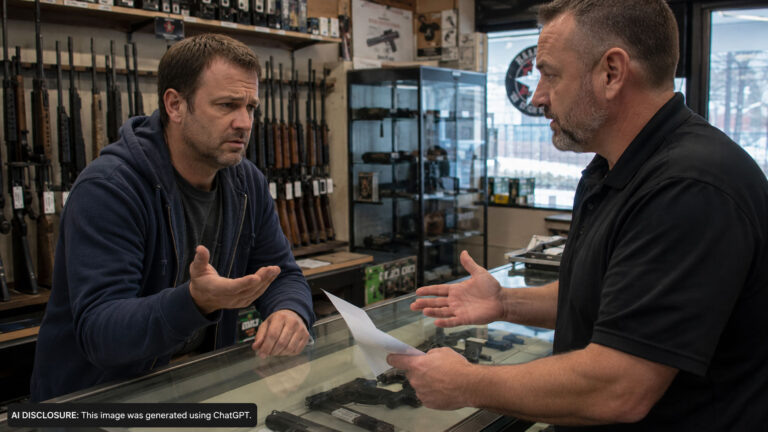
For families that are already fighting—or where nobody wants to take responsibility—selling can be the most realistic option. A reputable gun shop handling the process can keep things above-board, create a paper trail, and convert a complicated pile of steel and wood into estate funds that can be divided according to the law.
And if there truly are “no heirs to speak of,” the legal system still has a process. Estates can end up going to more distant relatives under intestate succession rules, or in some cases escheat to the state. That’s another reason to get proper guidance early—because “no heirs” sometimes just means “no obvious heirs in the immediate circle.”
The lesson for gun owners: don’t leave your family a grenade
If you own guns—and especially if you’ve got a collection—this is the kind of situation you can prevent with some basic planning. A will or trust isn’t just about money. It’s about taking away uncertainty, reducing family infighting, and keeping firearms out of the hands of someone who shouldn’t have them.
Even a simple plan helps: name the person you trust to handle your affairs, be clear about who gets what, and keep an inventory where your executor can find it. Because when you’re gone, your relatives are left to deal with the legal side and the emotional side at the same time. A gun collection makes that heavier, fast.
For the family in this situation, the best move is the boring one: treat the firearms like estate property, keep them secured and accounted for, and use the legal process to transfer them only to people who can lawfully own them. When there’s already tension in the room—and a prohibited person circling—the safest path is the one that leaves a paper trail and leaves nobody guessing.
Like The Avid Outdoorsman’s content? Be sure to follow us.
Here’s more from us: