Photo credit: AI-generated image created using ChatGPT. Illustrative only
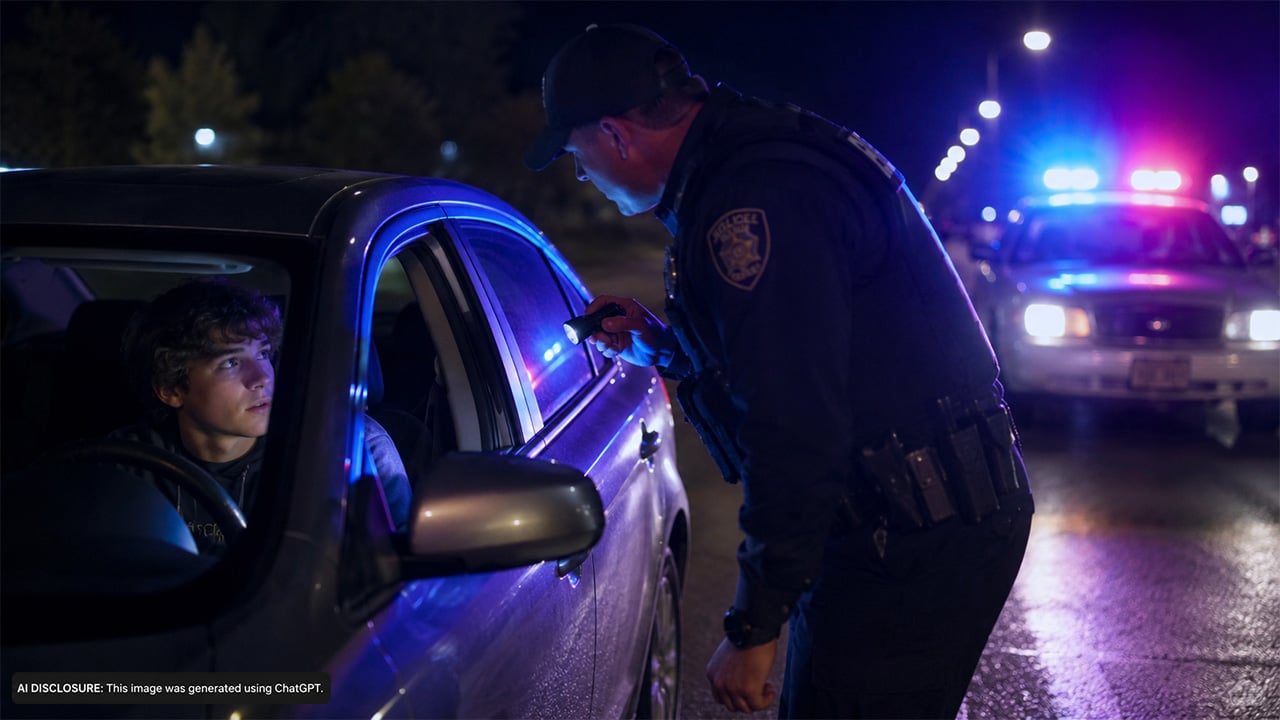
It was the kind of stop most folks in the country have had at least once: late night, empty roads, and a patrol car’s lights flipping on behind you for something small. In this case, a Tennessee driver says he was pulled over around 2:30 a.m. for a taillight that was out, and he decided to do what a lot of gun owners think is the safe play—he told the officer there was a firearm in the vehicle.
That’s when the night took a hard turn. According to the original post, the 18-year-old says his Glock 27 was seized and his friend’s Glock 21 was seized as well, with the reason given being “unlawful carrying.” Now he’s looking at a court date about two months out, with no handgun in the meantime, and a big question hanging over the whole thing: if Tennessee law doesn’t bar an 18-year-old from possessing a gifted handgun, why were the guns taken?
A simple equipment violation turned into a gun stop
From the driver’s description, the stop began as routine: an officer said a taillight was out. That’s as common as it gets, and it’s also one of those reasons you can get stopped without doing anything reckless—just bad timing and a bulb that finally quit on you.
But once the driver volunteered that a firearm was in the car, the focus shifted. Many outdoorsmen have been in that exact moment, weighing how to handle it. Some folks disclose immediately out of caution. Others keep their mouth shut unless asked, especially in states where disclosure isn’t required. Either way, the story shows what can happen when “I’m trying to do the right thing” meets a confusing patch of carry law.
The key detail: they were 18 with handguns said to be gifted
The driver says both he and his friend are 18. He also says they were legally able to carry because the handguns were gifted to them. In his words, he had a Glock 27 and his friend had a Glock 21, and both were taken.
That matters because age is often where people—gun owners and officers alike—get tripped up. Plenty of folks correctly remember that you can’t walk into a gun shop and buy a handgun at 18. Then they incorrectly assume it’s illegal to possess one at 18 at all. Those are two different questions, and the difference can decide whether a stop ends with a warning or ends with property being seized and a court date on the calendar.
What Tennessee and federal rules actually say (in plain terms)
The source material points to Tennessee Code § 39-17-1307(a)(1) and notes that it does not prohibit people 18 or older from possessing handguns. That’s the first important piece: possession isn’t automatically illegal in Tennessee just because someone is 18.
The second piece is federal law. Under 18 U.S.C. § 922(b)(1), a federally licensed dealer can’t sell a handgun to someone under 21. That’s the gun counter rule most people know. But the source also notes that private transfers or gifts to someone 18 or older can be lawful, as long as the recipient isn’t otherwise prohibited from possessing firearms.
So you can see the lane this driver is in: “I’m 18, these pistols were gifted, I’m not prohibited, so why am I being treated like a prohibited person?” It’s a fair question to ask. It’s also where “possessing” and “carrying” can get tangled, because even if possession is legal, the manner of carry and the location can still matter depending on the exact circumstances.
Why “unlawful carrying” gets thrown around at 2 a.m.
The officer reportedly used the phrase “unlawful carrying.” That phrase can cover a lot of ground, and not all of it is obvious in the dark on the side of the road. Was the handgun on a person? Was it loaded? Was it concealed? Was it in a vehicle in a way the officer believed didn’t comply with the law? The post doesn’t spell out those specifics, but those details are often what drives the decision to seize a gun during a stop.
There’s also the human factor. Most officers spend their careers dealing with guns in the hands of people who are up to no good. When a young driver says “I’ve got a gun,” that can raise the temperature fast, even if the kid is trying to be transparent and safe. A lot of gun owners assume disclosure earns trust. Sometimes it does. Sometimes it just changes the whole tone of the encounter.
And then there’s the age issue again. If the officer’s working assumption was “under 21 equals illegal handgun,” it’s easy to see how the stop could go sideways. That doesn’t mean the assumption is correct—it just explains how a bad assumption can produce a real-world consequence in about 30 seconds.
The practical consequences: no gun, a long wait, and a paper trail
The driver’s biggest immediate problem is simple: “I have no gun and court is two months away.” In the real world, that’s not just an inconvenience. For a lot of rural folks, a handgun isn’t a fashion accessory—it’s part of how they move through their day, especially if they’re traveling at odd hours, commuting long distances, or living in places where help isn’t always close.
There’s also the cost side. If a gun is seized and not promptly returned, you’re stuck in limbo. Even if you eventually get it back, the process can mean missed work, court dates, towing fees if things get worse (doesn’t appear to have happened here), and attorney costs if you choose to lawyer up. And every step creates a record—reports, property receipts, maybe citations—documents that matter later when you’re trying to prove what was legal and what wasn’t.
It’s also worth saying out loud: a seized firearm can come back with extra wear, missing accessories, or a different condition than it left in. That’s not an accusation about any particular department—just a reality of property rooms, evidence tags, and guns being handled by people who don’t own that gun and don’t have the same care for it that you do.
What people zeroed in on: the gap between “can own” and “can carry”
The source material leans hard on a point many gun owners have made for years: Tennessee law doesn’t automatically bar an 18-year-old from possessing a handgun, and federal law is often misunderstood. That’s the center of the dispute the driver is raising—he believes the seizure was wrong because the guns were gifted and lawful to possess.
But in these situations, the debate usually turns into two parallel tracks. Track one is legality: what does the statute actually say, and does it apply to the way the gun was being carried at that moment? Track two is procedure: even if the gun was lawful, did the officer believe there was probable cause to seize it pending review, and what does the court require to get it back?
Outdoorsmen tend to think in practical steps: what paperwork do you have, what can you prove, and what’s the fastest path to getting your property returned. The internet tends to argue about who’s “right.” The real world asks whether you can show up with receipts, gift documentation if it exists, and a clear statement of how the gun was transported and carried.
None of that is glamorous. It’s just what gets results when your gun is sitting on a shelf in a property room.
If there’s a lesson here for Tennessee gun owners—especially younger ones—it’s that the rules around handguns don’t always match the rules around buying them, and a late-night traffic stop is a terrible place to sort that out for the first time. Know your state’s carry rules, keep your vehicle squared away, and if you do get stopped, stay calm and make sure you leave with every bit of paperwork you’re entitled to. That paper trail can matter just as much as the law itself.
Like The Avid Outdoorsman’s content? Be sure to follow us.
Here’s more from us: