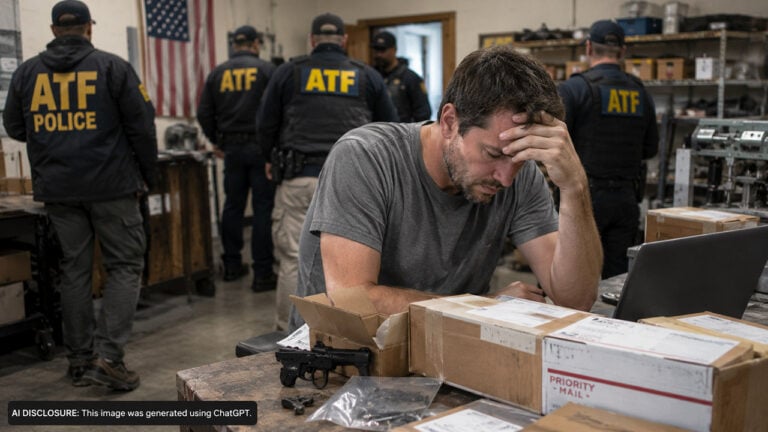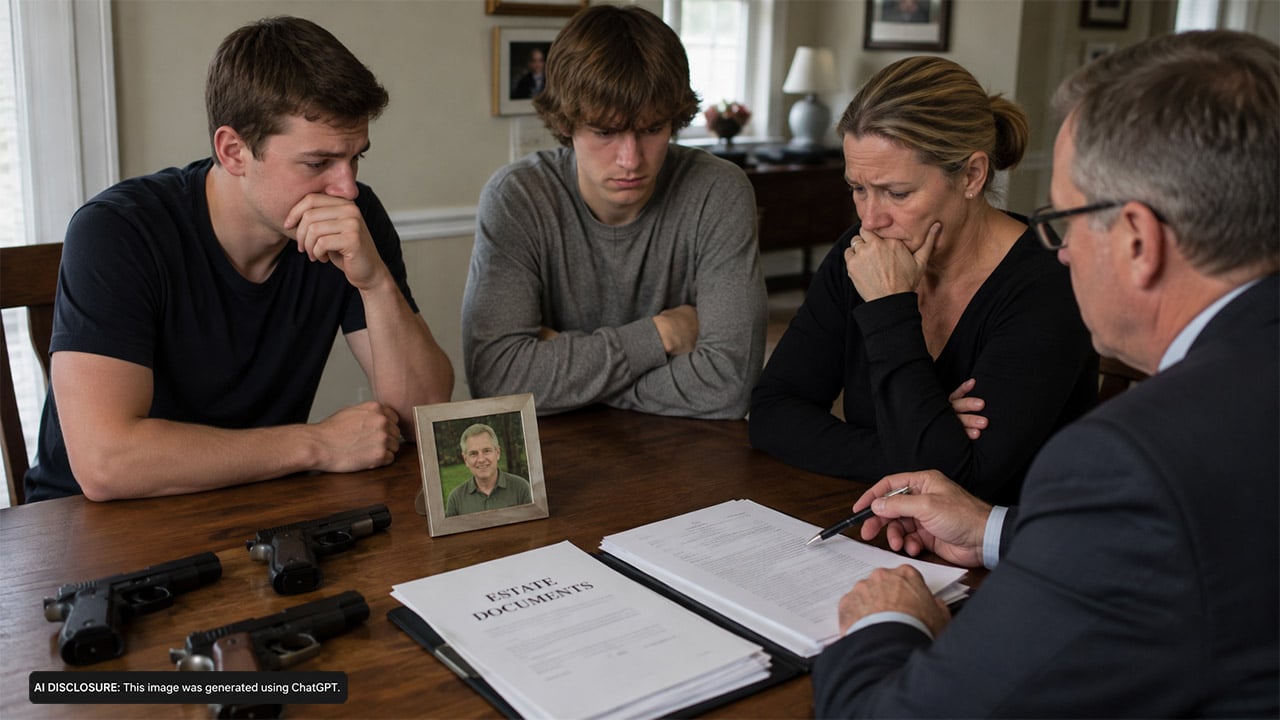
Photo credit: AI-generated image created using ChatGPT. Illustrative only
A family’s firearms plan can feel simple right up until it isn’t. One Michigan son recently found himself staring at that reality after his dad died in June of 2025 with a small gun collection and no will, even though he’d told his boys which guns he wanted each of them to have.
In the original post, the son asked the question a lot of gun-owning families eventually face: when Dad made a verbal promise about a few handguns, does that actually mean anything once he’s gone—especially when a surviving spouse is still in the picture?
The promise was clear, but it wasn’t written down
The son said his father had “a small firearm collection including a few handguns,” and he’d talked through which guns should go to which son if something happened. That’s common in hunting camps and family workshops—hand a kid a rifle on his first deer hunt, tell him, “This one’s yours someday,” and everyone nods like it’s settled.
The problem is that a verbal plan and a legal plan aren’t the same thing. When someone dies without a will, the state’s default rules—intestate rules—step in and decide who inherits what. The family might all agree on what Dad wanted, but agreement doesn’t automatically create clean ownership, especially for handguns that are more tightly regulated than grandpa’s old tackle box.
A surviving spouse can change the entire map
The key detail here is the stepmom. The son asked whether the handguns “automatically transfer[red] ownership to her after he passed.” That question tells you the family already senses the pressure point: even if Dad told the boys what he wanted, his widow may have a legal claim that comes first.
In plain terms, many states prioritize a surviving spouse in intestate situations, and Michigan has its own set of rules that can depend on things like whether the deceased had children with someone other than the surviving spouse. The son didn’t lay out those family-tree specifics, but the practical outdoorsman takeaway is the same: if there’s a spouse, don’t assume the kids can just divide up Dad’s pistols in the garage the week after the funeral.
And it’s not necessarily about anyone being greedy. It’s about legal standing. The widow may be the one who can legally possess, store, and transfer those handguns while the estate is being handled. If the family skips that step and just “gives” them away, they can accidentally create a mess that’s harder to fix later.
Handguns aren’t like inheriting a bow or a shotgun
To most gun owners, a firearm is a tool with a story. But legally, handguns tend to have extra hoops compared to other property. Michigan’s rules have changed over time, and there are differences between simply possessing a handgun, purchasing one, and transferring one. Add death and probate into the mix, and it’s easy for regular folks to get turned around.
The son’s instinct—“Trying to figure out what I need to do to make ownership”—is the right one. “Ownership” isn’t just having it in your safe. It’s whether you can prove the transfer was lawful and whether your name is properly tied to the handgun under current Michigan requirements. If there’s ever a theft report, a defensive gun use, or even just a future sale through an FFL, that paper trail matters.
From a safety standpoint, there’s another immediate issue: where are the guns right now, who has access to them, and are they secured? When families are grieving, firearms can wind up in a dresser drawer, on a closet shelf, or passed around casually. That’s how “Dad’s guns” turn into a preventable tragedy or a legal headache.
Probate and the estate—not the gun cabinet—usually decides
When there’s no will, the estate process is the lane you typically have to stay in. That means someone—often a spouse or a court-appointed personal representative—handles property, pays debts if needed, and distributes what’s left under the state’s intestate rules.
That can feel cold when you’re talking about heirlooms. But it’s the system that keeps transfers from turning into accusations later. If one son takes a handgun because “Dad promised it to me,” and the widow believes it was marital property or part of the estate she’s entitled to, the family isn’t just arguing about sentiment anymore. They’re arguing about lawful possession.
In situations like this, the cleanest path is usually paperwork-first: confirm who is authorized to act for the estate, confirm what the estate actually owns, and then transfer through the correct legal channel once distribution is allowed. If the widow is cooperative, that may be straightforward. If she isn’t, the sons may have to accept that Dad’s verbal wishes don’t automatically override a spouse’s legal rights.
The practical steps gun-owning families tend to overlook
This kind of situation is why so many experienced hunters and gun guys preach the boring stuff: write it down. A simple will, a list that matches serial numbers, and a plan for who gets what can keep the “he told me” arguments from ever starting. Even better, it gives the surviving spouse cover when relatives start asking for guns two days after the funeral.
It also helps to think about storage and access ahead of time. If Dad was the only one who knew the safe combo, or if the guns were in a house that the widow now controls, the sons might not have lawful access anyway. That can feel personal, but it’s often just the reality of how households and estates work.
And if you’re the guy reading this with a few handguns you plan to leave to your kids: don’t make them guess. Put it in a will. Keep the list updated. If you’ve got a blended family, it’s even more important, because the default rules may not match what you told the boys at deer camp.
For the Michigan sons in this case, the safest, cleanest move is to treat those handguns like what they are right now: estate property that needs to be handled through the proper legal process, with the widow’s rights accounted for. That’s not the romantic answer, but it’s the one that keeps a family from turning a few pistols into a long-term feud—and keeps everyone on the right side of the law.
Like The Avid Outdoorsman’s content? Be sure to follow us.
Here’s more from us: