Photo credit: Theavidoutdoorsman.com
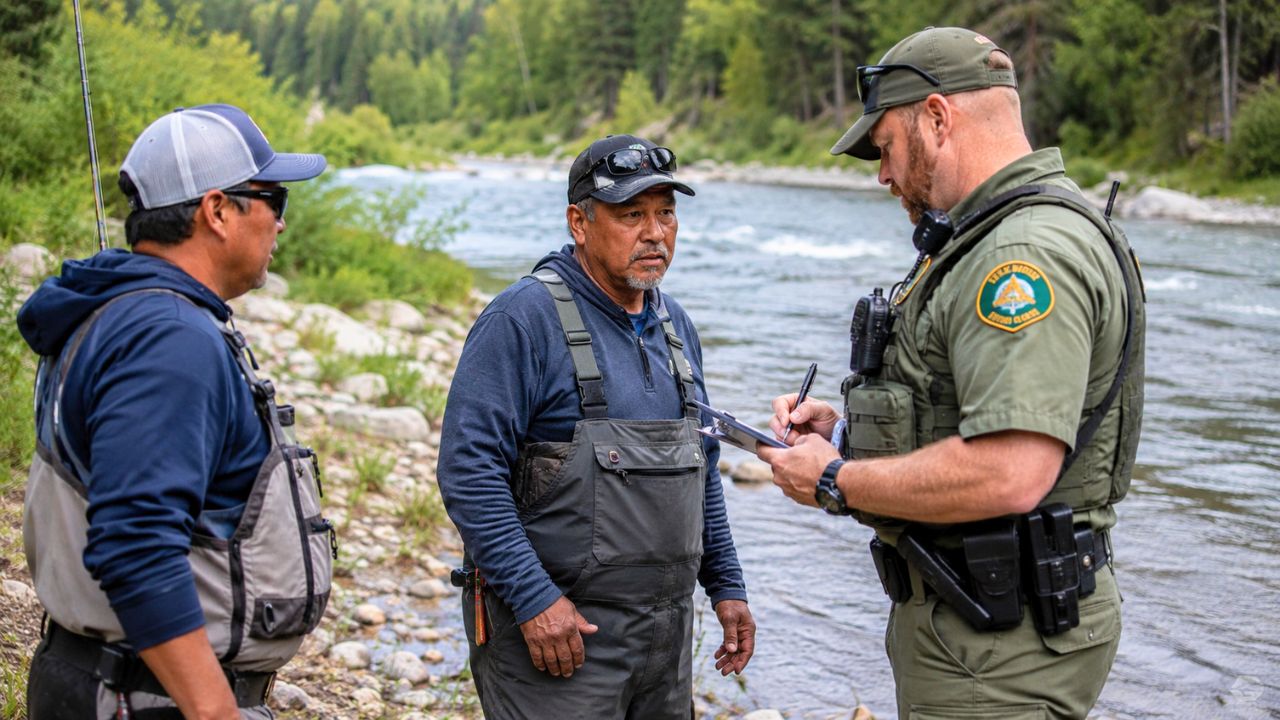
Two guys were working a quiet stretch of river from the bank, leapfrogging each other between little seams and deeper runs where the current rolled slow. It was the kind of evening where you can hear every cast land and every drag click, and you start believing you might have the whole place to yourself.
That’s usually when a green truck eases down the access road and a game warden steps out.
A routine license check turned into a paperwork mess
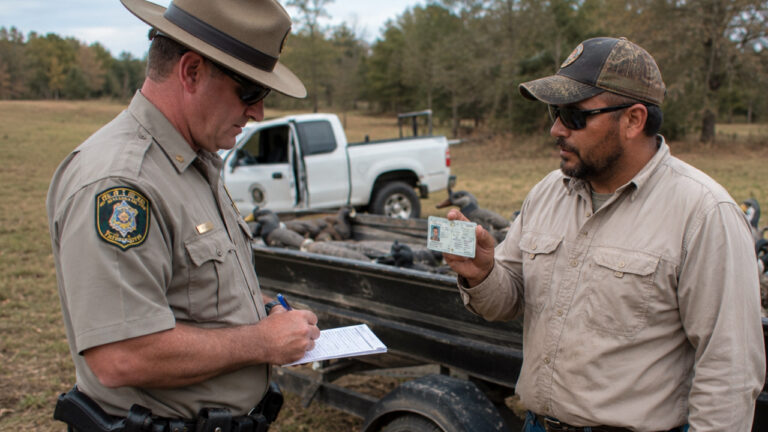
The warden did what wardens do. He walked in calm, watched hands and gear, and started with the basics: how the bite was, what they were using, and whether they had licenses on them. Both anglers said they were covered and offered up their driver’s licenses to speed things along.
One of them also pulled up a digital license on his phone, but service along that river was spotty. The screen loaded halfway, then froze, which is a pretty common headache in rural areas where you can have five bars one second and nothing the next.
The wrong name got run, and the tone changed fast
Instead of the usual quick “you’re good, have a nice night,” the warden’s radio chatter went quiet and his posture tightened. He’d entered one angler’s information into the database, but the name he ran didn’t match the person standing there.
It wasn’t a case of somebody lying and getting caught. It was a mix-up that can happen when two people share a similar name, or when a nickname gets offered instead of a legal first name, or when an old address and an updated address don’t line up. A mistyped letter or swapped middle initial can turn a clean record into a “no license” hit in a hurry.
And once the system flags it, the warden has to treat it like a real violation until it’s sorted out.
How a simple verification turns into a citation
From there, the conversation usually goes down one of two roads. If the angler can produce a current license number, a screenshot with the proper name, or a paper copy tucked into a tackle bag, the warden can verify it on the spot. If not, the warden is left with what he can confirm in the database at that moment.
That’s where things went sideways for one of the anglers. The database search the warden ran came back as “no valid fishing privileges,” and without a clean, verifiable license in hand, the warden wrote the citation for fishing without a license.
Meanwhile, the other angler’s check went through just fine, which made the whole situation feel even more frustrating. Same riverbank, same warden, one guy fishing legally, the other suddenly facing a ticket because the wrong name was tied to the search.
To make it worse, the warden likely warned that the citation still stands even if the angler later proves he had purchased a license—because the question becomes whether it can be amended or dismissed through the proper process, not whether the warden can guess right on the bank with limited signal and a database that’s only as good as what’s typed into it.
The options anglers actually have when the system is wrong
A lot of folks assume you can just argue it out right there, but that’s not how it works. A warden’s job is field enforcement, and the roadside or riverbank isn’t the courtroom. If you think the wrong identity was run, the best move is to stay calm and give the warden the cleanest information possible—full legal name, date of birth, and current address exactly as it appears on your license purchase.
If you bought online, an order confirmation email with your license number can be gold. Same with a saved PDF of your license in a folder on your phone that doesn’t require cell service to load. Many state systems let you download an offline copy for this exact reason.
If you still get cited, the fix usually looks like this: you gather proof of purchase (transaction number, date/time, license type), contact the licensing vendor or state system to correct any profile mismatch, and then follow the instructions on the citation to contest it or present documentation. In many places, there’s a path to get it reduced or tossed if you can show you were licensed at the time and the issue was a clerical error—especially if it’s tied to identity confusion rather than someone knowingly fishing without buying a license.
But you have to do it the right way, on paper, and within the deadlines.
What folks fixated on: wardens, databases, and “proof on your person”
Whenever a story like this makes the rounds at bait shops and local social pages, the same arguments show up. One group says wardens should be more flexible because technology fails in the field and honest people get jammed up. Another group says it’s on the angler to have proof in hand, because enforcement has to be consistent or it turns into a guessing game.
Plenty of outdoorsmen also point out a hard truth: databases aren’t perfect. Between common names, old customer profiles, and people who bought licenses under a different version of their name years ago, mistakes happen. Add in rural dead zones where your phone won’t load the app, and you’ve got the recipe for a bad evening.
There’s also the “keep it simple” crowd, and I tend to agree with them. Don’t rely on a spinning loading wheel. Keep a printed copy in your vest or tackle bag, or at least keep an offline screenshot that clearly shows your name, the license type, and validity dates. Screenshots aren’t accepted everywhere as official proof, but they can help a warden verify you’re not bluffing while he’s sorting out the database.
The practical lesson: make the license check boring
The easiest way to avoid this mess is to treat your license like you treat your tags during hunting season: make it easy to show, even when you’re wet, cold, and standing in a place with no service. If you’re running digital, download an offline copy if your state offers it. If you’re old-school, tuck a paper license into a waterproof sleeve and forget about it until someone asks.
And when a warden comes walking up, keep your hands visible, don’t get defensive, and help him confirm your identity cleanly. Most wardens aren’t out there looking to burn someone who’s doing the right thing. But if the wrong name gets run and the system says “no license,” you don’t want to be standing there with nothing but a frozen app screen and an argument.
Make it boring. That’s the goal. The river is where you go to relax, not where you go to learn how unforgiving a typo can be.
Like The Avid Outdoorsman’s content? Be sure to follow us.
Here’s more from us: