Photo credit: The Avid Outdoorsman
A California landowner said he was dealing with the kind of trespassing problem that feels different from someone simply cutting across a field.
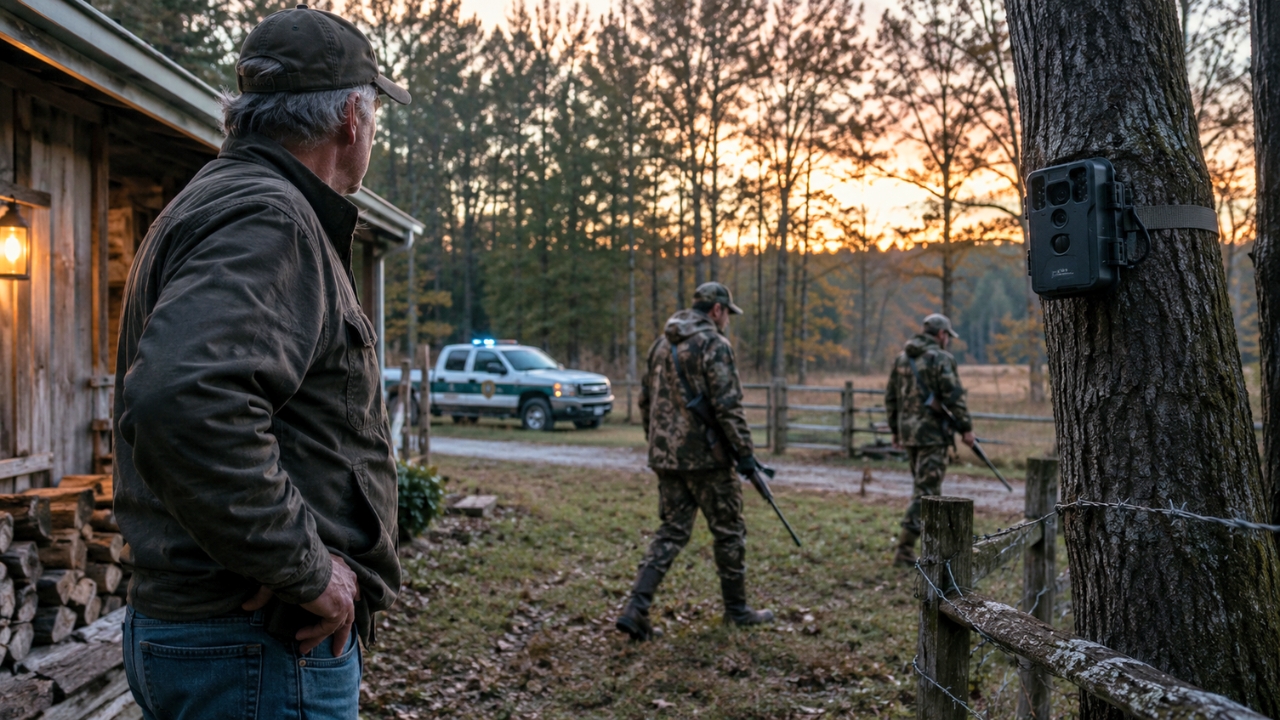
According to the Reddit post, the man lived with his wife on a heavily wooded 20-acre lot in unincorporated Kern County. Over two days, he said rifle-armed poachers had come onto the property multiple times to shoot deer out of season and without permission.
One of them allegedly shot a deer, left when confronted before police arrived, and then came back later to take the carcass.
The landowner explained the situation in a Reddit thread and asked what he was legally allowed to do when armed poachers were shooting on his property: https://www.reddit.com/r/legaladvice/comments/4puz2n/poachers_have_been_trespassing_with_guns_in_my/
The danger felt immediate
The poster was not just worried about losing deer.
He said he and his wife were often outside in the yard, and because the property was heavily wooded, he worried they could be mistaken for game. He also said neighbors sometimes walked the property with permission, and he had livestock to think about too.
That is what made the situation feel urgent. These were not trespassers stealing fruit or dumping trash. They were people with rifles, shooting near a home.
The landowner said law enforcement could take at least 20 minutes to arrive, and in one instance the sheriff reportedly took about an hour after the first encounter. That left him wondering what he was supposed to do while shots were being fired on his land.
He asked whether he could approach them armed
The poster’s main legal question was whether he could approach the poachers while armed and tell them to leave.
He clarified that he was not trying to brandish a gun or threaten anyone. His concern was that if he had to talk to armed criminals caught in the act, he did not want to do it empty-handed.
That is the part that drew some of the strongest reactions in the thread.
Commenters overwhelmingly warned him not to approach the poachers at all. Armed or unarmed, they said, walking up on people already breaking hunting and trespassing laws while carrying rifles could turn a bad situation into a deadly one.
Even people who understood why he wanted protection told him that confrontation was the worst option.
Commenters said Fish and Wildlife needed to know
One commenter pointed out that the crimes fell under the Department of Fish and Wildlife and gave the poster California’s poaching tip line.
That advice made sense because this was not only a trespassing problem. The poster said the deer were being shot out of season, which would put the issue squarely in wildlife-law territory.
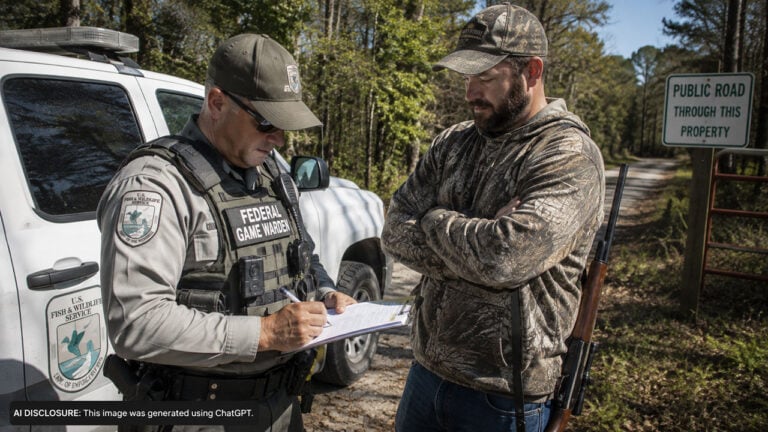
A sheriff’s deputy may respond to trespassing, but game wardens are built for this exact kind of thing: illegal hunting, poaching, armed trespassers, and repeat offenders using private land.
The poster later said he had called the CalTIP poaching hotline, the sheriff, and even a neighbor who volunteered with Fish and Game.
That was the right direction. The problem was that the immediate safety concern remained while he waited for help to arrive.
Trail cameras became one obvious answer
Another commenter suggested buying motion-activated game cameras to record the poachers.
That was practical advice. If the landowner could capture faces, vehicles, license plates, rifles, deer carcasses, or the direction the poachers entered from, he would have more than a general complaint.
A game warden can do more with images, dates, times, and patterns than with a vague report that “someone keeps coming onto my land.”
The poster said he and some neighbors were planning to order cameras. That was smart, especially because a rural property can be hard to monitor in person without putting yourself in danger.
The key was to use cameras as evidence, not as an excuse to go looking for a confrontation.
One commenter suggested a siren
One of the more memorable suggestions was not a legal argument at all.
A commenter suggested putting a siren on top of the trailer and turning it on when poachers showed up. The idea was that the noise would scare off the deer and possibly the poachers, while allowing the landowner to stay inside.
The poster loved the idea and said it sounded much better than risking getting shot.
That suggestion worked because it avoided the biggest danger in the thread: direct contact. It did not require the landowner to walk up to armed trespassers, argue with them, or try to force them off the property himself.
It simply made the area useless for poaching in that moment.
The legal discussion got complicated fast
The poster had been trying to understand California self-defense law, including whether castle doctrine applied to a yard or to shots fired near a home.
Commenters were careful not to give him a clean green light to use force. Some said castle doctrine is strongest inside the home. Others said that if someone was actually shooting at him, the situation would obviously be different.
But most commenters focused less on technical legal theories and more on survival.
They told him not to assume that being on his own property made every response safe. If he escalated a confrontation with armed poachers, the legal analysis would not matter much if he got shot.
The clearest advice was to call authorities, get inside, avoid contact, and document everything.
Signs and property markings still mattered
One commenter asked whether the landowner had marked the property line and posted no-hunting and no-trespassing signs.
The poster said they already had no-trespassing signs, but he was also considering better signs or other deterrents after the discussion.
That is a normal part of dealing with rural trespassers. Signs do not stop determined poachers, but they do remove excuses. They also make it easier for law enforcement or wildlife officers to say the people knew they were not allowed there.
For a wooded 20-acre property, signs need to be obvious at common access points, roads, paths, fence gaps, and property lines. If the poachers are sneaking in from the same direction, that area needs extra attention.
The neighbors mattered too
The poster mentioned neighbors who walked the property with permission and said some neighbors were also involved in ordering cameras.
That matters because repeat poachers can be harder to stop when only one person complains. If several landowners or neighbors are reporting the same activity, documenting the same vehicles, and calling the same wildlife officers, it becomes harder to ignore.
A poaching problem is often not limited to one yard. The same people may be moving across several rural properties, watching where deer travel, and testing which landowners respond.
Neighbors comparing notes can help identify patterns.
The thread showed why poachers are not worth confronting
The strongest theme in the comments was not legal technicalities. It was risk.
Commenters kept telling the poster that poachers are already showing they do not care about rules. They are armed, they are trespassing, and they are willing to shoot deer illegally. That is not the kind of person a landowner should approach in the woods.
The landowner’s fear was understandable. Nobody wants to sit inside while strangers fire rifles near their home.
But the advice was still clear: call the sheriff, call Fish and Wildlife, stay under cover if shots are coming close, use cameras, involve neighbors, and make the property less attractive to poachers without creating a face-to-face standoff.
For this landowner, the goal was not to win an argument in the yard. It was to stop armed trespassers from turning his own property into a dangerous place to live.
Like The Avid Outdoorsman’s content? Subscribe to our newsletter so you never miss an article.
Here’s more from us: