Photo credit: The Avid Outdoorsman
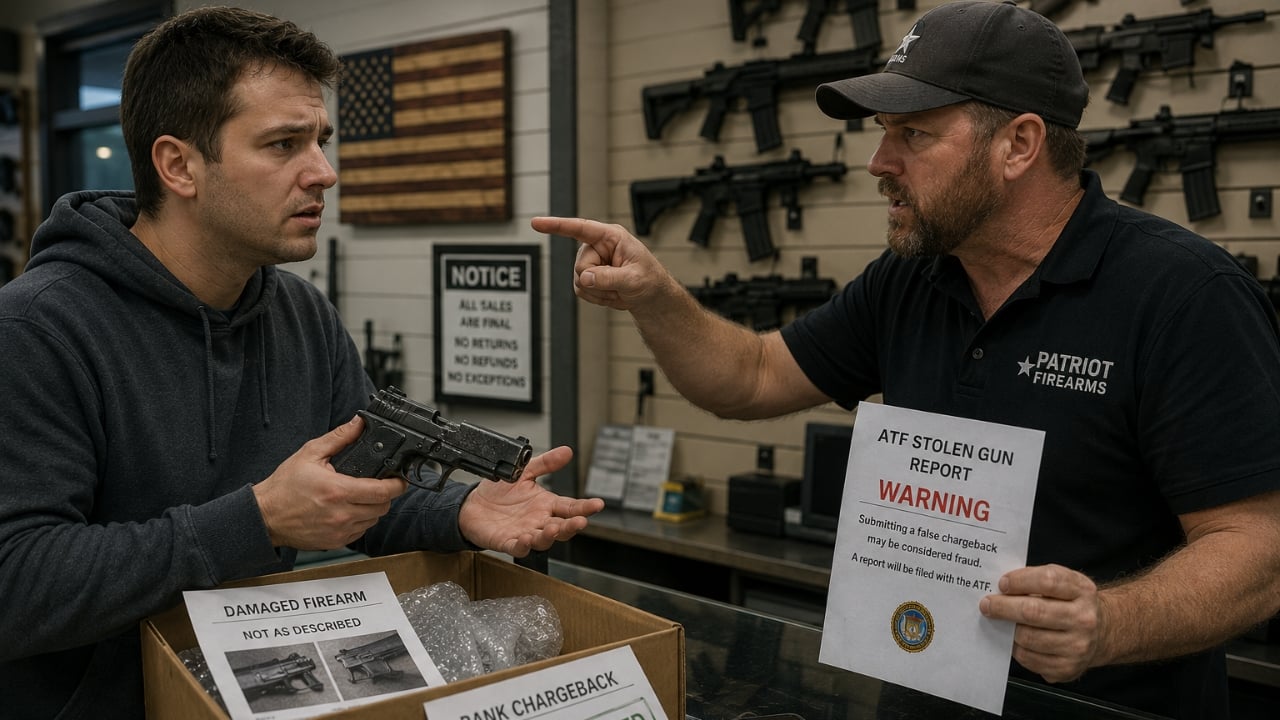
The buyer said the problem started with a firearm that arrived damaged. According to the Reddit post, he purchased a gun from a dealer, but when he received it, the condition was not what he expected. That kind of dispute can happen with almost any online purchase, but firearms add a layer of paperwork, transfer records, and legal pressure that ordinary retail returns do not have.
The original Reddit post can be found here: https://www.reddit.com/r/legaladvice/comments/119jri3/firearms_depot_sold_me_a_damaged_firearm_and/
The buyer said he tried to resolve the issue, but the dispute escalated after he filed a chargeback. That is when the situation became much more serious. According to the post, the dealer threatened to report the firearm as stolen to the ATF if the buyer did not reverse the chargeback or otherwise make the payment issue right.
That threat changed the whole argument. A damaged-item dispute is one thing. A stolen-firearm report is something else entirely. If a gun is reported stolen, the buyer could face serious trouble later if the serial number is checked during a traffic stop, range visit, resale, or any other law enforcement contact.
From the buyer’s point of view, the gun had not been stolen. It had been purchased, shipped, transferred through the proper process, and received through normal channels. The disagreement was about the condition of the firearm and the payment dispute after that. Treating that like theft seemed like an extreme escalation.
The dealer may have believed the chargeback meant the buyer had the gun without paying for it. But even then, commenters pushed back on the idea that a payment dispute automatically turns a completed transfer into a stolen firearm. That kind of disagreement usually belongs in a civil claim, refund process, credit card dispute, or business complaint, not a false criminal report.
The buyer needed to protect himself with paperwork. In a situation like this, every document matters: the original order, shipping record, FFL transfer paperwork, photos of the damage, messages with the seller, chargeback records, and any threats made in writing. If the dealer actually tried to report the gun stolen, the buyer would need proof that the firearm came into his possession legally.
The post shows how quickly a gun sale dispute can become bigger than a bad product. With a normal damaged item, the worst-case fight may be a refund or return. With a firearm, a dealer throwing around phrases like “stolen gun” or “ATF report” can make the buyer feel like an ordinary consumer complaint has turned into a legal threat.
Commenters told the buyer to preserve every record connected to the purchase. Several said the transfer paperwork would be important because it showed the firearm was not taken from the dealer without authorization. It was transferred through the system.
Others said the dealer’s threat, if made in writing, should be saved immediately. A threat to report a legally transferred firearm as stolen over a chargeback could become important if the buyer needed to explain the situation to law enforcement, the credit card company, or an attorney.
Some commenters suggested contacting the credit card company with all documentation and letting the chargeback process run through the proper channels. If the dealer believed the chargeback was improper, they could dispute it through that process rather than making a stolen-gun accusation.
A few people said the buyer should consider contacting an attorney if the dealer followed through or continued threatening him. Even if the dispute started over a damaged firearm, a false stolen-gun report could create real consequences.
Others pointed out that the buyer should not ignore the dealer entirely. Keeping communication calm, written, and factual would help. The buyer did not need to argue emotionally. He needed to keep proof that this was a damaged-product and payment dispute, not theft.
The post ended with the buyer caught between two problems. He believed he had been sold a damaged firearm. The dealer believed the chargeback created a payment issue. But the moment a stolen-gun report was threatened, the fight became much more serious than a return dispute.
Like The Avid Outdoorsman’s content? Subscribe to our newsletter so you never miss an article.
Here’s more from us: