Photo credit: The Avid Outdoorsman
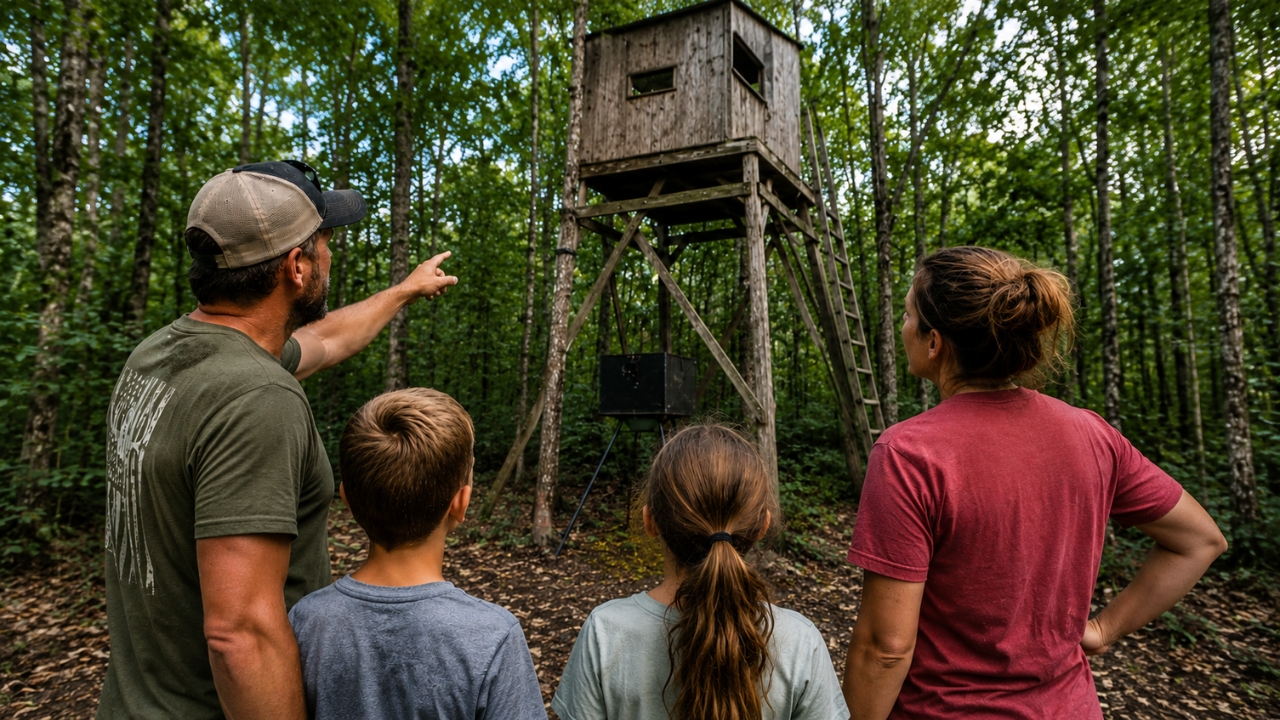
A hunter said his family walked into their usual setup on private property and found something that would make almost any landowner stop in his tracks: another deer stand had been built right above theirs.
The story came from a Reddit post titled “Deer stand found on private property”. The poster said he and his family had long used a particular area on private land and had their own deer stand there. When they returned, they discovered that someone else had constructed another stand above their setup.
That detail is what makes the whole thing so unnerving. This was not a hunter walking close to a boundary line. It was not a camera strapped to the wrong tree or a boot track across a corner of the property. Someone had spent enough time on the land to locate another family’s setup, decide to use that same location, and build a stand on top of it.
The property was private. The stand was not supposed to be there. And the safety implications were immediate.
Once a second stand exists in the same spot, the question is no longer just who is trespassing. It becomes who might show up first on opening morning, who thinks he has the right to sit there, and what happens if both parties assume the other one will not be there.
The Location Made It More Than a Trespassing Problem
Hunters understand that a good stand location is not random.
A spot may have the right wind, a good trail intersection, clear shooting lanes, deer sign, cover, and access. When a family uses the same area repeatedly, it usually means they know it works. So when someone else chooses that exact place and builds a stand there too, it does not look accidental.
It looks like someone either noticed the family’s stand and wanted the same location, or decided that because the spot was good, the family’s use of it did not matter.
That is why the poster’s reaction made sense. Finding another stand on private property is bad enough. Finding it above your own setup feels bolder, more invasive, and harder to explain away.
The new stand also raises practical problems. If the family removes it, will the trespasser come back angry? If they leave it and try to catch the person, could that person return armed during hunting season? If both parties unknowingly head to the same area before daylight, the chances for confusion or worse go up fast.
A deer stand in the wrong place is not just equipment. It is a sign that someone believes he can come and go on the property without permission.
Commenters Saw a Serious Safety Risk
A lot of commenters focused immediately on the danger.
It is one thing to deal with a stolen camera or a feeder tucked on the wrong side of a line. It is another to have unknown hunters building elevated shooting positions over your own stand. If someone shows up before daylight and climbs in, the family may walk in later not knowing anyone is above them. If the trespasser is there and the family arrives, the encounter could turn tense quickly.
That is what makes private-land stand conflicts so serious. Firearms, bows, and darkness already add enough risk during hunting season. Unknown hunters on the same tree or same shooting lane make it worse.
Some commenters likely imagined the worst-case scenario: someone sitting in the upper stand, another hunter moving below, and confusion about where shots might be taken. Even if nobody intended harm, the setup itself created a situation where harm becomes more possible.
That is why commenters did not treat it like a harmless prank. Building a second stand above the family’s existing setup crossed into a level of trespassing that needed to be handled carefully.
The Family Had to Decide Whether to Remove It or Watch It
A situation like this creates a natural temptation to tear the trespasser’s stand down immediately.
A lot of landowners would feel justified doing exactly that. Someone brought the stand onto private land without permission and put it over an existing family setup. From that point of view, removal feels like the most obvious response.
But commenters in threads like this usually split over whether immediate removal is the smartest move.
Some argue that the stand should come down at once because leaving it there means accepting a safety risk. Others say it may be better to photograph it, set cameras, and gather proof first. If the family can identify who is coming back to use it, they may be able to solve the bigger problem instead of only removing one stand.
That difference matters because stands can be replaced. A trespasser who feels confident enough to build over another stand may simply come back and do it again somewhere else. Proof of who it is may be worth more than one removed stand.
The right answer often depends on how soon the family expects the trespasser to return, whether the season is active, and whether local law enforcement or a game warden is willing to advise first.
A Camera Could Turn the Situation Around
Several commenters likely suggested placing a trail camera on the area.
That advice comes up often because it gives the landowner a safer way to learn more. A camera aimed at the trespasser’s stand may capture who built it, when he checks it, whether he carries gear in, and how he accesses the property. If a vehicle is involved, another camera near the likely entry point may help get a plate or at least a direction of travel.
The important part is to place the cameras carefully. If the trespasser noticed the family’s stand, he may notice obvious cameras too. A hidden camera higher up, farther back, or watching from an angle is more likely to catch him without being found.
Commenters also tend to suggest documenting the family’s own stand and the trespasser’s placement clearly. Photos showing the second stand built directly above or near the existing setup can matter if a warden or sheriff later becomes involved.
A camera would not solve the immediate anger of finding someone’s stand there. But it could keep the family from having to rely only on suspicion.
The Bigger Issue Was Respect for Private Land
At its core, the story was about something simple: someone ignored private property and another family’s clear use of that space.
Hunting disagreements can get complicated when public land, boundary lines, or old informal permissions are involved. This one felt more straightforward. The family already had a stand there. Someone else built another one over it. That showed a level of disregard that commenters had a hard time excusing.
Even if the trespasser believed the land was huntable, the sight of another stand should have stopped him. At minimum, it should have told him the area was already being used by someone else. To keep going anyway and build his own stand above it suggests either arrogance, recklessness, or a willingness to challenge whoever actually had rights to the property.
That is part of why stories like this upset hunters. Most hunters understand how much time and effort go into stand placement, scouting, access planning, and maintaining good relationships with landowners. Someone barging into that with no permission makes all of that feel disrespected.
And when the equipment is elevated and placed over an existing setup, the disrespect becomes a safety issue too.
Commenters generally treated the second stand as a serious trespassing problem, not a harmless misunderstanding.
Many focused on the safety concern. A stand built above or near the family’s own stand could create a dangerous encounter if both parties showed up to hunt the same area. That alone made the situation urgent.
Others suggested documenting everything before removing the stand. Photos of the location, the family’s existing setup, and the trespasser’s added stand could help if authorities needed to get involved. Several likely recommended placing trail cameras to catch whoever came back to use it.
Some commenters would have been ready to cut the stand down immediately. Others would have urged a call to a game warden or sheriff first, especially if the family suspected the person might return armed during the season.
The advice under all of it was the same: do not ignore it. A stranger building a stand above your own setup on private land is not a minor irritation. It is a warning that someone is treating your woods like shared space when it is not.
For the family, the shock was not only finding the extra stand. It was realizing how long someone may have been walking their property, watching their setup, and feeling comfortable enough to build over it. That is what turned an ugly discovery into something far more serious than a normal trespass complaint.