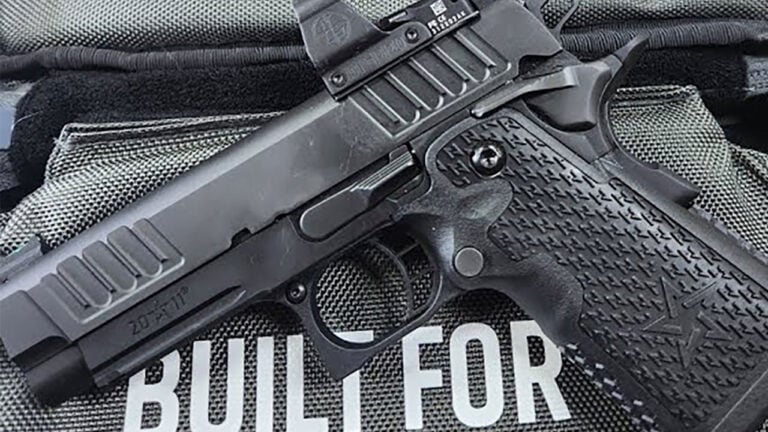
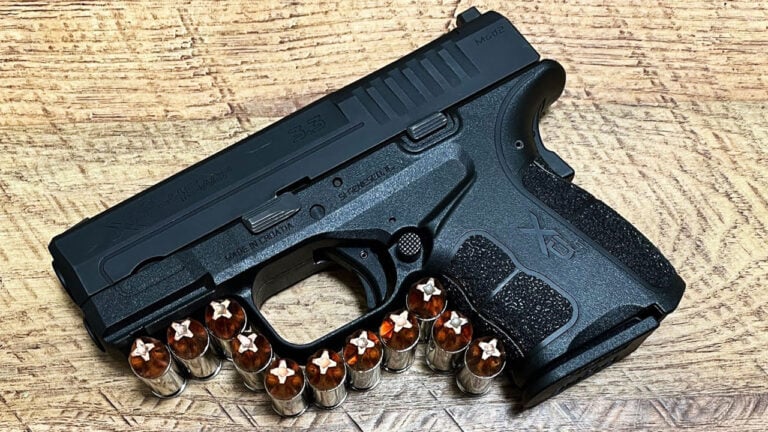
Photo credit: Springfield Armory
Micro-9s sell like crazy because they solve the part of concealed carry that most people feel every day: comfort, concealment, and convenience. They’re light, slim, easy to hide, and they don’t demand a wardrobe change. For a lot of buyers, that’s the whole decision. They’re not shopping for a training gun. They’re shopping for a “finally I’ll actually carry” gun. That’s why the micro-9 market exploded. The problem is that the same traits that make micro-9s easy to carry often make them annoying to train with, and once the carry honeymoon fades, the gun quietly migrates to a drawer or a safe. Not because it’s broken. Because the owner stops enjoying the experience of shooting it, and then stops shooting altogether.
The micro-9 isn’t the villain. The mismatch between expectations and reality is. People buy a micro-9 thinking they’re buying a small version of a compact that performs the same way. Then they discover it’s a different animal. It demands more grip discipline, more trigger discipline, and more practice to get the same performance. Most buyers don’t have that practice habit yet. So the gun sits. And once a carry gun starts sitting, it’s rarely because the person made a calculated decision. It’s usually because they drifted away from carrying without admitting it.
Micro-9s are “easy to own” and “hard to master,” and most buyers don’t realize that
At the counter, micro-9s feel like common sense. They fit smaller hands, they feel modern, and they’re easy to conceal. What you don’t feel at the counter is how small guns amplify mistakes. Less grip area means less leverage. Less mass means sharper recoil. Shorter sight radius means alignment errors become misses faster. That turns into a simple truth: micro-9s demand a cleaner draw and a cleaner trigger press to hit at the same level as a slightly larger pistol. New carriers usually aren’t there yet, and they don’t find that out until they’ve already spent the money. The first range session might still feel fine because they’re shooting slow. The second or third session is where they start pushing pace and realize the gun is work.
Training pain is the real reason they end up in safes
A micro-9 can beat your hands up, especially with defensive loads. Even if the recoil isn’t “too much,” it can be sharp enough that people don’t enjoy long sessions. The gun starts feeling like an obligation instead of a tool. Once someone doesn’t enjoy practice, practice gets skipped. Once practice gets skipped, confidence drops. Once confidence drops, carrying starts feeling like a performance they don’t want to do. That’s the pipeline from “best-selling micro-9” to “forgotten safe gun,” and it happens quietly because people don’t like admitting they bought a gun they don’t want to shoot.
A lot of owners also experience grip fatigue and inconsistency. They can shoot the first magazine okay, then performance degrades as their hands get tired. That creates frustration, and frustrated shooters look for shortcuts—triggers, comps, fancy grips—rather than addressing the root issue: the platform is less forgiving. If they don’t want to put in extra reps, the gun becomes a burden. Burdens get put away.
The carry convenience doesn’t automatically turn into carry consistency
Micro-9s are marketed as “finally, a gun you’ll carry.” Sometimes that’s true. Sometimes what happens is the buyer carries it for a few weeks, then life gets in the way. They skip the range. The gun starts feeling unfamiliar. Then they start leaving it at home because they don’t feel sharp with it anymore. The irony is that micro-9s are often purchased by people who need a forgiving gun the most, because they’re building the habit. Instead, they buy a demanding gun that requires a bigger training habit than they have. That mismatch kills momentum.
The people who keep carrying micro-9s long term are usually the ones who train regularly and treat it like a serious tool. They do cold reps. They shoot it often enough that the draw and grip stay automatic. The rest drift away, and the gun becomes a symbol of an abandoned intention.
They’re often bought as a “first and last gun,” and that’s not realistic
Many new carriers buy a micro-9 hoping it will be their one-and-done solution. They don’t want a collection. They don’t want to learn a bunch of setups. They want one gun that covers everything. The micro-9 seems like it checks all boxes—small enough to carry, big enough to shoot, enough capacity to feel safe. In reality, the micro-9 is usually a compromise that works best when you already have decent fundamentals and you’re willing to maintain them. It’s not the easiest platform for a brand-new shooter to build competence on.
This is why, after a year, you see a pattern: people either move up to a compact for better shootability, or they stop carrying entirely. The micro-9 was supposed to make things simpler, but for many owners it becomes the thing that reminds them they don’t train enough.
A micro-9 sitting in a safe is often a guilt object. The owner knows they should practice. They know they should carry. They don’t. Instead of selling it, they keep it because selling it feels like admitting failure. So it sits. This is why you’ll see micro-9s pop up at pawn shops and gun shows with the same stories: “barely shot,” “only a couple boxes,” “just sits.” Those stories are often true. The gun didn’t get shot because the owner didn’t like shooting it, and the carry habit never fully formed.
How to keep a micro-9 from becoming a safe gun
If you’re going to carry a micro-9, you have to build a small routine that keeps you honest. First ten shots of every range trip should be from a cold draw, at realistic distance, on an 8-inch target. If you can’t keep them in, slow down and fix the process. Dry fire your draw a few minutes a week so the dot or sights show up without fishing. Keep your practice sessions short but consistent, because micro-9 fatigue is real. You don’t need marathon sessions—you need regular reps.
And if you want to make practice measurable instead of vibes, a timer and targets help. You can grab training basics at Bass Pro Shops, but the goal isn’t more gear. It’s building a repeatable practice loop so your confidence is earned, not imagined.
Like The Avid Outdoorsman’s content? Subscribe to our newsletter so you never miss an article.
Here’s more from us: