Photo credit: Herrington Arms/YouTube
New shooters don’t buy their first gun in a vacuum anymore. They buy it after a week of YouTube “must-have” lists, forum dogpiles, and comment-section certainty. The problem isn’t that the internet is always wrong. It’s that the internet loves one-size-fits-all answers, and guns don’t work that way. Hand size, recoil tolerance, budget, and what you actually plan to do with the gun matter more than whatever’s trending this month.
Most of these picks have real strengths. They also come with quirks that don’t show up in a ten-minute review or a staged range day. If you’re new, you can end up blaming yourself when the gun feels awkward, snappy, or finicky—when it’s really a mismatch between you and the tool. Here are the common “internet told you to” guns, and why they can trip up beginners.
Glock 19

The Glock 19 gets recommended like it’s the answer to everything: carry, home defense, range work, training classes. It’s reliable and it’s easy to support with holsters, mags, and parts. That part is true.
What the internet skips is that not everyone shoots a Glock well right away. The grip angle and blocky feel can make some new shooters fight their presentation and sight alignment. The stock trigger can also feel mushy until you’ve got reps. None of that makes it a bad pistol—it’s just not automatically “perfect” for your hands. If you’re learning fundamentals, a gun that points naturally for you matters more than the logo on the slide.
SIG Sauer P365

The P365 changed the carry game, and the internet still treats it like the default recommendation for anyone with a waistband. It packs real capacity into a small footprint, and it carries easy. That’s why it sells.
Here’s the catch for beginners: small guns often shoot small. A shorter grip and shorter sight radius can make you feel less stable, and the recoil can feel sharp compared to a compact. New shooters then chase their groups, adjust their grip constantly, and start thinking they’re “bad” at shooting. You’re not bad—you’re learning on a platform that demands cleaner technique. The P365 can be a great second pistol. As a first, it can be a steeper hill.
Smith & Wesson M&P Shield Plus
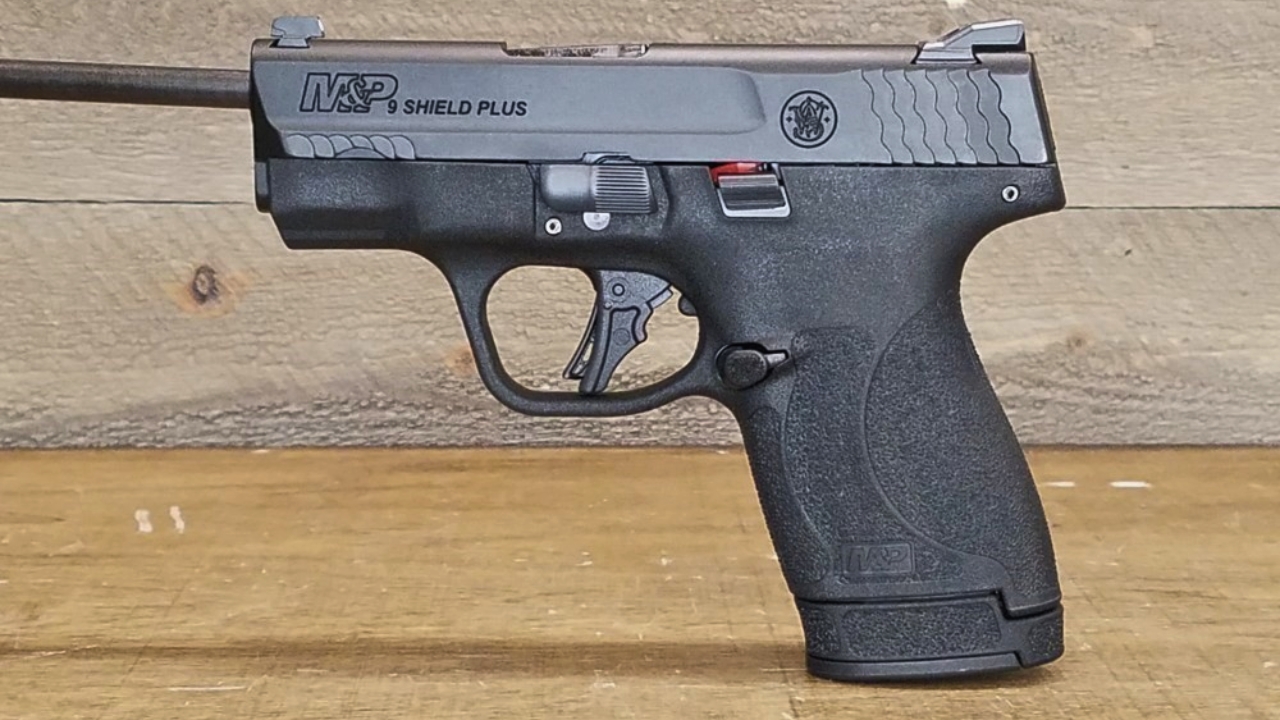
The Shield Plus is another internet darling because it’s slim, easy to conceal, and generally dependable. It also hits a price point that makes it feel like the smart, practical move. A lot of people really do carry them daily with zero drama.
But it’s still a small pistol. If you’ve got bigger hands, you may feel like you’re hanging on by your fingertips unless you use extended mags. That changes how you manage recoil and how fast you can get back on target. Some new shooters also find that a lightweight, thin pistol makes the range less fun, which means they practice less. Carry guns are supposed to be convenient to carry, not necessarily convenient to learn on.
Springfield Hellcat

The Hellcat got a ton of attention for capacity in a micro-compact size, and it’s easy to see why beginners get steered toward it. It carries well, it has solid aftermarket support, and it’s a modern design that checks the “tactical” boxes people want.
Where it can bite new shooters is the same place most micros do: it feels snappy. That short grip and light weight can make recoil feel quick and sharp, especially with hotter defensive loads. The trigger feel also doesn’t land the same for everyone, and beginners tend to overwork triggers they don’t trust. None of this means the Hellcat is unreliable. It means it’s a high-performance small gun that asks you to be disciplined from day one.
Ruger LCP II

When someone asks the internet for an “easy carry,” the Ruger LCP II gets tossed out constantly because it’s tiny, light, and affordable. It will fit places other pistols won’t, and it’s the kind of gun people actually keep on them.
It’s also one of the least forgiving guns a beginner can start with. The sights are small, the grip is tiny, and recoil can feel rude for its size. That combination makes accurate, confident shooting harder than it needs to be early on. Beginners often buy it, shoot one box, and then stop practicing because it’s not enjoyable. The LCP II makes sense as a deep-concealment tool once you’re already competent. It’s a rough teacher if you’re still building the basics.
Taurus G3C

The Taurus G3C gets pushed hard online because it’s budget-friendly and often runs fine for a lot of owners. For someone trying to get into a reliable 9mm without dropping big money, it looks like a practical choice, and it can be.
The problem is consistency. Budget guns can vary more between individual samples, and beginners don’t always know what “normal” feels like when diagnosing issues. A gritty trigger, a stiff mag, or picky behavior with certain ammo can send you down a rabbit hole of doubt. You end up swapping parts or trying to “fix” a gun that may simply need break-in—or may not be the best example of the model. If you buy one, you need to vet it hard and practice with your exact magazines and ammo.
Canik TP9SF / TP9SF Elite

Canik gets hyped because you often get a lot for the money: good features, decent ergonomics, and a trigger that feels better than many guns in its price range. That’s why beginners hear “buy a Canik” so often when they ask for a first pistol.
The hidden downside is support and logistics. Holster fit, magazine availability, and small parts can be more annoying than with the big mainstream choices, depending on the exact model. Some new owners also confuse a nice-feeling trigger with an easy path to competence, then get frustrated when fundamentals still matter. The gun can absolutely be a strong value. You just want to make sure you can actually find a quality holster, extra mags, and training-friendly gear before you commit.
Kimber 1911 (entry-level models)

A Kimber 1911 shows up in beginner “best handgun” threads more than you’d think because the 1911 is iconic and the marketing photos look like confidence. The grip feels good to many hands, the trigger can feel clean, and it has a tradition that pulls people in.
The reality is that 1911s can be more maintenance- and magazine-sensitive than a lot of modern striker-fired pistols. Some run flawlessly, some need sorting, and beginners rarely have the experience to diagnose what’s ammo, what’s mags, and what’s the gun. You can also end up spending money chasing reliability instead of buying practice ammo. A 1911 can be a great pistol for someone who enjoys the platform and understands it. It’s not always the smoothest first step.
Beretta 92FS

The Beretta 92FS gets recommended because it’s a proven service pistol with a long history, good durability, and a smooth recoil impulse. It also looks and feels like a “real” handgun to a lot of people, especially if they grew up seeing it in movies and military photos.
For new shooters, the challenge is size and control layout. The grip can be a handful for smaller hands, and mastering a double-action/single-action trigger takes practice. The first shot is heavier, the following shots are lighter, and beginners often throw that first round low or wide. Add in the safety/decocker confusion some people have, and you’ve got a pistol that’s excellent but not simple. If you’re willing to train, it’s rewarding. If you want plug-and-play, it can feel like extra work.
PSA AR-15

“Just buy an AR” is the most common internet advice for new shooters, and there’s a reason: the AR-15 is modular, easy to shoot, and widely supported. Budget builds from Palmetto State Armory also make entry cheap, which is why they’re constantly recommended.
Where beginners get burned is expecting every low-cost build to behave like a tuned duty rifle. Assembly tolerances, gas system choices, and parts quality can vary across configurations. A new shooter may buy a bargain build, then chase cycling issues with cheap ammo, underpowered steel case, or questionable magazines. Now the internet answer turns into a troubleshooting hobby. A budget AR can be a smart buy if you pick a known-good configuration and run quality mags. If you mix bargain ammo, bargain mags, and bargain parts, you may create problems you didn’t need.
Ruger 10/22

The Ruger 10/22 is one of the best beginner rifles ever made, and the internet is right to recommend it. It’s light, low recoil, and it’s a training machine. You can learn sight picture, trigger control, and positions without getting beat up.
The downside is what happens next. The 10/22 has an endless upgrade path, and beginners can get sucked into “build culture” instead of shooting. You end up chasing tiny accuracy gains with barrels, triggers, stocks, and gadgets before you’ve mastered the basics. There’s also the reality that rimfire ammo can be inconsistent, and new shooters sometimes think the rifle is malfunctioning when it’s really ammo variation. The 10/22 is an excellent first rifle—if you treat it like a practice tool, not a parts catalog.
Mossberg 590 / 590A1

The pump shotgun gets sold online as the ultimate home-defense answer: simple, powerful, and reliable. The Mossberg 590 series is a proven design, and in trained hands, it’s a serious tool.
The issue is that pump shotguns are not “easy mode” for beginners. Running the action under stress takes reps, and short-stroking is a real problem when you’re new. Recoil with buckshot can also be punishing, which makes practice less frequent. Add in the temptation to bolt on too many accessories, and you can end up with a heavy, awkward setup that’s harder to manage indoors. The 590 is a strong platform, but it rewards training. If you don’t plan to practice, a softer-shooting option may serve you better.
Remington 870 (newer production)

The Remington 870 has a legendary reputation, and the internet still talks about it like every 870 is automatically a lifetime gun. Older examples earned that reputation honestly, and a good 870 still feels right when you run it.
The problem is that newer production eras have been uneven, and beginners aren’t always equipped to spot rough chambers, gritty actions, or questionable fit. A shotgun that should feel slick can feel sticky, and then you’re fighting extraction or reliability when you least expect it. New shooters often buy one based on the name alone and assume it will be flawless. A solid 870 is excellent. A questionable one can sour you on shotguns entirely. If you go this route, you want to be picky about the specific example you’re buying.
Henry Big Boy (pistol calibers)

Lever guns are internet catnip right now, and Henry Big Boy models in .357 or .44 get recommended to beginners because they’re “fun, simple, and reliable.” They are fun, and they carry a lot of charm while still being useful.
The beginner trap is cost and expectations. These rifles aren’t cheap, and feeding them—especially in .44—can turn range days into a wallet burn. Lever guns also demand a bit of technique: how you run the lever, how you load, and how you clear issues is different than what most modern training focuses on. If you buy one because it looks cool online, you might not practice as much as you think once you see ammo prices and realize the manual of arms is its own skill set. They’re great rifles, but they’re not always the most straightforward “starter” choice.
Hi-Point C9

The Hi-Point C9 gets recommended online in a certain corner of the world because it’s cheap and it often works. For someone with a hard budget limit, the argument is simple: it’s better than nothing, and many people have gotten functional guns for very little money.
Where beginners get disappointed is everything surrounding the gun. The ergonomics are awkward for many hands, the weight and balance feel odd, and the trigger and controls don’t help you learn clean shooting habits. The aftermarket and accessory support is limited, and resale value is basically a shrug. A beginner can end up with a gun they don’t enjoy shooting, and that means they don’t shoot. If you truly can’t spend more, it can fill a role. But it’s rarely the gun that helps you fall in love with practice.
Like The Avid Outdoorsman’s content? Be sure to follow us.
Here’s more from us: