Photo credit: NRApubs/YouTube
Some guns come with a reputation bigger than their bore. You hear the name and immediately think of accuracy, power, or history. Maybe it’s the one your grandfather carried, or the one every forum swears is the ultimate whitetail rig. But sooner or later, you pull the trigger and the legend starts falling apart. Recoil’s worse than expected. Accuracy’s average at best. The trigger feels like a staple gun. Maybe the stock doesn’t fit right, or the action’s sticky, or it just refuses to group anything that’s not match-grade ammo. These are the rifles, pistols, and shotguns that get talked up like they walk on water—but in the hands of real hunters or shooters, they prove they’re more story than substance. You won’t see many of these at the range twice. And if you do, the guy behind it probably won’t be smiling.
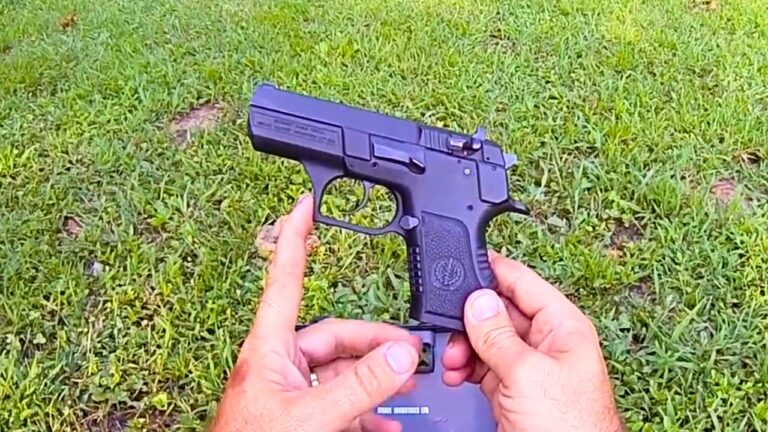
Desert Eagle .50 AE

Everyone wants to shoot one—until they do. The Desert Eagle has movie-star energy and plenty of campfire bravado behind it, but it’s a range toy more than a serious handgun. That big .50 AE round makes a sound you won’t forget, but so does the sharp recoil snapping your wrist backward. It’s a heavy gun, and somehow still unpleasant to shoot.
Most folks brag about having tried one, but very few ever want to own one. Accuracy? Meh. Practicality? None. If you’re not wearing gloves, you’ll feel it bite. It’s impressive to look at and loud enough to get everyone’s attention, but once you squeeze that trigger a few times, the novelty wears off fast. That’s usually when it goes back in the case—for good.
M1 Garand

The M1 Garand is often romanticized as the greatest battle rifle ever made. It’s got history, it’s got weight, and it makes that satisfying “ping” everyone talks about. But pull the trigger today and the shine fades quickly. The recoil’s snappy, the sights take getting used to, and the trigger feels mushier than most remember.
Most modern shooters expect it to run smooth and group tight out of the box, but that’s not always the case. Garands are picky about ammo, and if you feed them the wrong load, you’ll risk bending the op-rod. It’s not the fault of the rifle—it’s just dated. Still, people line up to shoot them, expecting magic. What they often get is sore shoulders and a confused look wondering why it didn’t shoot like the legend they’d heard about.
Smith & Wesson 500

You hear “most powerful production revolver,” and your expectations go sky-high. The S&W 500 sounds like a handheld cannon—and that’s basically what it is. Trouble is, most folks can’t control it. The trigger pull’s heavy, the recoil’s worse, and one shot is often enough to make someone regret chambering it at all.
It’s impressive until you actually shoot it. Then you’re dealing with muzzle rise, aching hands, and ammo that costs more than a tank of gas. Accuracy suffers under recoil, and follow-up shots? Not happening. It’s something people love to talk about owning, but nobody actually wants to shoot twice. Once the noise settles and your hand stops stinging, you start thinking about trading it for something you might actually carry.
Browning A-Bolt

The A-Bolt has long been praised as a smooth-operating bolt-action with Browning’s reputation behind it. But once you’ve taken it into the field, certain things become clear. The 60-degree bolt throw feels off to some shooters, and that glossy stock picks up every scratch and fingerprint imaginable.
The trigger isn’t anything special, and the magazine system—especially that hinged floorplate with detachable box—is fiddly when you’re in a hurry. Sure, you’ll see it mentioned on hunting forums as a tried-and-true rifle, but in the field, more than one hunter has been left wishing for a different setup after a rushed reload or a missed shot they can’t quite explain. It’s not a bad rifle, but it’s not the “legendary performer” the marketing made it out to be, either.
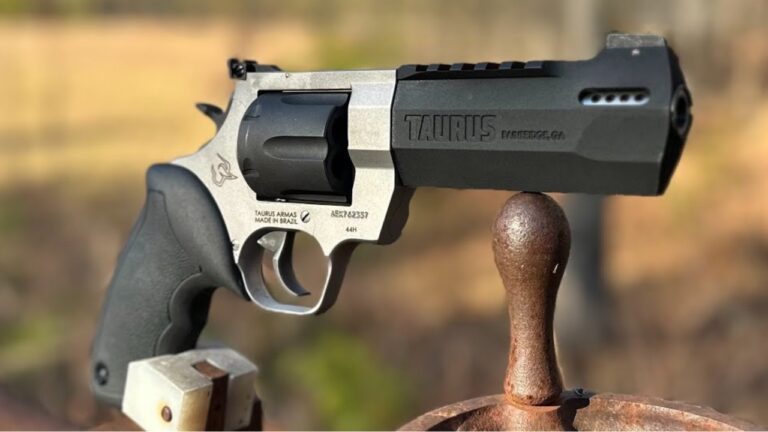
Taurus Judge

You’d think a revolver that shoots both .45 Colt and .410 shotshells would be the ultimate backwoods companion. Sounds great—until you fire it. The Judge is loud, clunky, and underwhelming across the board. Accuracy with .45 Colt is marginal, and .410 out of a snub barrel feels more like noise than power.
You hear folks brag about having one in the truck or nightstand, but those same folks rarely put more than a handful of rounds through it. It kicks awkwardly, and the spread from .410 makes it more theatrical than effective. It’s not great at either role—too bulky for carry, too short for serious accuracy, and too niche for consistent use. Sounds legendary, sure—but it won’t live up to the stories once you pull the trigger.
Remington 7600

Pump-action rifles have their place, and the 7600 has its fan club—especially in brush-heavy parts of the country. But even die-hard fans will admit that pulling the trigger on one doesn’t feel nearly as satisfying as the lore makes it sound. The trigger is gritty and inconsistent, and the accuracy falls apart beyond 150 yards.
It cycles fast, yes—but fast doesn’t mean smooth. Short-stroking is common if you’re not used to the action, and that can ruin a second shot when it matters most. You’ll hear hunters go on about the 7600’s speed, but what they don’t say is how often they miss because the trigger caught them by surprise or the second round didn’t fully chamber. It’s more of a regional relic than a rifle you’d call dependable nationwide.
Springfield Armory M1A

The M1A sounds like a dream—military lineage, classic looks, and chambered in .308. But once you start actually shooting one, you’ll notice it’s a heavy rifle that doesn’t handle like modern semi-autos. The trigger is passable, but the balance is front-heavy, and accuracy isn’t on par with what most expect from something carrying a $1,500+ price tag.
It’s finicky with mags and ammo, and mounting optics is a chore. The first time you fire one, you might feel a little let down—not because it’s bad, but because it doesn’t live up to the hype. That legendary battle-ready image turns into sore shoulders and frustration trying to group five shots inside two inches. Looks great, sounds great—but rarely performs the way people hope it will.
Colt Single Action Army (Modern Repros)

Few handguns carry more legend than the Peacemaker. But today’s reproductions, especially the budget-minded ones, leave a lot to be desired. The trigger is rough, the action isn’t always smooth, and accuracy varies wildly between models. Even the loading gate can feel like a chore.
You pull the trigger expecting Old West glory. What you get is a slow, deliberate shot process with stiff cocking, sluggish lock time, and questionable point-of-impact. They look gorgeous, sure—but they’re better off as display pieces or cowboy-action props than real sidearms for the field. The nostalgia wears off quick when you’re missing targets and realizing the design hasn’t aged as well as the marketing would have you believe.
Winchester Model 94 (Post-64)

The Model 94 had a long and proud history—until 1964, when cost-cutting changes made it one of the most frustrating lever guns to actually shoot. Bragging rights stayed intact because of the name, but the trigger got sloppy, the fit and finish dropped off, and the action got clunky.
Shooters still talk about the 94 like it’s holy ground. But those who’ve handled both pre-64 and post-64 versions know the difference is night and day. Pulling the trigger on a newer model often results in a gritty break and inconsistent groups. The soul of the rifle was in the craftsmanship—and once that got stripped back, all that remained was a name that didn’t quite shoot like it used to.
FN SCAR 17S

It looks like the future and comes with a price tag to match. And yes, it feels cool to shoulder a SCAR 17S—until you actually fire it. The recoil impulse is harsher than most expect from a .308, the reciprocating charging handle has bitten more than a few thumbs, and the trigger is underwhelming for the money.
It sounds like a rifle that’ll outperform everything else on the line. But for most civilian shooters, the SCAR’s quirks stand out faster than its benefits. Heavy, loud, expensive to feed, and tough to mount optics on cleanly. You’ll hear plenty of bragging before the first shot. Afterward? Usually silence and a hand rubbing the sore spot where the charging handle slapped them mid-cycle.
Henry Big Boy .44 Mag

Everything about the Big Boy screams cool—brass receiver, lever action, and that .44 Magnum punch. But once you pull the trigger, the cracks start to show. The rifle’s heavy, the action can be stiff right out of the box, and recoil with hot loads feels more like punishment than fun.
And that shiny finish? It scratches if you breathe on it wrong. Shooters brag about it at the counter, but after a few range sessions, it starts collecting dust. Accuracy is hit or miss, and the slow reload process makes it a pain in the woods. The Henry looks better than it shoots—and that’s something few will say out loud until they’ve owned one for a full season.
Like The Avid Outdoorsman’s content? Be sure to follow us.
Here’s more from us:
The worst deer rifles money can buy
Sidearms That Belong in the Safe — Not Your Belt
*This article was developed with AI-powered tools and has been carefully reviewed by our editors.