Photo credit: FotoDax/Shutterstock.com
Duty-size pistols get recommended like they’re the default “serious” option, and on paper it makes sense. Full grip, full sight radius, higher capacity, softer recoil, easier shooting. If you’re in a uniform with a real belt and you’re carrying openly, it’s hard to argue against that. The problem is most regular people aren’t living that life. Real-world carry means concealment, comfort over long days, getting in and out of vehicles, bending, lifting, sweating, chasing kids, and trying to live normal without constantly adjusting your shirt like you’re hiding a secret. In that world, duty-size guns can create more friction than benefit, and friction is what makes people quit, or “carry sometimes,” or start compromising in ways that actually make them less capable.
The smartest carry gun isn’t the one that’s easiest to shoot in perfect conditions. It’s the one you can keep on you consistently, draw cleanly, and shoot well when you’re cold and distracted. A duty-size pistol can still be that for some people, but it’s not automatically the smartest pick just because it’s the “professional” size.
The biggest problem is not shooting—it’s daily concealment and consistency
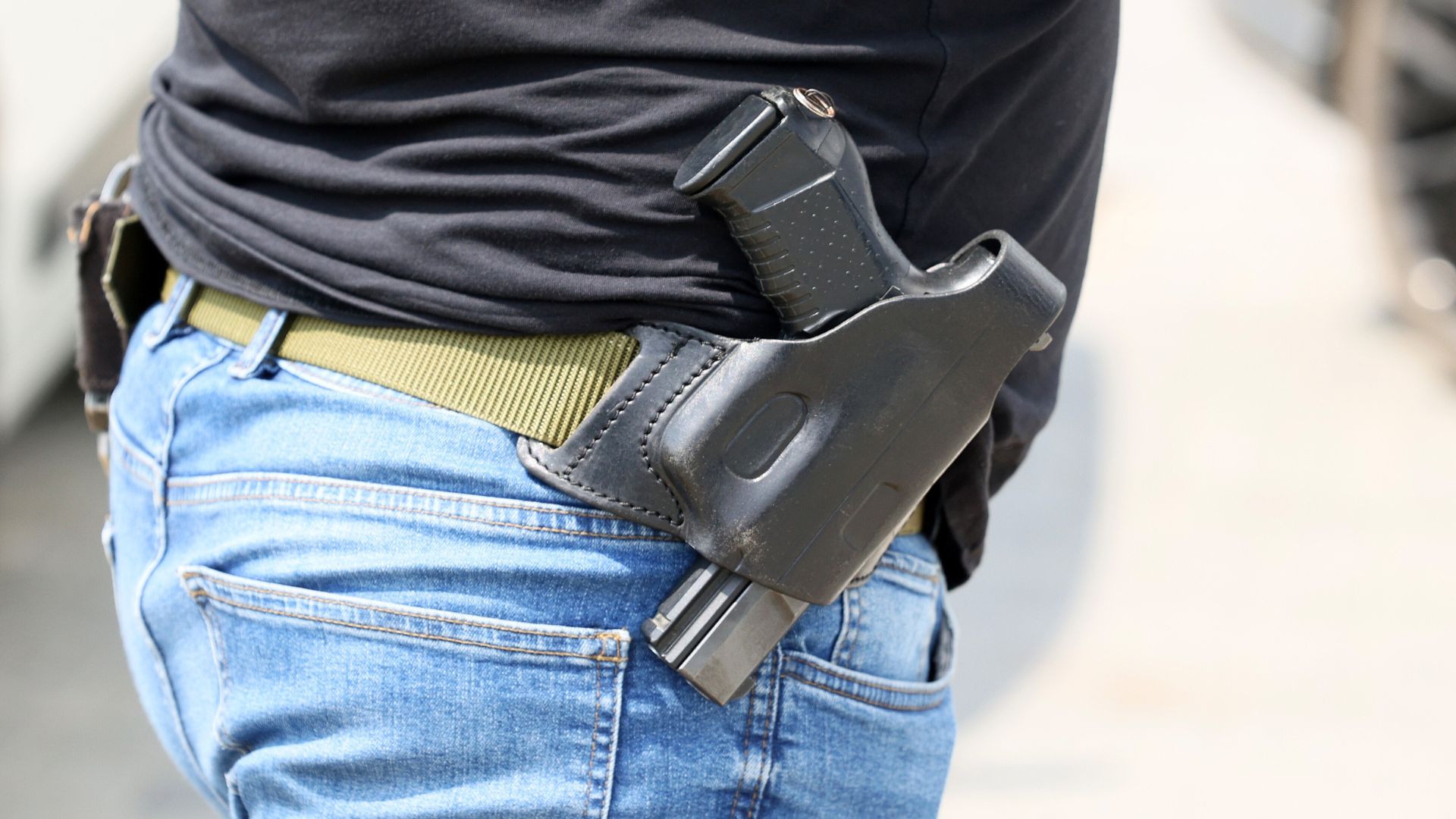
A duty-size gun hides fine in a winter jacket. It hides a lot worse in a normal t-shirt. The grip is the part that prints, and duty-size grips are longer, which means more leverage pushing against your cover garment when you bend, sit, or twist. People respond by constantly shifting the holster, hiking their pants, or dressing around the gun in a way they can’t sustain long-term. Then the carry habit becomes a chore. That’s the real failure mode. Not “the gun is too big to carry.” It’s “the gun is big enough to annoy me every day until I start leaving it behind.”
And when people do carry it, they often start making compromises to “fix” the discomfort: looser holsters, softer belts, odd carry positions, and sloppy concealment. Those compromises can make access slower and less consistent. In other words, the bigger gun didn’t automatically make them more capable. It pushed them into a less stable setup.
Bigger guns can be slower from concealment, especially in real clothes
A duty-size pistol can be slower to draw cleanly from concealment because there’s more gun to clear and more grip to manage under a cover garment. If the grip is tucked too deep to reduce printing, it’s harder to build a full firing grip. If it rides too high to help the grip, it prints more. The gun itself creates less margin for error. That matters when you’re cold, under stress, or your cover garment is clinging because it’s hot out. Guys will argue this all day, but the timer doesn’t care. For a lot of people, a compact is the fastest “real life” draw because it balances concealment with grip access better.
This is why you’ll see carriers who shoot duty guns extremely well on the range still choose compacts for everyday life. Not because they can’t shoot the big gun. Because the big gun creates more friction in daily carry.
Duty-size makes sense… until you factor in how people actually live
Duty pistols shine when you can support them properly: good belt, stable holster, consistent clothing, and enough time to practice. But most people carry around real schedules and real responsibilities. They’re in cars constantly. They’re sitting at desks. They’re picking up kids. They’re wearing whatever works for their day. If your carry gun only works in your “carry outfit,” it’s not a real-world setup. It’s a hobby setup. A compact is often the smarter choice because it fits more days without forcing you to rebuild your wardrobe around it.
That doesn’t mean you need a tiny pistol, either. Tiny pistols create their own problems. The sweet spot for many carriers is a compact or slim compact that still shoots well but disappears more easily and comfortably.
The “smartest” pick is the one you can practice with and keep on you
A duty-size pistol can be a great training gun because it’s easy to shoot well, and training builds skill. But if you never carry it because it’s annoying, that training benefit doesn’t transfer to your real carry life. The smarter move is picking a gun you can do both with: carry it consistently and train with it regularly. That’s why compacts win so often. They’re shootable enough that training isn’t miserable, and they’re concealable enough that carry isn’t miserable.
If you’re trying to decide, a simple test tells the truth: run cold draws to one hit, then controlled pairs, from concealment, with your real clothes. Do it with a duty-size and with a compact. Don’t argue about it—measure it. If you need a timer, targets, or basic belt/holster upgrades to make your setup stable, Bass Pro Shops is an easy place to grab the basics, but the win is choosing what you can actually live with.
Duty-size handguns aren’t “wrong.” They’re just not automatically the smartest real-world pick for concealed carry. Bigger guns can add friction, print more, and slow your draw from concealment, which pushes people into inconsistent habits. The smartest carry gun is the one you can keep on you every day and shoot well under pressure. For a lot of normal lives, that ends up being a compact—not because it’s trendy, but because it’s sustainable.
Like The Avid Outdoorsman’s content? Subscribe to our newsletter so you never miss an article.
Here’s more from us: