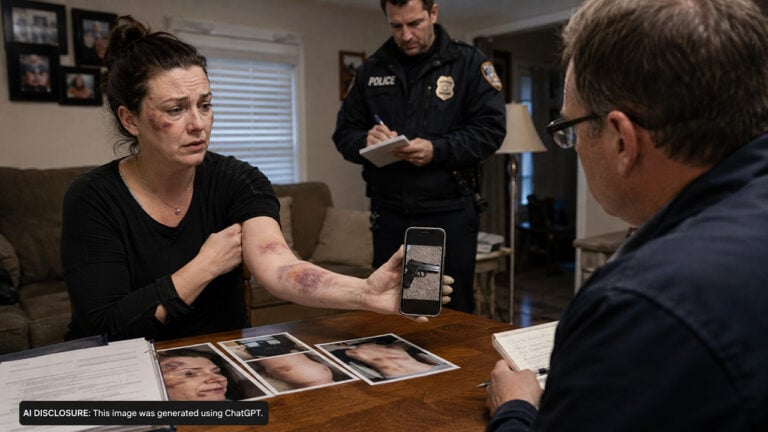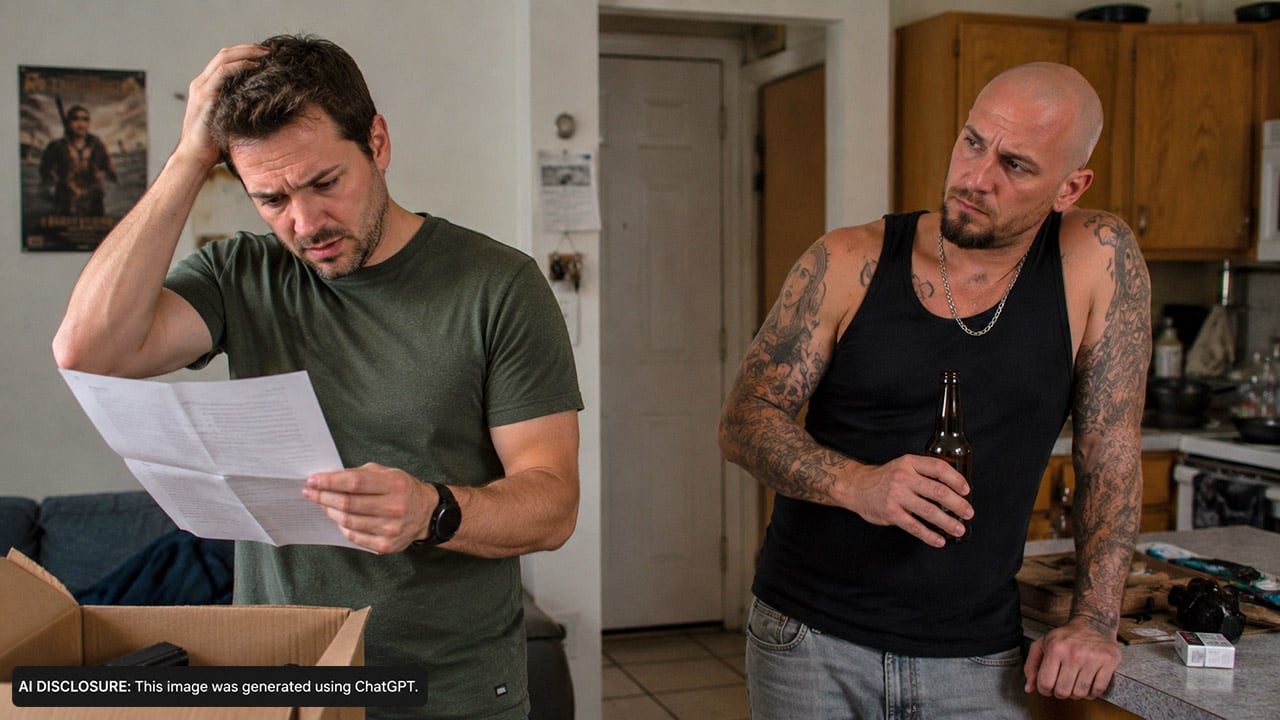
Photo credit: AI-generated image created using ChatGPT. Illustrative only
It’s one thing to share a place with other adults to keep rent manageable. It’s another thing to find out your new roommate has a felony on his record after he’s already moved in—especially when you’re a gun owner.
That’s the bind a Utah renter laid out in the original post. He lives in the basement of a large home and shares the space with two other tenants. A recently moved-in roommate, he learned, has a felony DUI, and the renter’s immediate worry wasn’t drama or stolen property—it was whether simply having his own firearms in the house could put him, the new roommate, or both of them in hot water.
A basement rental, a new face, and a bad surprise
The setup was pretty normal: he’d been in the home a little over two years, another basement tenant had been there nearly a year, and then a third guy moved in. Only after the fact did he hear from the first roommate that the new one is a felon, specifically for a DUI.
If you’ve ever lived in a shared house, you know how these things go. People come and go, background checks can be spotty, and “roommate screening” sometimes means nothing more than a handshake and the first month’s rent. But firearms change the stakes, because the consequences aren’t just a bad living situation—they can be criminal.
Why “possession” is the word that matters
The renter knew the basic rule most gun owners have heard: felons can’t possess firearms under federal law. The part that gets tricky in real life is what counts as “possession” when someone is living under the same roof as guns they don’t own.
There’s “actual possession” (a gun on your person, in your hands, in your bag) and “constructive possession” (having access to it and the ability to control it). That second one is where roommates, vehicles, and shared spaces get dicey. In a hunting camp or a shared house, a gun leaning in a corner of the living room isn’t just “someone else’s property”—it can look like easy access.
The renter said he wasn’t worried about the new guy taking the guns because they’re secured in his room. That’s a good start. But depending on the exact storage and the layout—locks, keys, who can enter whose rooms, whether guns ever come out into common areas—the legal risk can swing from “probably fine” to “you’ve created a problem.”
Secure storage helps, but shared living can still create exposure
Most outdoorsmen think in terms of practical security: keep guns locked up, keep ammo stored smart, keep curious hands away from them. In this kind of situation, “secure” needs to mean more than tucked in a closet. The whole point is to prevent access—because access is what turns into allegations of constructive possession.
If the firearms are in the renter’s private room and the felon roommate has no way to get to them—no key, no shared lock combo, no “we all borrow each other’s stuff” situation—that’s cleaner. If the guns are ever staged in common spaces, or if the roommate can freely enter the room, that’s where trouble starts. Even well-meaning habits like cleaning a rifle at the kitchen table or leaving a pistol in a nightstand during a quick shower can become a serious problem when a prohibited person is living there.
There’s also the human reality: roommates aren’t always permanent. A relationship sours, someone gets curious, someone has friends over, someone rummages. A felon touching a gun for ten seconds is still a felon in possession, and if law enforcement gets involved for any reason, the “who had access” question becomes more than theoretical.
The monthly police checks raised the temperature
One detail in the post that should make any gun owner sit up straight: the renter mentioned police come over to check on the new roommate monthly. That suggests the roommate is under supervision of some kind, and it means law enforcement contact is not a rare, random event—it’s built into the living arrangement.
When officers are regularly present, the odds of your firearms being noticed goes way up, even if you’re doing nothing wrong. You don’t have to be paranoid to recognize what that changes. A normal house might go years without a uniformed officer stepping inside. This house has routine check-ins, which means routine opportunities for questions, misunderstandings, and somebody deciding they want to look closer at how the guns are stored and who can access them.
The renter asked whether he should proactively tell the officers about the firearms. That’s a fair question from a law-abiding guy trying to stay out of trouble. But it’s also the kind of decision that should be made carefully, because you can’t un-ring that bell. The more immediate point is this: if officers have reason to believe a prohibited person has access to guns, they may act on it, and “access” can come down to small details of storage and household rules.
What people zeroed in on: locks, access, and not getting dragged into it
Even with limited details, the central theme is the same one experienced gun owners repeat over and over: keep prohibited people away from your firearms, period. In a shared home, that means your storage setup has to be beyond “good enough.” It has to be clearly restricted.
Practical steps revolve around controlling access. A locked safe that only you can open is different from a locking cabinet where the key lives on a hook in the hallway. A bedroom door that’s always locked when you’re gone is different from “we all come and go down here.” If you’re serious about protecting your rights, you want a situation where you can honestly say the roommate cannot access the firearms, and your actions match that statement day after day.
And there’s the other angle outdoorsmen understand: don’t volunteer yourself into a mess. If you’re concerned you’re in a bad legal setup, the fix is usually to change the setup—storage, living arrangements, or both—rather than hoping a casual conversation with an officer won’t backfire.
The options that keep hunters and gun owners out of the blast radius
This is one of those situations where “I’m not doing anything wrong” may not feel like enough. The renter’s goal is to stay legal and keep everyone safe, and that typically means making hard choices instead of assuming it’ll be fine.
One path is to tighten storage and household boundaries so the felon roommate has no access—real, provable access—to the firearms. Another is to remove the guns from the home entirely until the living situation changes. And the most straightforward option, if it’s available, is to stop living with a prohibited person at all. That may mean speaking with the landlord, changing rooms, or finding a new place. It’s not always convenient, but neither is explaining a “constructive possession” situation after the fact.
The outdoorsman’s version of this lesson is simple: your guns are your responsibility, and so is where you keep them. If a new roommate’s past turns your home into a gray area, you don’t wait for a knock on the door to find out how gray it really is.
Living arrangements can change fast. Gun charges change lives even faster. When you discover a roommate is a felon and law enforcement is already doing regular check-ins, the smartest move is to treat storage and access like it matters—because it does.
Like The Avid Outdoorsman’s content? Subscribe to our newsletter so you never miss an article.
Here’s more from us: