Photo credit: AvidOutdoorsman
It doesn’t take much to turn a normal evening in the country into a full-on mess. One coyote slipping along a fence line, a homeowner trying to protect chickens or a house cat, and one rushed shot that didn’t have a safe backstop. In this case, the bullet didn’t find fur. It found sheet metal and copper tubing on the neighbor’s outdoor AC unit.
By the time the dust settled, the predator was gone, the air conditioner was damaged, and a neighbor was on the phone filing a criminal complaint. That’s the kind of situation that can sour relationships for years and put someone in the crosshairs of law enforcement even if they honestly thought they were “handling a problem.”
A coyote sighting turned into a snap decision
The way these things usually go, the coyote wasn’t doing anything cinematic. It was just there—trotting the edge of a yard, cutting across a pasture, working a treeline like coyotes do. The homeowner reportedly saw it near the back of the property where pets were sometimes let out and where a small flock of birds had been kept.
Instead of grabbing a light and trying to haze it off, or waiting for a better opportunity, the homeowner chose to shoot. The setup matters here: homes in semi-rural neighborhoods often sit on acreage, but they’re still close enough that a “miss” doesn’t just disappear into the next county.
The miss mattered more than the coyote
The shot didn’t connect, and that’s where the story changes from predator control to reckless discharge territory. A bullet that misses has to go somewhere. If there isn’t a dirt berm, a steep hillside, or a known safe direction that ends in earth, you’re rolling the dice with whatever sits downrange—barns, vehicles, livestock, and in this case, a neighbor’s HVAC equipment.
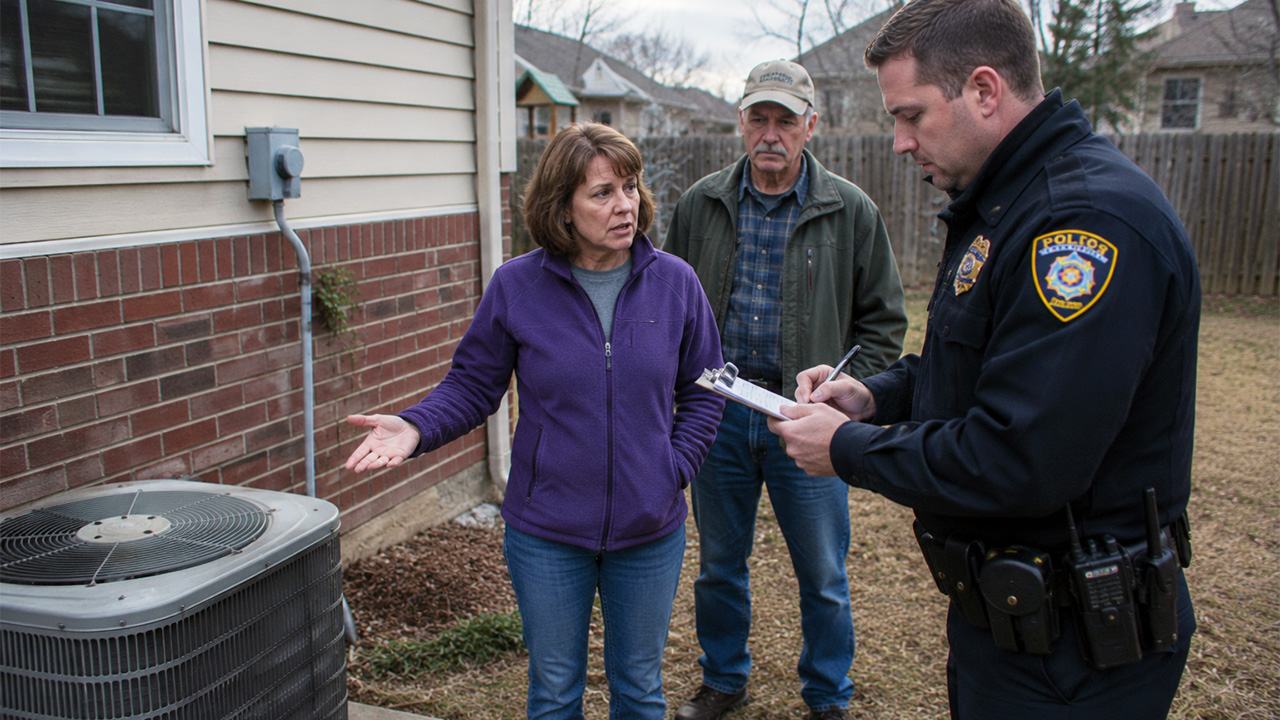
The round reportedly struck the outdoor condenser unit, the part that sits on a pad next to the house. Those cabinets are thin metal around sensitive components. A bullet doesn’t have to hit the compressor dead-on to create an expensive problem. Clip a refrigerant line, puncture a coil, or damage wiring and you’re looking at a repair bill that can jump from “service call” to “replace the whole unit” in a hurry.
The neighbor’s complaint changed the stakes
Property damage is one thing. Gunfire impacting someone else’s property is another. When the neighbor discovered the damage—and especially once it was connected to a shot fired next door—the tone shifted fast.
From a neighbor’s perspective, it’s not just about the AC unit. It’s about the fact that a projectile crossed a property line and hit something near the home. Even if nobody was outside, that’s the kind of detail that makes people think about kids in the yard, a back porch, or a window. Filing a criminal complaint is often less about “getting even” and more about forcing the situation into a formal process where there’s documentation, accountability, and potentially restitution.
And for the shooter, that complaint can bring interviews, reports, and charges that vary by state—anything from unlawful discharge to reckless endangerment, depending on how the local statutes read and what investigators decide the facts support.
Where a lot of hunters and landowners get tripped up
Most outdoorsmen understand predator control. Coyotes can hammer fawns, take barn cats, and absolutely wreck a chicken coop if they get a chance. In many places they’re classified as varmints or nongame animals with liberal seasons. That reality makes some people feel like any time, any place is “good enough” if a coyote shows up.
But “legal to shoot” is not the same thing as “safe to shoot here.” Neighborhoods with five-acre lots, scattered houses, and treelines feel rural until you send a bullet a few hundred yards farther than you meant to. Rifle rounds can carry a long way, and even some shotgun loads can do damage beyond what folks assume—especially if they’re using slugs or heavier buckshot.
This is also where emotions get people. If you’ve just lost birds or you’ve got a small dog that likes to roam, you can get tunnel vision. The problem is, a hurried shot taken without a safe backstop is exactly what investigators and courts call “foreseeable.” That’s a tough word to fight once property damage is documented.
What people zeroed in on: backstops, distance, and “country math”
Whenever stories like this make the rounds among hunters and rural homeowners, the comments tend to split into two camps. One side says the shooter was just trying to deal with a predator and got unlucky. The other side says there’s no excuse for launching a round without knowing where it’s going to end up.
The more experienced voices usually come back to the same basics: you don’t shoot unless you’ve got a safe direction and a backstop that will actually stop the projectile. A treeline isn’t a backstop. Brush isn’t a backstop. A dark yard at dusk isn’t a backstop. Dirt is a backstop.
People also tend to talk about distance requirements and discharge ordinances. A lot of counties and townships have rules about how close you can shoot to an occupied dwelling, a roadway, or across a property line. Even if the homeowner was within their rights to hunt predators on their own land, a local ordinance can still make the discharge itself a violation.
Practical ways this could’ve been handled without risking a neighbor
If coyotes are a real problem where you live, the answer isn’t “never shoot.” It’s to set yourself up to do it safely and lawfully. That starts with knowing your property lines and your safe shooting lanes in daylight, not in the moment when adrenaline is up.
For a lot of folks, the better play is non-shooting deterrence until you’ve got the right conditions: secure the coop, run a light, haze the animal, and keep pets in after dark. If you’re going to shoot, do it from a position where you’ve got earth behind the target—down into a bank, into a hillside, or toward a berm you built for that purpose. In tighter neighborhoods, calling a nuisance wildlife operator can be the smarter move, even if it costs money, because it shifts the work to someone who’s insured and trained to handle the angles and the legalities.
And if you do make a mistake, own it immediately. A neighbor finding a bullet hole in equipment is bad. A neighbor finding a bullet hole and getting brushed off is what turns a repair bill into a criminal complaint and a courtroom date.
The hard truth is that predator control doesn’t buy you any grace if your round ends up in someone else’s stuff. Coyotes are tough, but they’re not the only problem out there. Sometimes the bigger threat is one careless shot in a place that feels like “the country” until you see how close everyone really is.