Photo credit: AvidOutdoorsman
The shot wasn’t taken on a whim. It was one of those late-afternoon sets where the wind finally laid down, the field edges started to come alive, and a single coyote slipped out like it owned the place. The hunter was posted on permission ground, tucked into a fencerow and watching a cut bean field that backed up to a patchwork of small acreages—one of those rural neighborhoods where farmland and hobby farms touch corners.
He’d been dealing with coyotes all winter. Calves were due soon on the nearby place, and a neighbor had already lost a couple barn cats. When the coyote paused at the edge, the hunter settled in, picked his lane, and fired.
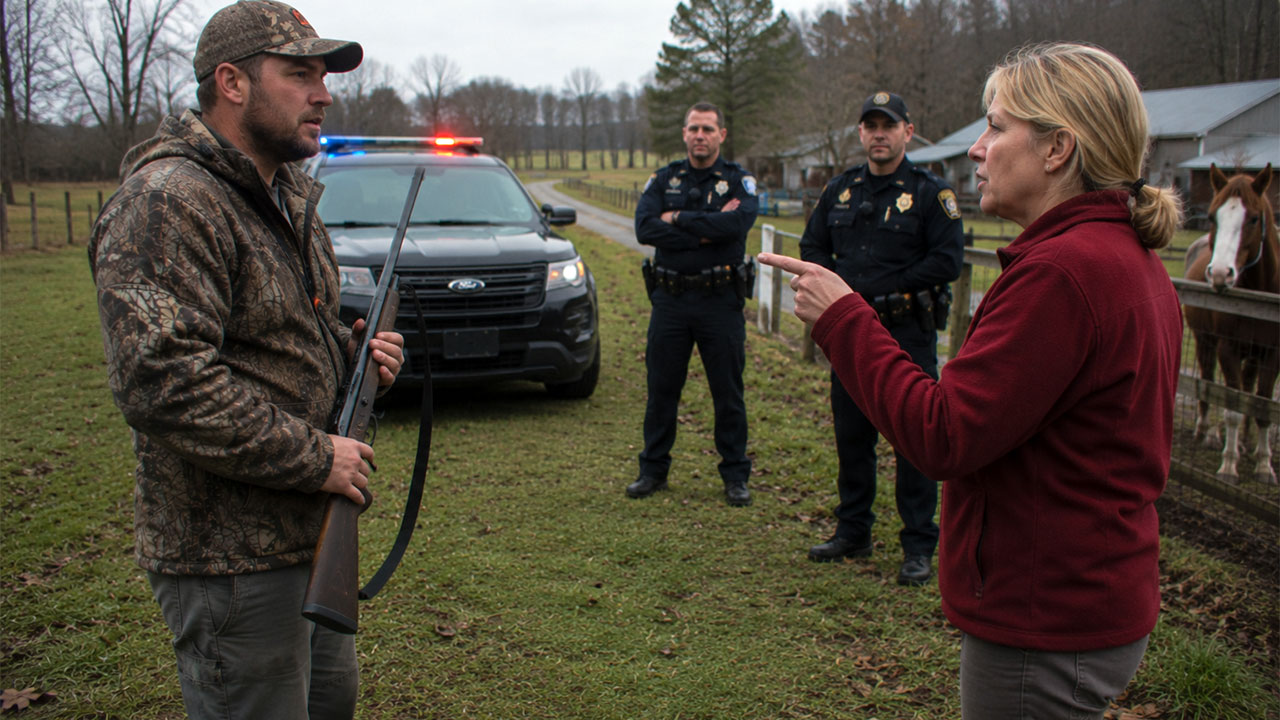
He didn’t know that across the way, a woman had horses out behind her house. All she heard was the crack of a rifle and saw a man in camo near the field line. Within minutes she was on the phone, telling dispatch someone was shooting at her horses.
A field-edge shot that looked different from the other side of the fence
Field edges are where predator hunting makes the most sense and where it gets the most complicated. Coyotes run those transition lines—crop to grass, brush to pasture, timber to creek. Hunters set up there because it’s where they can see, call, and get a safe angle with a good backstop.
But safe from the shooter’s perspective and safe from a bystander’s perspective aren’t always the same thing. If you’re standing by a barn or a paddock and you hear a rifle report close by, you don’t think “responsible predator control.” You think “somebody is firing toward my animals.” And if that person already isn’t comfortable with guns, the story gets told fast and sharp.
In this case, the hunter’s shot was directed at a coyote along the field margin, with the ground falling away into the cut field. To him, it was dirt and stubble behind the target—about as good as it gets. To the horse owner, it was a gunshot “near” her property and animals, and “near” is a word that tends to grow legs when police get involved.
When the police show up, the whole day changes
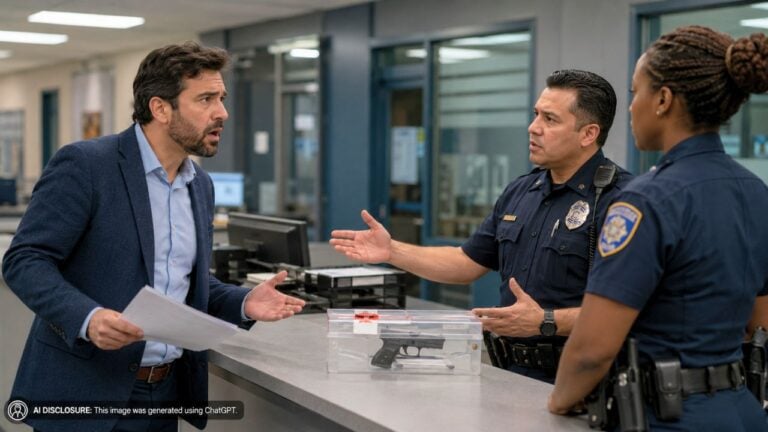
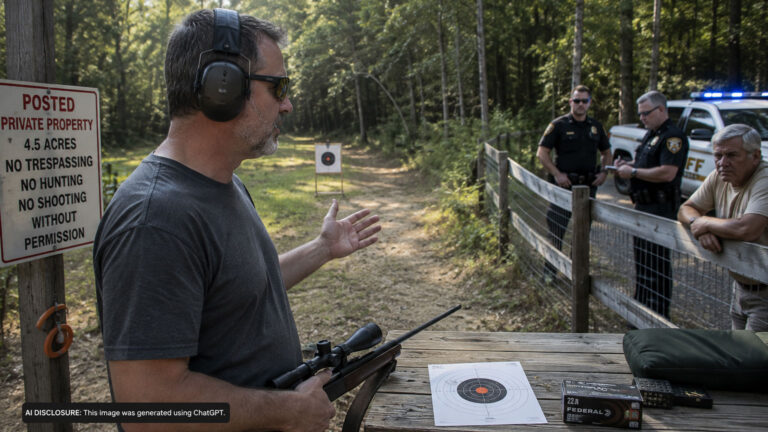
Patrol units don’t roll up to a “coyote shot.” They roll up to a “man shooting at horses” call, and that’s a completely different energy. Expect commands, questions, and a careful approach. If you’re the hunter, the best thing you can do is make it easy—rifle cleared, hands visible, and no sudden movements.
The hunter had permission to be where he was, but permission doesn’t stop a complaint from becoming a contact. Officers asked where he was set up, what direction he fired, what he was shooting at, and whether there were buildings or livestock in the line of fire. They also wanted to see his hunting license and know whose land he was on.
This is where little details matter. A simple map pin from a landowner, a saved text granting permission, and a clear explanation of the shot angle can keep a tense call from turning into a bigger mess. Officers aren’t there to referee neighbor drama, but they are there to make sure nobody is endangering people or property.
Livestock changes the standard, even if you did everything right
Most hunters know the hard rules: know your target, know what’s beyond it, and never send a round where you can’t account for it. Around livestock, though, the “what’s beyond” part becomes personal to the neighbor in a hurry. Horses aren’t like a fence post you can replace. They’re expensive, they’re emotional, and they’re often owned by people who didn’t grow up around hunting.
Even if the hunter didn’t shoot toward the horses, the sound and the proximity can be enough for someone to believe their animals were in danger. And from a practical standpoint, a frightened horse can hurt itself without ever being touched by a bullet. That’s why these situations get attention fast.
The responding officers walked the area, looked at the hunter’s line of sight, and asked where the coyote was standing. They also went to speak with the horse owner, who pointed out where her animals were and what she heard. The question becomes: was the hunter reckless, or was the neighbor mistaken?
In a lot of farm-country situations, it ends up being a misunderstanding with bad timing. But it’s still a reminder that “legal” and “smart” aren’t always the same thing when houses and animals sit close to an otherwise perfect calling spot.
The small choices that would’ve prevented the call
There are a few things that can keep a predator hunt from turning into a police report. First is picking a setup that keeps you from silhouetting yourself near a property boundary. Even if you’re on the right side of the line, being visible to the neighbor across an open field makes people nervous.
Second is choosing the safest possible direction of fire, even if it costs you a shot. A steep downward angle into a field, a solid dirt bank, or a hillside backstop beats “flat ground with pasture somewhere behind it” every time. If there’s a chance your bullet could travel off your intended area, you don’t squeeze the trigger. Period.
Third is communication. Nobody’s asking you to go door-to-door announcing you’re predator hunting. But if you know there are horses or houses tight to the edge, a quick heads-up to the landowner—who may choose to notify the neighbor—can prevent the worst assumptions. Folks are less likely to panic when they’ve been told what’s going on.
And finally, suppressors—where legal—reduce the shock factor. They don’t make a rifle “quiet,” but they do take the edge off and can keep a single shot from sounding like a war started at the fence line.
What other hunters focused on: permission, property lines, and proof
When stories like this make the rounds, most hunters don’t argue the neighbor’s right to be concerned. They argue the importance of being able to prove you did everything by the book. The first thing folks talk about is documented permission and knowing exactly where you’re standing, not where you “think” you’re standing.
A lot of guys also point out how quickly a simple complaint can turn into a “brand-new narrative” once it hits a dispatcher. “Shooting at a coyote” becomes “shooting near a residence,” and then “shooting at animals,” and suddenly you’re defending yourself against something you never did. That’s not paranoia—that’s just how secondhand information works under stress.
Others focus on the ugly truth that some neighbors don’t want anyone hunting anywhere near them, and a livestock complaint is an easy lever to pull. That may not be what happened here, but it’s common enough that hunters should plan for it. Keep your hunt clean, keep it safe, and keep it documented.
Trail cameras don’t help much for a one-time shot, but mapping apps do. A screenshot of the property boundary with your position marked, plus the landowner’s contact saved in your phone, can go a long way toward calming everyone down on scene.
The real takeaway: predator hunting is still hunting, but it’s also neighbor management
The hunter in this situation went out to call a coyote, not to make enemies. But that’s the reality of hunting close to homes, horse paddocks, and small-acre parcels. You can do it legally and safely and still end up with a badge in your face because someone heard a shot and assumed the worst.
If you’re going to hunt the edges, act like the edges. Pick the backstop like your reputation depends on it. Keep your permissions straight. And remember that a calm, cooperative attitude with law enforcement and neighbors is often the difference between a bad evening and a problem that follows you for a long time.
Like The Avid Outdoorsman’s content? Be sure to follow us.
Here’s more from us: