Photo credit: AI-generated image created using ChatGPT. Illustrative only.
Most gun owners have a pretty clear mental flow chart for worst-case days: call the cops if you have to, cooperate, and keep things from getting worse. But one New Jersey gun owner learned the hard way that “cooperate” can turn into “good luck getting your property back” even when you’re the one who made the call.
In the original post, the man described dialing 911 after an ex-girlfriend “went completely psycho on prescription meds.” Police removed her from his apartment in the middle of the night, and then asked him to voluntarily surrender his firearms “for safekeeping.” Their stated logic was that if she later accused him of threatening her, the department could show the guns were already in police custody.
A 2 a.m. decision made under pressure
Anyone who’s dealt with a late-night domestic call knows the vibe: bright lights, tired brains, and a whole lot of authority standing in your living room. The poster said it was around 2:00 a.m., with about six officers present, and he didn’t want to “stir the pot.” So he agreed to the voluntary surrender.
He also said he had disclosed the presence of firearms before officers entered. That’s a detail most responsible gun owners understand—nobody wants an officer spotting a safe or a rifle case unexpectedly and deciding you’re hiding something. He was trying to keep the temperature down and keep everyone safe.
He says law enforcement treated him as the victim
Here’s where it gets sideways. According to the post, police deemed him the victim of domestic violence. He said he wasn’t charged, wasn’t arrested, and there was no restraining order and no “TERPO” (a temporary extreme risk protective order, as gun owners often call them).
In plain terms: he believed he did everything a reasonable person would do. He called for help, disclosed his guns, complied, and walked away expecting that once the dust settled, he’d follow the process and get his firearms back.
The “voluntary” handover that doesn’t feel voluntary later
The poster’s main complaint wasn’t about being asked in the moment. It was what happened afterward. He said the prosecutor’s office was “essentially treating me like a defendant,” even though he described himself as the reporting party and victim.
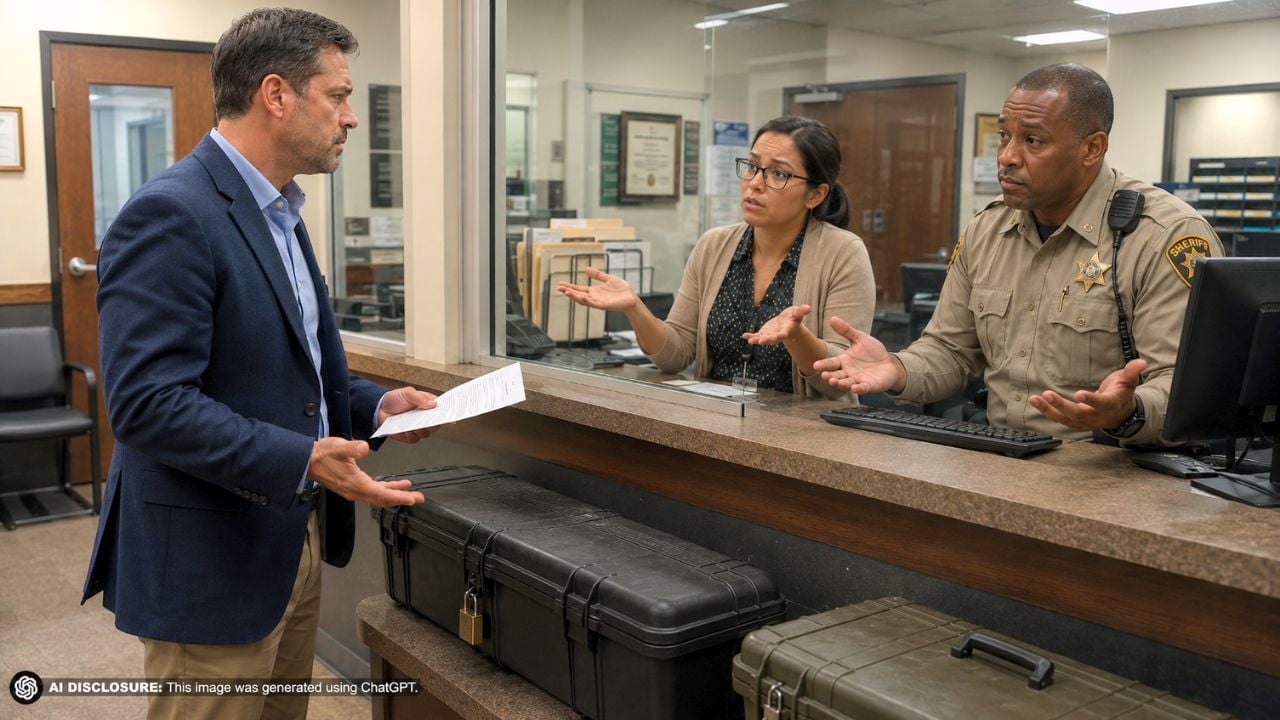
He hired a lawyer and had the lawyer serve paperwork requesting the guns back. But, in his telling, the request has been “blown off.” The part that will make any gun owner’s stomach tighten is his description of the legal status: the weapons weren’t “seized,” so he’s stuck in a gray area where the normal paths don’t seem to fit.
That gray zone matters. When property is seized, there’s usually a paper trail and a defined procedure. When property is “voluntarily surrendered,” the paperwork and deadlines can look different, and the owner may find out later that “safekeeping” doesn’t come with a clean, predictable return date.
Why this hits hunters and home defenders especially hard
For folks who don’t own guns, losing access to your firearms might sound like an inconvenience. For hunters, it can mean losing an entire season—missed scouting trips, missed sight-in days, and tags that go unused because your rifle or slug gun is sitting in an evidence vault or property room.
For home defenders, it’s more personal. It’s the tool you chose to protect your family, now gone, and you didn’t commit a crime to lose it. Even if you’ve got other options, the idea that your property can get trapped in bureaucracy is a gut punch.
And there’s another practical piece: the longer guns sit in someone else’s custody, the more you worry about condition, handling, and documentation. Anybody who takes care of their gear knows what humidity and neglect can do, even if it’s “indoors.”
The hardest part: being told to comply without being told how to comply cleanly
The headline version of this type of situation is usually a protective order with a strict deadline, but the underlying problem is the same: you’re told, “Hand them over,” yet the “legal, correct” destination can be unclear in real time. Is it local police? A licensed dealer? A friend who can lawfully possess them? Your attorney? And what proof do you need so you’re not accused later of hiding something?
In this case, the poster said police asked for a surrender specifically so they could later show the guns were in their custody if allegations came up. That tells you something important: officers were thinking about downstream accusations and liability, not just immediate safety.
But when the state’s machinery starts moving—especially when domestic violence is even adjacent to the call—common-sense expectations don’t always matter. What feels like a protective step at 2 a.m. can turn into a months-long fight where nobody gives you a straight answer, and you’re the one paying a lawyer to chase it.
The lesson he took from it, and the one other gun owners should take too
The poster ended with a blunt “lesson learned,” saying that next time he’d ask whether he was under arrest or being detained, and if not, he’d leave. That’s an emotional reaction, sure—but it’s also the kind of reaction you hear from good people who feel like compliance got punished.
The more grounded lesson for the rest of us is simpler: if you ever feel pressured into a “voluntary” firearms surrender, slow the moment down as much as the situation safely allows. Ask what the exact process is for getting them back, what documentation you’ll receive that night, and what office you’ll be dealing with on the return. If they can’t tell you, that’s a red flag you should take seriously.
This isn’t advice to be difficult with responding officers. It’s advice to protect yourself the way you’d protect a hunting lease or a piece of equipment you can’t easily replace: with paperwork, clear terms, and a firm understanding of what happens next. Because once your guns are out of your hands, “safekeeping” can start to look a lot like limbo.