
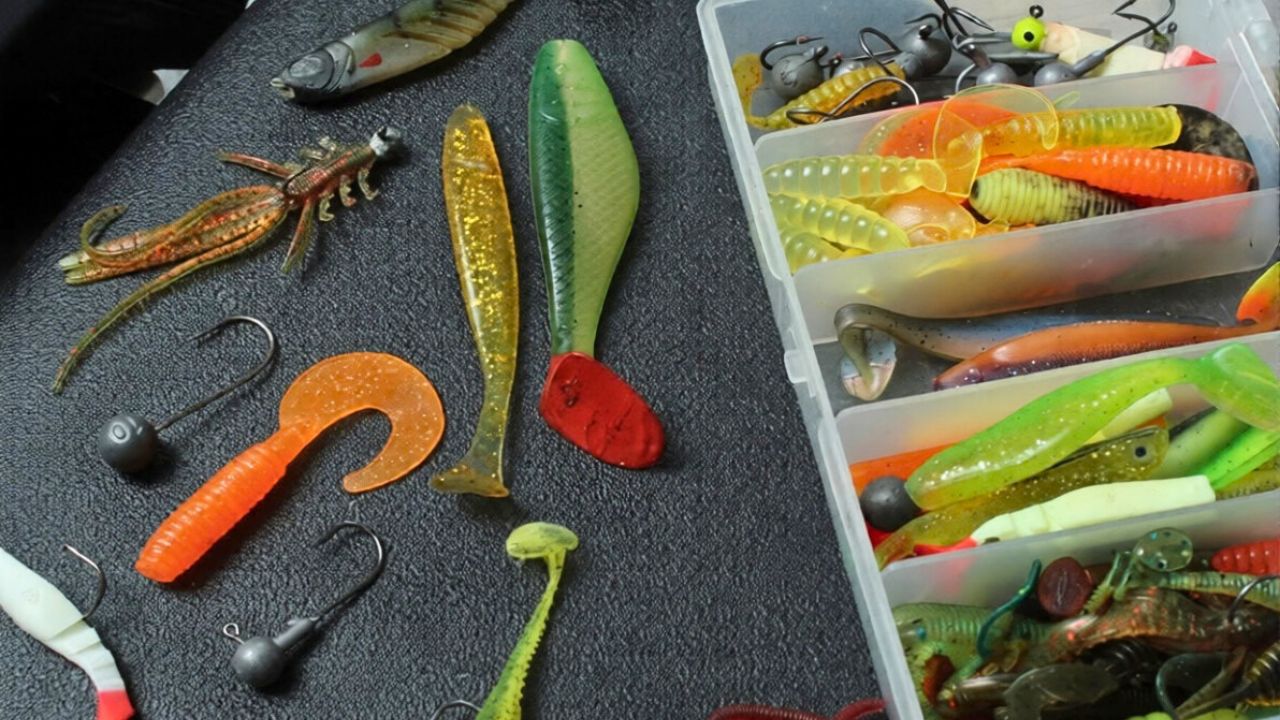
Photo credit: Tom Korcak/Shutterstock.com
Soft plastics are simple until they’re not. You can fish a worm, a creature bait, or a stick bait a hundred different ways, and the weight you pick changes the whole presentation. Too light and you can’t feel anything, you can’t stay in the strike zone, and wind makes it miserable. Too heavy and it falls wrong, blows through fish, and looks unnatural. Picking the right weight is less about “the rule” and more about matching conditions so you can control the bait without ruining the action.
Start with depth and wind. If you’re fishing shallow, you can get away with lighter weight. If you’re fishing deeper or it’s windy, you need enough weight to keep contact. Contact is how you know what your bait is doing and how you know when a fish has it. If you can’t feel bottom, you’re guessing. That doesn’t mean you need to fish heavy all the time—it means you need just enough weight to stay honest. On calm days, I’ll go light because the fall looks better. On windy days, I’ll go up because I’d rather feel and catch than “fish pretty” and miss everything.
Cover is the next factor. Thick grass, brush, and wood often require more weight to punch through and get down. But even then, you don’t always need a flipping weight. Sometimes a small bump—from 1/8 to 3/16—gets you through the top of the grass without turning it into a cannonball. In wood, too much weight can wedge you into cracks and cost you baits. Lighter weights glide more and hang less, but you have to manage slack. If you’re getting hung constantly, you might actually need less weight, not more.
Fish mood matters too. When bass are aggressive, a faster fall can trigger them. When they’re pressured or cold, they often want a slower fall. That’s why downsizing weight can work even when nothing else changes. A bait that hangs in the water column longer gets looked at longer. On slow bites, I’ll go lighter and make the bait linger. On active bites, I’ll go heavier and make it more of a “react now” deal.
Don’t ignore your line and rod, either. Heavier line creates more drag and makes baits fall slower. Lighter line lets them fall faster and more naturally. If you’re trying to fish light weight but you’re using thick line, you might be fighting yourself. Same with rod choice—if your rod is too stiff and you’re fishing light weight, you’ll struggle to cast and feel it. Everything works together.
If you want a practical approach: start light enough that the bait falls naturally, then increase weight only until you can feel and control it. If wind picks up, go heavier. If you move deeper, go heavier. If fish get picky, go lighter. The “right” weight is the one that keeps your bait in the zone and keeps you in control without killing the presentation. That’s how you stop guessing and start catching.
Like The Avid Outdoorsman’s content? Subscribe to our newsletter so you never miss an article.
Here’s more from us:


