Photo credit: AvidOutdoorsman
It started the way a lot of lease mornings start: headlights in the dark, a quick check of the wind, and that quiet feeling that today might be the day. Two hunters had permission on the same piece of ground, both running stands in the same general block of timber and cutover. They weren’t strangers, but they weren’t exactly hunting buddies either.
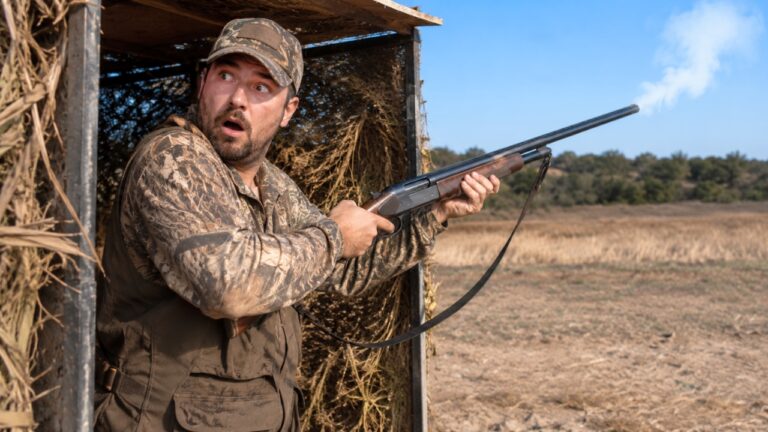
Right after first light, a mature buck came through—one of those heavy-bodied deer that looks like it owns the place. Almost immediately, two shots cracked from different directions. And that’s where the morning went sideways.
The shot sequence turned into an argument at the blood trail
Both hunters believed they made the clean, lethal hit. Each had the same story: the buck stepped out, paused just long enough, and the crosshairs settled behind the shoulder. When the deer bolted, each man heard the “good hit” sound and watched it disappear into the same drainage.
They met up near the edge of the cutover after hearing each other shoot. At first it was just the usual post-shot talk—what direction, how far, did you hear it crash. But once they found first blood, it got tense fast. The trail showed sign that could support either claim: bright frothy drops in one stretch, darker thicker blood a little farther along, and tracks that didn’t tell any clear story.
When the buck was found, both claimed it—and neither wanted to budge
They eventually jumped the buck out of thick brush and watched it stumble. A short follow-up search put them on the deer, piled up in a tangle of briars. That should have been the end of it: shake hands, drag it out, take pictures, and go home with a story.
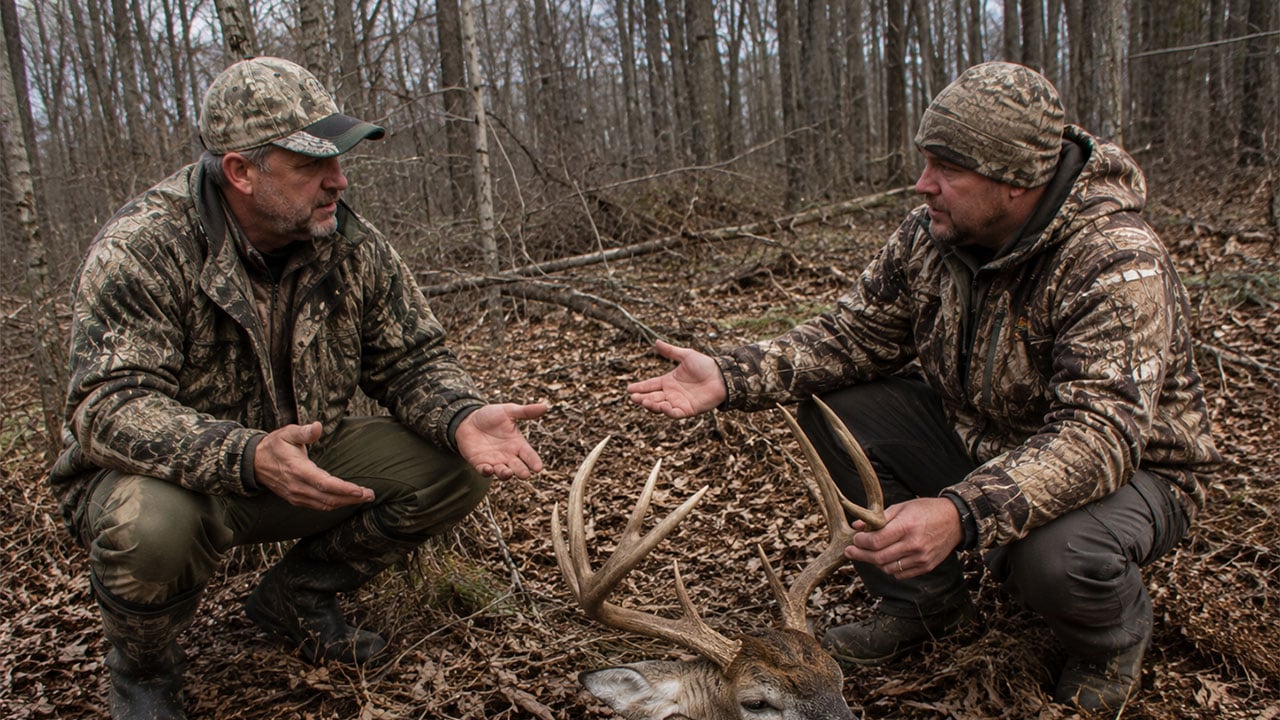
Instead, both hunters started looking for the proof that would decide who tags it. One pointed to an entry wound that looked like his angle from the ridge. The other found what he said was his bullet path, lining up with where he’d been sitting. Neither man wanted to admit there was a real chance the deer took two hits and both contributed.
It’s one of those ugly truths in deer hunting: sometimes the woods don’t hand you a clean answer.
The refusal to let the other tag it is what brought law enforcement into the woods
Here’s where the situation escalated. One hunter insisted he was tagging the buck, period. The other demanded the deer be left exactly where it fell until a conservation officer could look at it. When the first hunter tried to start moving the deer—drag rope in hand—the other blocked him and told him to stop.
That’s the moment the conversation shifts from “who shot it” to “this could get dangerous.” Two armed hunters, tempers up, both feeling wronged, standing over a dead buck. Smart hunters recognize that as a flashing red light and back away.
Instead of backing off, one hunter reportedly kept pushing to get the deer out and get it tagged his way. The other pulled out a phone and called for an officer to respond. Depending on where you hunt, that could mean a game warden, a deputy, or both—because once a dispute turns physical or turns into someone preventing someone else from leaving, it stops being “just a hunting issue.”
What officers usually look at in a “same deer” dispute
Most states have some version of a “first possession” or “who recovered it” concept, but it’s rarely as simple as “finder’s keepers.” Officers tend to look at a handful of practical factors: who made the first legal shot, whose shot was most likely the fatal one, who can show where they were, and who can show the timeline.
In a situation like this, they’ll often examine the wounds and angles, ask for the shooters’ locations, and look at the firearms and ammo involved. If the buck has two distinct wound channels from different directions, you’re not going to talk your way around that. And if one hunter is already trying to tag it while the other is demanding an investigation, that behavior can matter, too.
The other piece is plain old compliance. If an officer tells you to stop moving the animal and you ignore it, you’ve just created a new problem that has nothing to do with antlers. That’s when citations and confiscation become real possibilities, even if you did shoot the deer.
Commenters zeroed in on lease rules, stand spacing, and the “talk before daylight” fix
Whenever a story like this gets around, hunters tend to split into a few camps. One group argues the simplest rule is “whoever put hands on it first tags it,” because it prevents standoffs in the field. Another group says the tag belongs to the hunter who made the first fatal hit, even if someone else finished it.
A lot of seasoned lease guys focus on prevention: if two members are hunting the same block, there should be a simple check-in system and stand map. Text the group chat when you park. Mark stand locations on a shared pin app. And if someone’s already in a corner, don’t slip in 150 yards away and pretend it’s fine. It’s not just about deer—it’s about muzzle direction and unknown backstops in low light.
Some also pointed out the most uncomfortable truth: if you’re on the same lease and you don’t have a written agreement about “shared deer,” you’re trusting everyone’s character on the most emotional moment of the season. That’s a gamble.
The practical takeaway: protect the relationship and the tag with documentation and restraint
If you hunt leases long enough, you’ll eventually deal with a boundary question, a tracking question, or a “was that your shot” question. The best move is to slow everything down. Unload rifles, take a breath, and treat the deer like evidence until you agree on what happened.
Photos matter more than people think. A quick picture of the deer as found, the blood trail, and even your stand location can keep a disagreement from turning into a shouting match. If you use a tracker app, save the track. If you’ve got trail cameras nearby, don’t be afraid to pull the card and check times. None of that is about “winning.” It’s about giving everyone a fair shake.
And if you can’t agree, it’s better to involve an officer early than to drag a buck to the truck while the other hunter is demanding it stay put. That’s how arguments turn into accusations, and how a good season turns into a stack of headaches.
In the end, a mature buck is a prize—but it’s still just a deer. No rack is worth a ruined lease, a broken friendship, or a dangerous confrontation in the woods. The best hunters I know would rather eat the tag than escalate a situation that’s already gone hot.