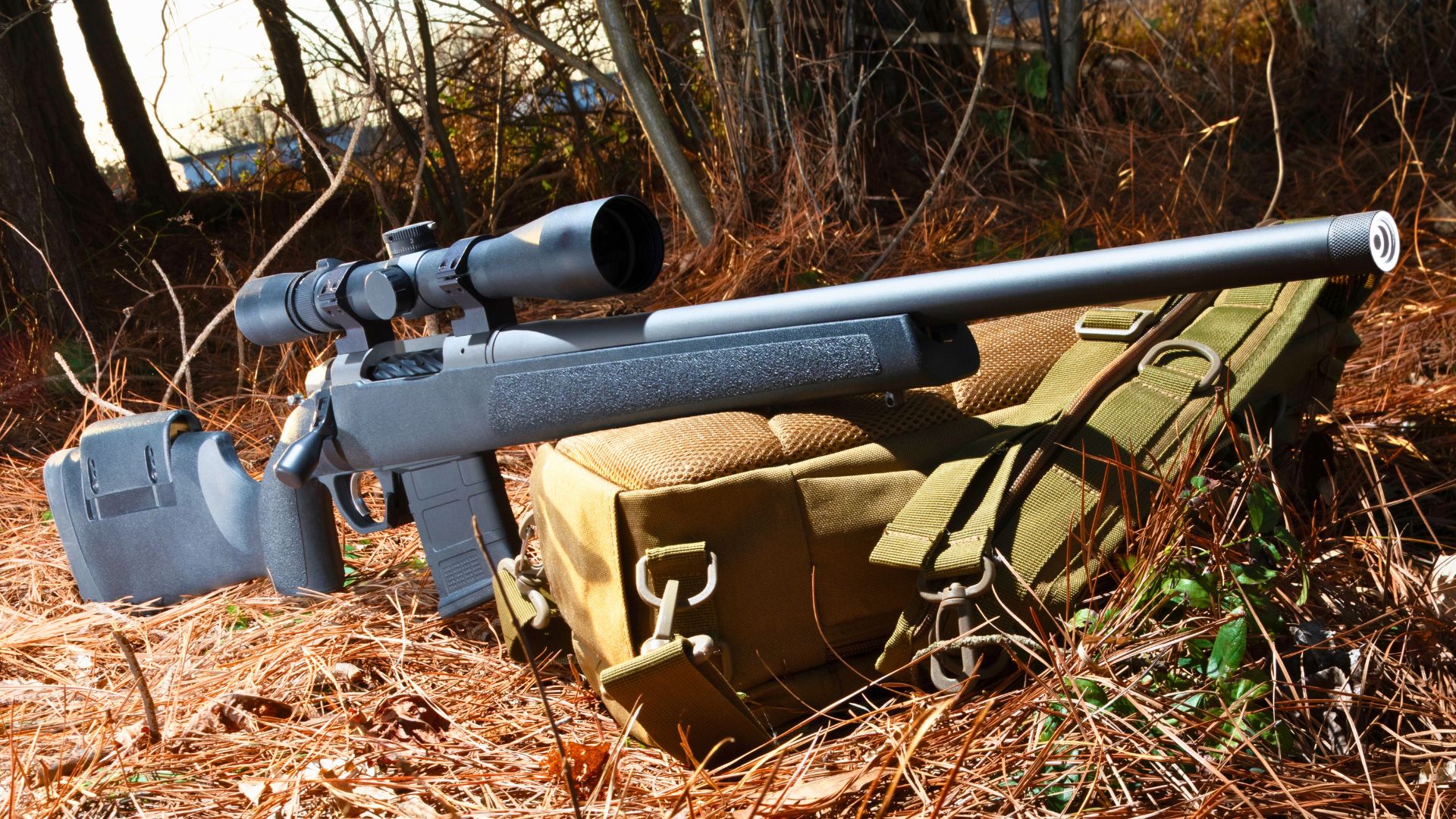
Photo credit: Guy J. Sagi/Shutterstock.com
You buy a rifle that feels balanced and tight in the store, then you carry it into the woods and learn a hard lesson: not every rifle keeps what it promises. A quick jolt, a hard pack, or a brush scrape should not mean a new zero. When rifles lose point of impact after routine handling, it’s almost always because of things you can check: soft or mismatched scope bases, stock-to-action fit that’s anything but solid, poorly torqued rings, or production runs with inconsistent bedding. Sometimes the receiver finish or thin mounting screws let the optic walk. You want a hunting rifle that gives you confidence—one that keeps POI through rough handling, not a pretty one that needs a gunsmith before you trust it at 200 yards. Below are models where owners have seen that “one bump” problem crop up often enough to warn you. For each, I’ll explain the common failure points and quick fixes to test before you commit.
Ruger No. 1

The Ruger No. 1 is elegant and lightweight, and that pleasant balance on the showroom floor makes it a tempting carry rifle. Problem is, some No. 1 owners find that single-shot falling-block bedding and thin recoil lugs aren’t always forgiving when the rifle takes a real-world knock. If the action isn’t bedded solidly into the stock or the bedding around the recoil lug is marginal, a hard bump can shift the barreled action slightly and change your point of impact. That’s especially true with high-magnification optics where tiny angular changes become big misses downrange.
You don’t have to panic—this is fixable. Inspect the action-to-stock fit, pay attention to the recoil lug contact area, and consider a modest glass bed around the block. Swap any flimsy factory bases for robust steel pieces and torque everything with a proper wrench. A properly bedded No. 1 stays true in the field; an unchecked one makes you re-zero after a brush scrape.
Browning BLR

The Browning BLR’s lever-action plus detachable-box-mag design feels modern and handy in the shop, but some hunters report zero creep related to how the receiver mates to certain sporter stocks. The BLR’s pivoting action and the geometry around the receiver ring mean that if the bedding surface lacks consistent contact or the bases are marginal, a bump can nudge the optic alignment. Hunters who rely on factory bases or light rings sometimes notice POI drift after stowing the rifle under gear or rubbing a branch.
If you like a BLR for its quick handling, do a pre-season check on the recoil lug area and base seating. Consider upgrading to full-foot steel bases and ensure even torque across screws. A BLR with a solid mounting plane holds zero like any other well-bedded rifle; one that hasn’t had attention will remind you why bedding and base choice matter in real-world hunting.
Anschutz 1710 sporter

Anschutz sporter variants bring delicate barrels and precise triggers into hunting configurations that feel lovely in the store. That precision means they also show zero shifts if the mounting plane is shallow or the rings press unevenly on the tube. Because these rifles are often topped with sensitive optics, even micro movement of the rail or a slight bedding gap becomes a noticeable POI change after a hard bump or heavy pack ride. In short, Anschutz accuracy magnifies mounting mistakes.
The solution is straightforward: use a broad-foot rail with quality rings and verify even contact under the tube. If you bleed across high magnification, check that ring torque is consistent and that the action seats into the stock without gaps. Correct those details and the Anschutz stays true; ignore them and you’ll waste valuable range time re-zeroing.
Steyr Scout

The Steyr Scout is praised for its compactness and fast handling, and that feel in the store sells a lot of hunters. The trade-off is that lightweight chassis and minimal bedding interfaces on some Scout examples can let small movements translate into POI shifts if the scope bases aren’t robust. One hard bump or a heavy sling knock can reveal marginal interface points, especially when combined with high-power optics. Hunters have learned to check the receiver-ring contact and base seating before trusting the rifle deep into the season.
Fixes are familiar: fit a sturdy base with a wide footprint, confirm even torque, and consider bedding the recoil lug area if the stock design allows. With those measures the Scout’s quick handling and pointability remain its strengths; left stock, a single knock can force you to the range to re-zero.
Weatherby Mark V
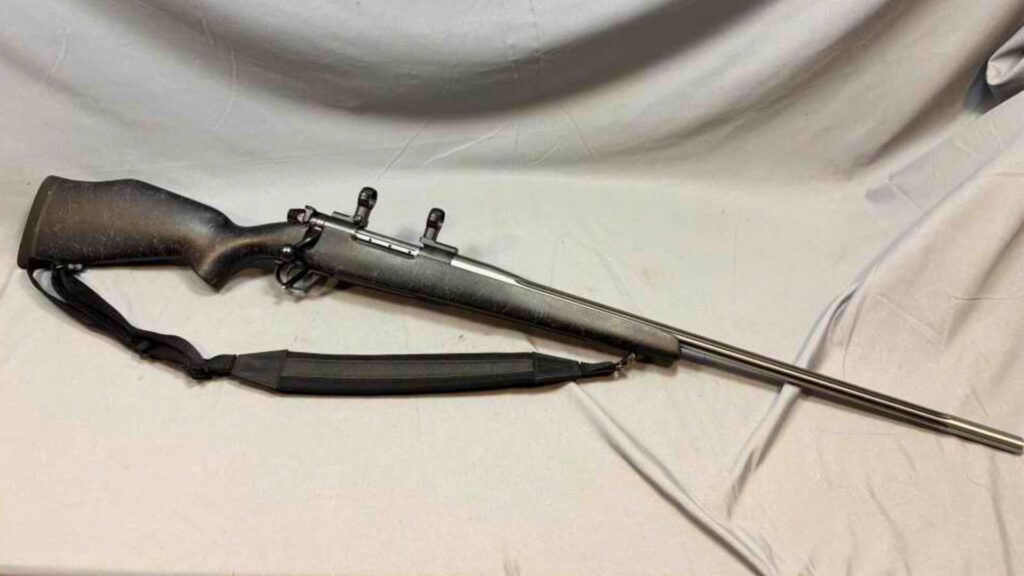
The Weatherby Mark V feels like high-end craft on the counter — smooth bolt, great trigger, and tight lockup. But some Mark V owners find that action-to-stock fit and the choice of factory bases affect zero retention more than expected. The Mark V’s precise action makes micro-movement show up clearly at distance, and if the bedding at the recoil lug or the ring footprint isn’t solid, a bump can nudge POI. That’s particularly true on long-barrelled magnum examples where recoil dynamics accentuate any bedding weakness.
Before hunting season, inspect the bedding around the action and ensure the bases have full contact and robust construction. Many owners fit steel bases and add a quick glass bedding touch at the lug to eliminate any play. Do that and the Mark V stays true; skip it and you’ll find a rifle that looks perfect in the shop but nags you on the range.
Sako 85

The Sako 85 is a precision hunting rifle by design, but some older production runs had action-to-stock fit that varied from unit to unit. When fit is marginal, a knock in the field can translate into POI shift because the barreled action can move minutely inside the stock. The Sako’s tight tolerances make that micro-movement more noticeable at distance. This isn’t a universal Sako problem; rather, it’s an argument for checking fit if you buy used or pick an early serial.
A quick pre-season inspection — remove the action screws, check for even contact, and test for any side-to-side play — will tell you whether a scope should be remounted after a bedding job. Fix the interface and the 85’s excellent inherent accuracy will hold up to hard field use without fuss.
CZ 557

The CZ 557 brings Mauser-style controlled-round feeding to a modern action, and most examples stay rock-solid. Still, some owners mention POI issues when using lightweight rings or when torques are uneven. The 557’s receiver can be sensitive to ring pressures that aren’t evenly distributed, which shows up after a bump or a heavy carry. Opt for a matched two-piece base system and torque the screws in stages with a proper wrench to avoid this.
Another tip: avoid single-piece, low-profile mounts with thin contact surfaces on fine-barreled examples. With the right mounting approach, the 557 shoots extremely well and keeps zero through rough field work; do it wrong and you waste accuracy the rifle earned.
Mauser M18

Mauser’s M18 is a budget-friendly bolt gun that performs surprisingly well for the price, but among early owners some reported bedding inconsistencies that caused POI shifts after rough handling. The polymer stock on certain units didn’t clamp the action as firmly as proven pillar-bedded designs, and under sustained abuse that could show up as a need to re-zero. That doesn’t mean the M18 is unreliable—many hunters carry them with no problem—but it’s a reminder to check action fit before you rely on one in the field.
If you get an M18, inspect the action screws and consider a low-cost pillar bed if you expect hard use. That small investment converts many budget rifles into season-worthy tools that don’t wander after a bump.
Anschutz Model

Anschutz makes target rifles that are rock-solid on the bench, but some of the sporterized Anschutz hunting variants ship with lightweight mounting rails that, if paired with shallow rings, permit micro movement after a jolt. That movement is magnified when you run a higher-magnification optic, because small angular changes equal large POI shifts downrange. For varmint and light-game hunting, use a broad-based rail and firm rings; trust me, the Anschutz will reward you with repeatable accuracy once the mounting plane is right.
Don’t blame the action — verify the rail’s footprint and the ring contact area before you go deep into the season. Fix that and the Anschutz’s superb barrels and triggers deliver predictable POI even after a rough ride.
Maadi / Egyptian Mauser-type clones (older surplus fits)

Older surplus Mauser-type rifles and modern clones with looser headspace or variable receiver faces sometimes reveal zero problems after rough handling. The root cause is inconsistent action-to-stock fit or slight variations in dovetail seating that allow the optic to move. These rifles can be gems for the price, but a hard bump often exposes thin-mounting setups or uneven torque. Inspect the stock bedding and the dovetail or base mating surfaces before trusting one in a hunt.
A gunsmith-grade inletting or a simple bedding job plus a stout base will usually stabilize things. Once corrected, these rifles can be excellent field companions; left as-is, they’re the ones you’ll re-zero after a rough pack ride.
*This article was developed with AI-powered tools and has been carefully reviewed by our editors.