Photo credit: Buckeye Ballistics/YouTube
Some guns get all the attention online, but when it’s time to put meat in the freezer or defend yourself in the backcountry, they leave you hanging. Whether it’s reliability issues, poor accuracy, or just bad ergonomics, not everything that looks good on paper works well in the field. Here’s a list of firearms that get talked up a lot but often fall short where it counts—out in the wild.
Remington 597

The Remington 597 seems like a decent semi-auto .22 at first glance, but many folks run into jamming and feeding issues right out of the box. That’s not something you want to mess with when you’re trying to quietly take small game.
Even after upgrades, some shooters still struggle to get consistent performance. The stock magazines are also notoriously finicky. For a survival or small game rifle, that’s a dealbreaker.
Desert Eagle .50 AE

This gun turns heads, but it’s a terrible choice for the wild. It’s huge, heavy, and kicks like a mule. Unless you’re bear hunting from a tripod, it’s more of a novelty than a tool.
Field use is awkward thanks to its size and recoil. Carrying a couple spare mags of .50 AE is a workout in itself. Fun at the range? Sure. Practical in the backcountry? Not even close.
Taurus Judge

On paper, a revolver that shoots both .410 and .45 Colt sounds like the perfect trail companion. In reality, it’s more of a compromise than a solution. Accuracy is lacking, especially with .410 shells.
The short barrel doesn’t do much for velocity or spread control. It might work for snakes at close range, but beyond that, you’re better off with a dedicated handgun or shotgun.
KelTec Sub2000

Folding design, shared mags with your Glock—it’s easy to see why folks like the idea of the Sub2000. But out in the field, the plasticky build and reliability issues become a real problem.
The sights are awkward, and the cheek weld is less than ideal. If you’re using it as a survival rifle, you’ll want something that can take a beating and keep going. This one struggles with that.
Chiappa Rhino

The Rhino looks cool and shoots from the bottom cylinder, which lowers muzzle flip. That’s clever engineering, but it’s not enough to make up for real-world flaws. The trigger can be inconsistent, and it’s picky with ammo.
Durability is another concern. Some users report timing issues or mechanical hiccups after moderate use. When you’re miles from help, that’s not a risk you want to take.
Marlin Model 795
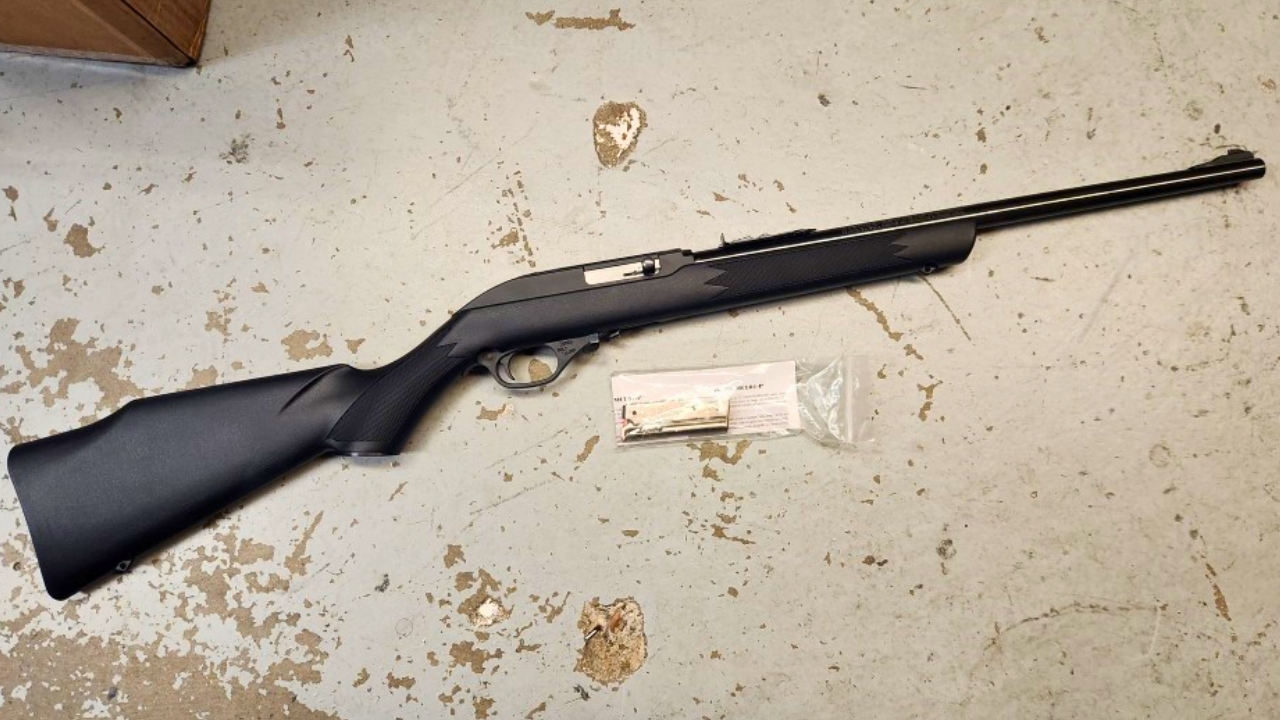
The Marlin 795 is budget-friendly and lightweight, but it’s not exactly confidence-inspiring out in the woods. The accuracy isn’t bad, but the reliability can be hit or miss depending on the ammo.
It also has a pretty cheap feel overall, and the mags can be a pain to load. If you’re relying on your rifle to feed you or protect you, this one might not be up to the job.
Glock 44

This .22 LR Glock sounded like a dream for training and small game, but it hasn’t lived up to the hype. Users report cycling issues and ammo sensitivity. That’s a bad combo when you’re out in the field.
It’s lightweight, sure—but if you need to run through multiple loads to find one it likes, you’re wasting time and money. It’s just not as dependable as other rimfire options.
Henry AR-7 Survival Rifle

This takedown .22 is compact and stores inside its own stock, which sounds great—until you start using it. The accuracy is mediocre, and the trigger is nothing to brag about.
It feels clunky when assembled, and some users complain about feeding problems. For something that’s supposed to be a survival rifle, you’re better off with a Ruger 10/22 or similar.
Mossberg MC1sc

Mossberg knows shotguns, but their first attempt at a subcompact 9mm left a lot to be desired. Reliability is shaky, and the ergonomics aren’t the best for fast shooting or control.
It had potential as a woods carry gun, but many folks ended up shelving it in favor of more proven options. When it comes to backcountry carry, trust matters—and this one lost it early on.
FN Five-seveN

There’s no doubt the Five-seveN looks tactical and has some cool features. But once you’re out in the wild, the high cost of ammo and limited terminal performance become real drawbacks.
It’s fast and flat-shooting, but 5.7x28mm just doesn’t hit hard enough on larger threats. Add in the steep price tag, and it starts to feel more like a showpiece than a trail companion.
*This article was developed with AI-powered tools and has been carefully reviewed by our editors.