Photo credit: BigDaddyHoffman1911
When you’re miles from the truck and the trail goes quiet, you start caring about different things. Bear country has a way of making you prioritize gear that works when it’s wet, dirty, cold, and your hands aren’t doing fine-motor tasks very well. A revolver still fits that mindset. It’s not perfect, and it’s not magic, but it can be a steady option when you want a powerful sidearm that doesn’t depend on a magazine, slide velocity, or a specific grip to cycle.
The revolvers that make sense out there share a few traits: strong frames, practical barrel lengths, usable sights, and grips you can hang onto with sweaty hands or gloves. You also want a gun you’ll actually carry all day, not one that lives in your pack because it’s miserable on your belt. The models below have earned their place because they balance power, durability, and carry reality better than most.
Ruger Super Redhawk Alaskan

The Super Redhawk Alaskan is built around one idea: maximum strength in a package you can keep on you. The short barrel makes it easier to carry on a chest rig under a pack strap, and the heavy frame soaks up a lot of what big-bore recoil tries to do to you.
It’s not a range toy, and it’s not meant to be. It’s meant to be there when you need it, in weather that makes everything else feel fragile. The double-action pull is workable, the cylinder locks up tight, and the whole gun feels like it was designed by people who expect you to bang it on rocks eventually. If you want a revolver that doesn’t mind abuse and still brings serious power, this one stays high on the list.
Ruger Super Redhawk 7.5″

The longer-barreled Super Redhawk gives you a steadier sight picture and more velocity than the snub variants, and it can be easier to shoot well when you’re breathing hard and your pulse is up. The weight is real, but that weight buys control when you’re trying to keep shots on track.
In bear country, that matters because follow-up shots are rarely calm and measured. The Super Redhawk’s frame strength is proven, and the gun holds up to heavy loads that would be hard on lighter revolvers. It also tends to run well in ugly conditions, with a robust lockup and a design that’s not finicky about grit and moisture. If you want the “belt cannon” version that still carries reasonably on a chest rig, this is a strong choice.
Ruger Redhawk 4.2″

The Redhawk in the shorter 4.2-inch configuration hits a sweet spot for a lot of backcountry carry. It’s compact enough to move well on your body, yet it’s still a full-size, heavy-duty revolver that doesn’t feel delicate when you’re climbing, bushwhacking, or hauling meat.
It’s also a gun many shooters can run well under stress. The grip shape and weight help keep recoil from getting away from you, and the sights are practical for real-world distances. The Redhawk has a reputation for strength and longevity, and it isn’t picky about being babied. If you want a revolver that carries better than the long-barreled hunting rigs but still brings legitimate bear-stopping capability, the 4.2-inch Redhawk is an easy one to defend.
Ruger GP100 Match Champion 4.2″

A .357 Magnum revolver can still make sense in bear country when you prioritize shootability and carrying comfort, and the GP100 is one of the most durable platforms in that category. The Match Champion variant keeps the gun trim and usable without turning it into a delicate range piece.
The real advantage here is that you can practice a lot, and practice matters. A heavy .44 or .454 that you avoid shooting isn’t doing you favors. The GP100 is controllable, strong, and reliable in bad weather, and it carries more comfortably than the big-bore giants. You’re still responsible for ammo selection and realistic expectations, but if you want a revolver you can run fast, shoot accurately, and actually keep on your belt day after day, the GP100 earns its keep.
Smith & Wesson Model 629

The Model 629 is a classic .44 Magnum that has been carried in bear country for decades because it hits a practical balance. It’s powerful, widely supported with holsters and grips, and it’s easy to find in barrel lengths that work for hiking and hunting.
What keeps it relevant is how it shoots. In a reasonable barrel length, the 629 can be controlled well enough to place hits under pressure, and the double-action trigger can be excellent once you learn it. Stainless construction helps in wet climates, and the gun carries well on a chest rig. It’s not the heaviest, strongest .44 ever made, but it’s a proven field revolver with real-world carry manners. If you want one revolver that “fits” a lot of different trips, the 629 keeps showing up.
Smith & Wesson Model 69

The Model 69 is a smaller-frame .44 Magnum that appeals to people who want real power without carrying a brick all day. It’s easier to pack, easier to forget you’re wearing, and it pairs well with a chest rig when you’ve got a pack on.
That lighter format comes with a tradeoff: recoil feels sharper, especially with heavier loads. The upside is that you’re more likely to actually carry it, and a revolver that’s on you beats a bigger one that stays in camp. The Model 69 can be a solid choice for deep woods carry when you want a powerful cartridge and a manageable overall package. If you’re disciplined about practice and you choose grips that let you hang onto it, it can be a very practical bear-country companion.
Smith & Wesson Model 329PD

The 329PD exists for one reason: you want a .44 Magnum that won’t drag your belt down. In the backcountry, weight matters, and this is one of the easiest big-bore revolvers to carry all day without resenting it.
The cost is that it can be punishing to shoot with heavy loads. That’s not a small issue, because you need to train with what you carry. Still, many experienced hikers and hunters accept that trade because the gun rides so well on a chest rig and stays out of the way under pack straps. It’s a revolver you choose when you know you’ll carry it every mile, and you’re willing to put in the reps to manage it. In deep bear country, a light .44 that’s actually on you can make a lot of sense.
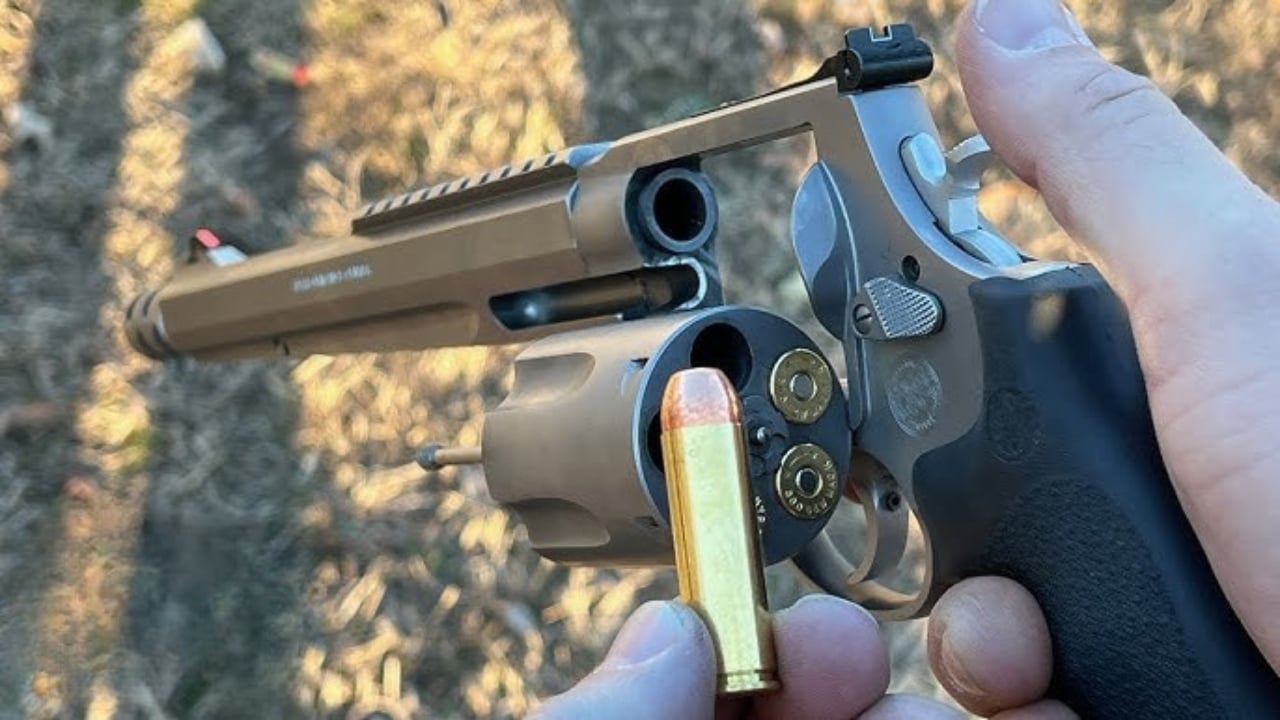
Smith & Wesson Model 460XVR

The 460XVR is for the person who wants reach and power in one revolver, and it’s hard to argue with what it can do on paper and in the field. It’s a big-frame gun, but it gives you serious capability, and it offers versatility with the ability to run milder loads when you want more practice.
In bear country, it’s not a casual carry, but it can be a deliberate one. The gun is large, the cylinder is massive, and it demands a proper holster setup, usually a chest rig. The benefit is that you’re carrying a revolver with a lot of authority, and the longer barrel options can help with accuracy and control. If you want a revolver that feels more like a handgun you can hunt with and defend with, the 460XVR fits that role.
Smith & Wesson Model 500

The Model 500 is famous because it’s extreme, but in bear country there’s a practical angle: it delivers heavy bullets and big energy with a revolver platform that’s built to handle it. If you’re traveling where large bears are a real concern, some people want that extra margin.
The downside is carry and shootability. It’s a large revolver, and it takes commitment to train with it enough that you can place fast, accurate shots. Holster choice matters, and most people end up on a chest rig because belt carry gets old quickly. When you’re honest about the tradeoffs, the 500 becomes a specialized tool, not a universal answer. If you’re the type who trains hard and wants maximum revolver power in the backcountry, this model is still in the conversation.
Taurus Raging Hunter .44 Magnum

The Raging Hunter has become popular because it offers a lot of capability for the money, and the design tends to manage recoil better than you’d expect. The porting and weight can make .44 Magnum feel more controllable in fast, realistic strings, which matters when you’re not shooting from a perfect stance.
In bear country, the appeal is that you can get a sturdy big-bore revolver without spending premium-brand money, and you can set it up with grips and holsters that fit your carry style. The gun is not tiny, but it balances well enough for chest carry, and the sights are usable. Like any revolver, it still needs practice and inspection, but the Raging Hunter has carved out a real niche as a backcountry sidearm that delivers power without feeling like a punishment to shoot.
Taurus Tracker 627 (4″)
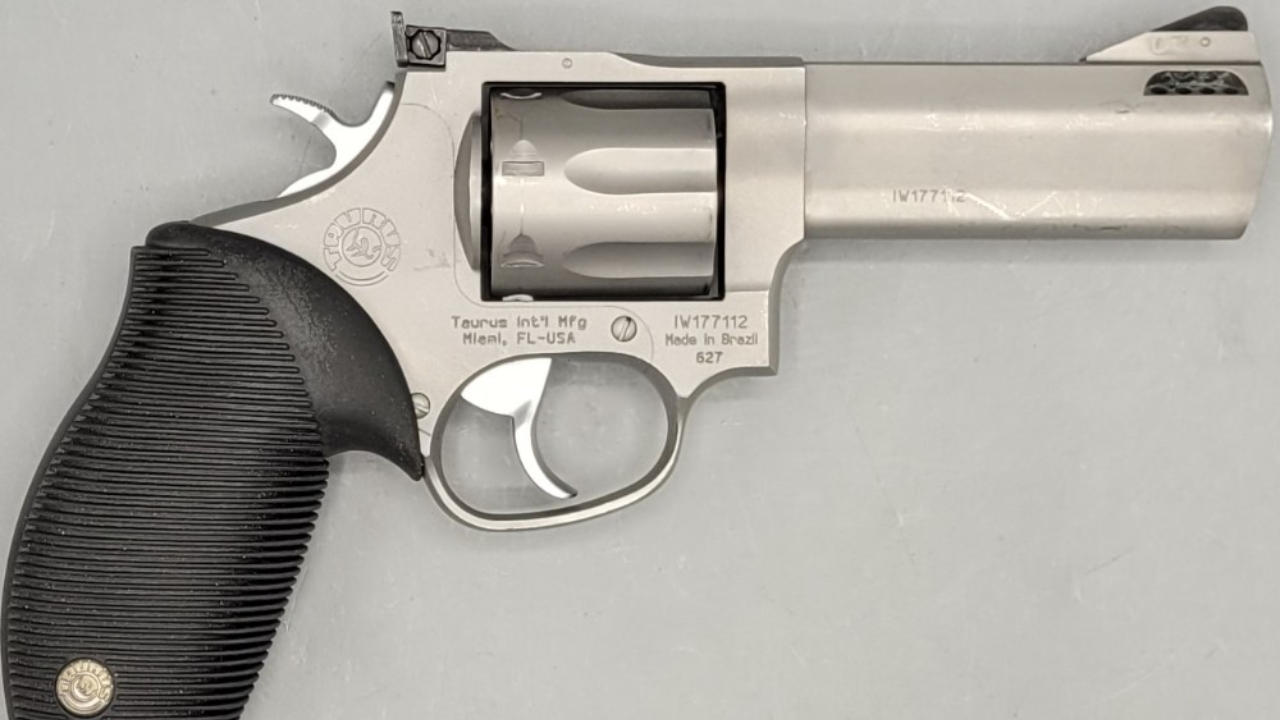
If you want a revolver you’ll actually carry, a mid-size .357 can still be a practical choice, and the Tracker 627 gives you a lot of revolver in a packable format. The 4-inch barrel is a workable balance between carry comfort and shootability, and the gun is easy to keep on you all day.
The reason this can make sense is training and control. You can shoot a .357 well, you can run it fast, and you can practice more without dreading recoil. In stressful situations, that matters. You still need realistic expectations about cartridge performance and shot placement, but the Tracker format is convenient in a way that big-bore revolvers often aren’t. If your priority is a revolver you won’t leave behind because it’s heavy and awkward, this model fits a practical lane.
Colt Anaconda (6″)

The modern Anaconda brought Colt back into the serious .44 Magnum conversation, and the 6-inch version is a strong field revolver when you want a steadier sight picture and a little more control. It’s large enough to tame recoil reasonably well, and it points naturally once you get familiar with it.
For bear country, the Anaconda’s appeal is shootability and build quality. A revolver that you can run accurately matters more than raw power on paper. The 6-inch barrel isn’t as convenient as a 4-inch gun, but with a good chest rig it can still carry well, especially if you want the extra stability for longer shots on animals or for confident practice at distance. If you like a traditional double-action revolver with modern manufacturing behind it, the Anaconda deserves a spot.
Freedom Arms Model 83

The Freedom Arms Model 83 is what you carry when you value strength, precision, and lockup above everything else. These revolvers are known for tight tolerances and excellent accuracy, and they’re often chambered in cartridges that serious bear-country folks trust when they want maximum penetration.
The tradeoff is practicality in a hurry. Many Model 83s are single-action, which changes how you run the gun under stress, and the cost is high enough that it’s not an impulse buy. Still, the reason people choose it is confidence. The gun is built for heavy use, the cylinders are strong, and the platform has a reputation for handling tough loads without drama. If you’re deep in the backcountry and you want a revolver that feels like a precision tool with serious strength, the Model 83 is hard to ignore.
Ruger Blackhawk (Bisley)

A strong single-action revolver can still make a lot of sense in bear country, and the Ruger Blackhawk—especially in a Bisley configuration—has long been a favorite for people who want power with controllable recoil. The Bisley grip shape can help you manage heavy loads in a way that keeps the gun from beating you up.
The Blackhawk is also tough, straightforward, and well-supported with holsters meant for field carry. Single-action operation means you need to be honest about how you train and how you carry, but many hunters like the deliberate nature of the platform. The gun rides well, it handles hard use, and it can be very accurate in practiced hands. If you want a revolver that feels at home on a belt in the woods and you’re comfortable with the single-action manual of arms, the Bisley Blackhawk still earns its keep.
Ruger Vaquero (large-frame)

The large-frame Vaquero doesn’t get talked about as much in modern bear-defense circles, but it can make sense for certain backcountry setups because it’s a strong, reliable single-action revolver that carries comfortably. It points well, it’s durable, and it rides nicely in traditional holsters that sit tight to your body.
The key here is being realistic about what it is and how you run it. You’re choosing a single-action revolver for simplicity of mechanism and carry comfort, not for rapid reloads or a match-style manual of arms. In bear country, some experienced outdoorsmen value a revolver that stays dependable in rain, grit, and cold, and the Vaquero format delivers that. If you already shoot single-actions well and you want a revolver that feels natural on long days in the woods, a large-frame Vaquero can still be a practical companion.
Like The Avid Outdoorsman’s content? Be sure to follow us.
Here’s more from us: